

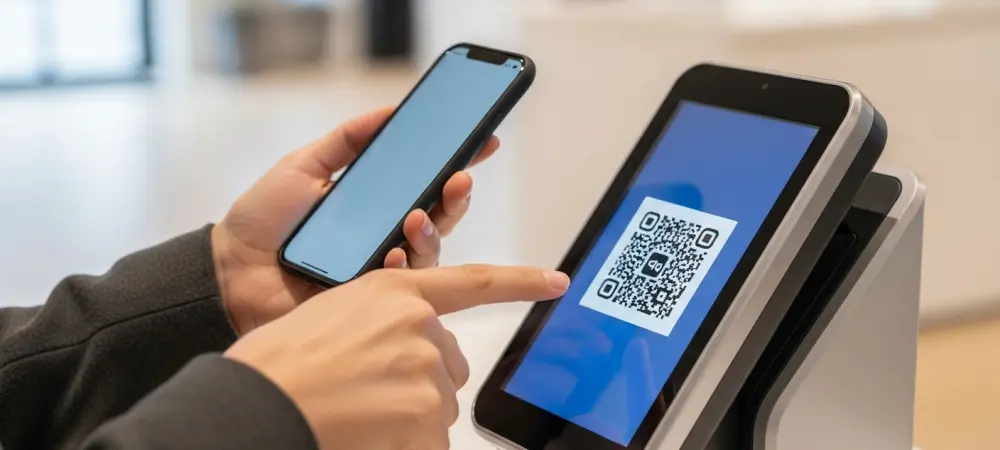
The simple act of scanning a pixelated square to view a menu or make a payment has seamlessly integrated into daily life, yet this convenience masks a potent and rapidly growing security threat that exploits user trust. By effortlessly bridging the physical and digital worlds, QR codes have created novel attack vectors specifically targeting mobile devices, which often lack the robust security protections of traditional corporate networks. This analysis will explore the rising statistics of malicious QR code attacks, dissect common methods used by threat actors, present expert insights into their effectiveness, and offer crucial mitigation strategies for both organizations and individuals navigating this evolving landscape.
The Rise of Quishing: Understanding the Threat Landscape
An Escalating Threat: Data and Growth Trends
Recent data from security researchers highlights a dramatic surge in malicious QR code activity, signaling a clear shift in attacker methodology. According to analysis from Palo Alto Networks, crawlers are detecting approximately 75,000 QR codes each day. Alarmingly, about 15% of these, equating to over 11,000 daily detections, redirect users to malicious websites designed for phishing, scams, or malware delivery. This demonstrates not just a high volume of threats but also a concerning success rate in propagating dangerous content through a seemingly benign medium.
A key factor contributing to this trend is the sophisticated use of evasion techniques by attackers. Many malicious campaigns employ QR code shorteners, which serve a dual purpose. First, they obscure the true destination of the link, preventing users from identifying a suspicious URL at a glance. Moreover, these shorteners allow attackers to dynamically change the link’s destination after the QR code has been distributed or set it to expire, making the threat difficult for security researchers to track, analyze, and ultimately block.
Attacks in Action: Real World Scenarios
The most prevalent attack method leveraging this technology is known as “quishing,” or QR code phishing. In these scenarios, attackers place malicious QR codes in emails or on physical posters in public spaces. When scanned, the code redirects the user to a convincing but fraudulent login page for a familiar service, tricking them into surrendering their credentials. The speed and ease of this process often catch users off guard, leading them to act before scrutinizing the destination. Beyond simple phishing, threat actors are exploiting “in-app deep links” to execute account takeovers. QR codes can be crafted to trigger specific actions within applications like Telegram, Signal, and WhatsApp, such as linking a new device to an existing account without the owner’s full awareness. Researchers have observed tens of thousands of QR codes containing Telegram deep links designed for this purpose. A separate but equally dangerous tactic involves the direct delivery of malicious applications. Analysis has identified nearly 59,000 detections linked to 1,457 distinct Android Package Kits (APKs) delivered via QR codes, a method that entirely bypasses the security checks of official app stores.
Expert Insights: Decoding the Attacker’s Playbook
Security experts at Palo Alto Networks’ Unit 42 suggest these attacks are highly effective because they target the weakest link in the security chain: the personal mobile device. Most QR code scans occur on smartphones that typically have fewer security controls compared to corporate-managed desktops. This allows an attack to bypass an organization’s security perimeter entirely, as the malicious activity takes place on a device that may not be monitored by enterprise security tools.
This presents a significant challenge for defenders. The malicious behavior initiated by a deep link scan can be invisible to standard web analysis tools, which are not equipped to monitor actions occurring within a mobile application. Effectively detecting and analyzing these threats often requires specialized mobile sandboxes capable of simulating the app environment and observing the custom URL schemes used to trigger malicious actions. This technical barrier makes proactive defense and incident response far more complex.
Future Outlook: The Evolving Challenge of QR Code Security
The threat posed by malicious QR codes is expected to evolve, with threat actors likely developing more sophisticated attack scenarios. One emerging concern is the potential for “contact poisoning” attacks, where a malicious QR code could be used to inject a fraudulent contact into a user’s device, which could then be leveraged in subsequent social engineering campaigns. This demonstrates a move toward multi-stage attacks that begin with a simple scan.
For security teams, this trend necessitates a strategic shift toward proactive defense. Organizations must now consider scanning QR codes before they reach the user, which involves monitoring images embedded in documents and web pages for malicious content. Furthermore, security policies should include blocking known malicious URL shorteners and restricting the ability of users to install applications from untrusted sources. This creates a difficult balance for industries like payments, logistics, and marketing, which rely heavily on the convenience of QR codes to streamline user experiences, forcing them to weigh usability against a growing security risk.
Conclusion: Navigating the QR Code Minefield
The analysis showed that malicious QR codes have become a formidable threat vector, enabling attackers to execute phishing campaigns, initiate account takeovers via deep links, and install malware directly onto mobile devices. These methods effectively exploit the inherent trust users place in the technology’s convenience, turning a simple tool into a gateway for significant security breaches. The core lesson was that all QR codes must be treated as potentially untrusted inputs, requiring a new level of caution from everyone.
Moving forward, organizations adopted stronger email and web filtering protocols capable of detecting QR-based lures and expanded their monitoring to include image-based threats. They also recognized the necessity of continuous user awareness training to build a more resilient human firewall. For individuals, the new standard became a multi-step verification process: always confirming the source of a QR code, previewing the full URL before navigating to a site, rejecting urgent prompts for payment or login, and disabling the installation of applications from unknown sources on their mobile devices.