

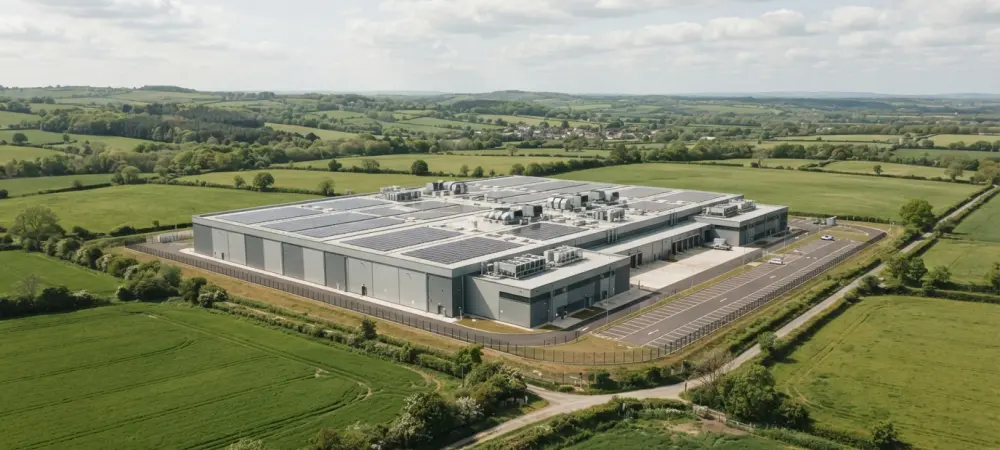
Across the United States, quiet residential corridors are becoming the new front lines in a battle between the insatiable demand for AI infrastructure and the residents who value local stability. As hyperscale data centers expand into rural and suburban areas, the resulting friction highlights a critical need for transparent governance and sustainable industrial planning. This trend of local resistance is exemplified by the recent moratorium in Indiantown, Florida, which serves as a primary case study for broader national shifts.
Analyzing the Global Data Center Surge
Measuring the Explosive Growth of Hyperscale Facilities
The rapid expansion of global data center capacity is being driven by the generative AI boom and cloud computing needs. Developers are increasingly moving away from traditional tech hubs into smaller municipalities where land is more accessible. This shift is characterized by massive land acquisitions, yet it often overlooks the underlying strain on local infrastructure and the community.
Moreover, these facilities require more intensive cooling and energy resources than traditional industrial sites. The sudden demand for high-voltage power and millions of gallons of water often competes with residential needs, sparking fears of utility shortages. Consequently, municipalities are beginning to realize that the digital cloud has a very heavy physical footprint that requires careful calibration during the planning phase.
Examining Real-World Conflict in Indiantown, Florida
Indiantown recently initiated a legislative freeze following the ousting of council members who supported industrial growth without sufficient public discourse. Residents expressed frustration over being excluded from the decision-making process regarding massive projects. This moratorium serves as a strategic pause, allowing officials to study the environmental and social impacts of data centers on their specific landscape.
However, the moratorium does not apply to projects already in the pipeline, such as Project Silver Fox, Project Growler, and the massive Tesoro Groves development. Project Silver Fox utilizes a “waterless” design to mitigate environmental backlash, while Project Growler is slated for a contaminated Superfund site that requires extensive federal cleanup. The 5,722-acre Tesoro Groves AI development even incorporates solar arrays and battery storage as a concession to local sustainability.
Expert Insights on Local Regulatory Resistance
Urban planners and legal experts suggest that “trust gaps” between developers and the public are the primary driver behind modern development moratoriums. When community members feel that their identity is being sacrificed for tax revenue, political pushback becomes inevitable. Professional opinion has shifted toward the idea that economic benefits no longer automatically outweigh the preservation of local character or natural resources.
Furthermore, industry leaders are beginning to view citizens’ advisory committees as a necessary step rather than a hindrance. These committees allow for early engagement and can help define the “political will” of a community before a project reaches the final approval stage. By fostering transparency, developers may actually find a smoother path toward long-term regional integration.
Projecting the Future of Sustainable Development
Temporary pauses are likely to lead to more stringent and standardized environmental impact regulations across the nation. This “slow-growth” model ensures that community-led oversight boards become a permanent fixture in industrial land-use planning. Such boards provide a mechanism for residents to voice concerns about noise and ecological preservation before ground is broken on any new facility.
Additionally, the integration of renewable energy sources will likely become a mandatory component for future project approvals. From 2026 to 2030, the requirement for solar arrays and on-site battery storage is expected to become the baseline standard for hyperscale facilities. This approach addresses the energy demands of AI infrastructure while aligning with broader climate goals and local sustainability mandates.
Reconciling Economic Progress with Public Interest
The conflict between digital infrastructure needs and community standards necessitated a shift toward radical transparency and early public engagement. Local governments moved to establish clearer zoning laws that specifically addressed the unique footprints of AI data centers. Developers adopted a more collaborative approach, acknowledging that their facilities had to serve as good neighbors rather than isolated industrial fortresses.
These strategic pauses allowed municipalities to reconcile legal obligations with resident concerns, creating a blueprint for future technological industrialization. Public interest was protected through the creation of permanent oversight committees that monitored water usage and energy efficiency in real time. Ultimately, the lessons learned from the Indiantown case ensured that the march of progress did not trample the very communities it intended to serve.