

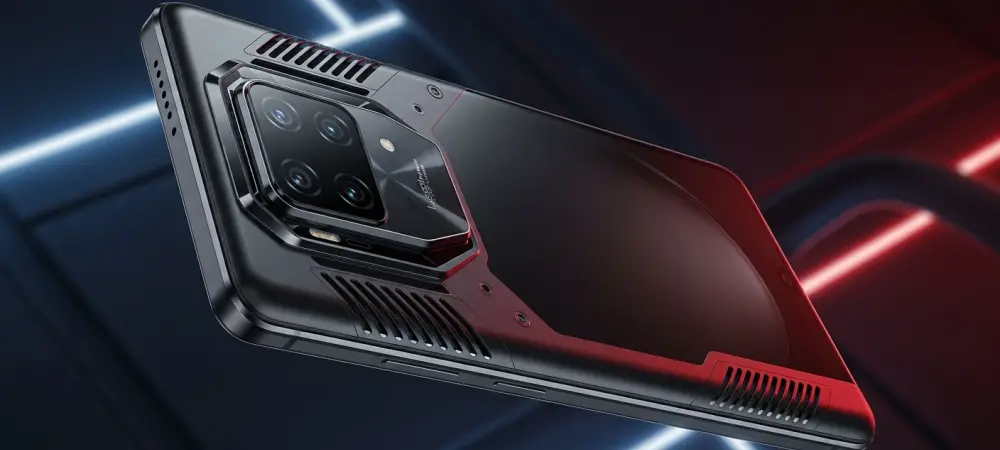
Serious competitive mobile gaming has moved well beyond casual entertainment and now requires specialized hardware that can withstand extreme thermal pressure without sacrificing portability or long-term battery health. Lenovo’s official return to the flagship arena with the Legion Y70 signals a paradigm shift in how manufacturers balance extreme battery endurance with high-fidelity visual performance. This analysis explores the technical breakthroughs of the Y70, its strategic positioning against established market leaders, and the broader implications for the future of mobile gaming hardware in an increasingly demanding landscape.
Market Dynamics and Hardware Benchmarks
Redefining Power Standards: High-Capacity Battery Integration
The industry is currently witnessing a push toward 8,000 mAh power cells, a massive leap that redefines the expectations for mobile endurance. Lenovo has paired this capacity with a 1,200-cycle durability benchmark, ensuring the device remains viable far longer than previous generations. By focusing on longevity, the manufacturer addresses the primary pain point for enthusiast gamers: the rapid battery degradation typically caused by heavy thermal loads during extended play.
Advancements in Display Fidelity: Thermal Dissipation Technology
Display technology has reached a crossroads where pixel density must be balanced against power consumption. Lenovo utilizes a 2K gaming panel that provides superior energy efficiency compared to the 1.5K displays common in the current market. To maintain this performance, the device integrates a 5,500 mm² vapor chamber and optimized antenna systems. These features act as real-world solutions for reducing latency and preventing the thermal throttling that often plagues high-end mobile chipsets.
Expert Perspectives: Lenovo’s Strategic Re-entry
Analyzing Design Synergies: Aesthetic Evolution
Design experts note that Lenovo has moved away from the aggressive “gamer” aesthetic in favor of a Motorola-inspired look. This more sophisticated, lifestyle-oriented design features a clean chassis and a streamlined camera array. Such a shift suggests a calculated effort to broaden the device’s appeal, attracting professionals who require high-performance hardware but prefer a more subtle visual profile for daily use.
The Impact: Next-Generation Silicon Performance
There is significant industry speculation regarding the integration of the Snapdragon 8 Gen 5 processor within the Y70. Analysts believe this silicon will be the deciding factor in how the device stacks up against the RedMagic and iQoo series. Furthermore, the success of the hardware likely depends on Lenovo’s ability to refine its software ecosystem to maximize the potential of this high-end chipset without compromising system stability.
Future Outlook and Global Market Implications
Scaling Beyond: The Chinese Enthusiast Segment
While the initial launch focuses on the Chinese market, the potential for an international rollout could disrupt the current hierarchy of gaming-specific smartphones. Entering saturated Western markets remains a challenge due to established brand loyalty; however, a competitive global pricing strategy might provide the necessary leverage to capture a significant market share from traditional flagship lines.
The Broader Trajectory: Sustained Gaming Performance
The Y70’s focus on sustained performance over peak bursts reflects a maturing industry where reliability is valued as much as raw power. This philosophy will likely influence future development cycles, leading to a trend where high-end cooling and battery technologies eventually trickle down into mid-range consumer devices. Such a transition would elevate the baseline for mobile performance across all price tiers. The Legion Y70 established a new standard for mobile gaming through its massive 8,000 mAh battery and advanced 2K display. This device served as a catalyst for innovation, forcing competitors to prioritize thermal management and long-term durability. Moving forward, the industry must look toward integrating these high-performance features into more sustainable and globally accessible formats. Professional gamers and enthusiasts alike should expect this shift to drive more efficient hardware designs that do not compromise on longevity or visual fidelity.