

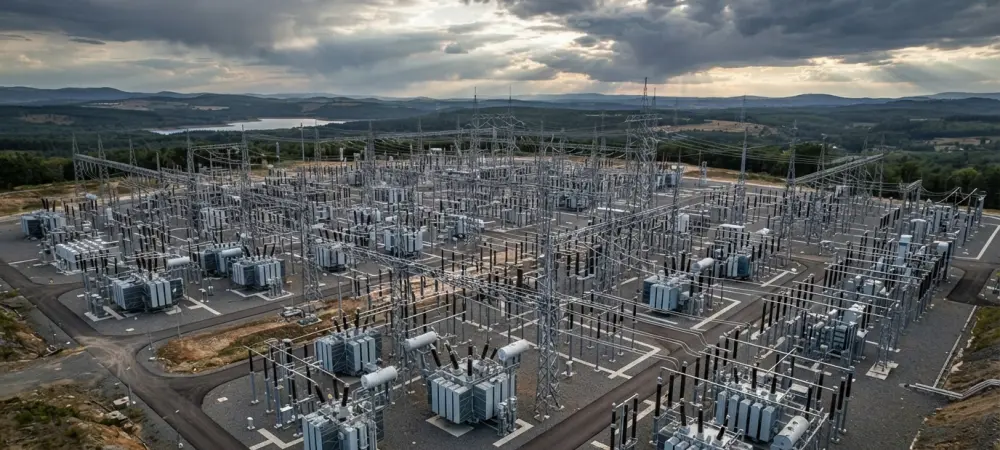
A silent digital intrusion in the modern era no longer merely compromises a database but can physically ignite a factory floor or melt down a regional supply chain without a single human intruder ever entering the premises. The digital transformation of industrial sectors has moved well beyond simple automation, creating an intricate bridge between software and physical machinery. However, this convergence has birthed a new era of risk where a single line of malicious code can trigger a catastrophic mechanical failure. As critical infrastructure becomes increasingly “smart,” the vulnerability of Industrial Control Systems (ICS) has transitioned from a theoretical concern for researchers into a documented, daily threat to public safety and economic stability. This transition demands a fundamental re-evaluation of how societies protect the invisible systems that manage electricity, water, and food logistics.
Evolution of the ICS Threat Landscape
The shift in the industrial threat landscape is defined by the erosion of the “air gap,” a formerly standard security practice that kept operational networks physically isolated from the internet. In the current environment, the pursuit of operational efficiency has led to the widespread integration of remote monitoring tools and cloud-based analytics. This connectivity, while beneficial for productivity, has expanded the attack surface for critical infrastructure to a degree that was previously unimaginable. Organizations are now finding that the protocols designed for internal, isolated use are being exposed to a global network of sophisticated threat actors who specialize in manipulating physical processes.
Data Trends and the Escalation of OT Vulnerabilities
Market data analyzed throughout 2026 indicates a sharp and persistent increase in cyberattacks targeting industrial sectors, with a 50% year-over-year rise in documented ICS incidents compared to the previous period. Adoption statistics illustrate a dangerous paradox: while 90% of industrial organizations have successfully integrated Internet of Things (IoT) sensors for predictive maintenance, less than 20% of these entities have updated their perimeter defenses or network segmentation to match this new level of connectivity. This lag creates a window of opportunity for attackers to exploit systems that were never intended to face the public web.
Reports from global cybersecurity agencies highlight that “low-hanging fruit” remains the primary entry point for both state-sponsored groups and criminal enterprises. Vulnerable controllers that are reachable via the public internet, often secured by nothing more than default manufacturer passwords, account for a significant portion of successful breaches. For the 2026-2028 planning cycle, the focus for many defense contractors has shifted toward identifying these exposed assets before they can be weaponized. The proliferation of automated scanning tools has made it easier for attackers to map out the exact make and model of hardware used in a municipal water plant or a power substation from thousands of miles away.
Real-World Impact: The European Refrigeration Crisis
The potential for physical devastation was made clear in late 2024, when hundreds of supermarkets across France, Ireland, and Sweden experienced systemic cooling failures due to hijacked software parameters. In this instance, attackers did not steal credit card data or lock office files; instead, they bypassed safety protocols to raise industrial freezer temperatures to 122°F. This specific manipulation of Operational Technology (OT) resulted in millions of euros in spoiled goods and, in several locations, triggered localized equipment fires as compressors were pushed far beyond their thermal limits.
This case study illustrates the terrifying “blast radius” of modern OT attacks, where a digital intrusion leads to immediate physical consequences and localized panic. The crisis proved that the integrity of the food supply chain is inextricably linked to the security of the software governing simple refrigeration units. When these systems fail en masse, the resulting instability transcends the financial ledger and becomes a matter of public health. The incidents served as a definitive warning that the boundaries between digital bits and physical atoms have effectively vanished, leaving infrastructure vulnerable to invisible sabotage.
Perspectives from Industry Experts
Security researchers consistently point to a “visibility gap” as the most pressing internal challenge for modern industrial enterprises. Many organizations operate under a false sense of security, unable to distinguish between a device that is merely connected to an internal network and one that is dangerously exposed to external traffic. This lack of situational awareness means that a compromise can persist for months without detection, as most traditional IT security tools are unable to interpret the specialized communication protocols used by industrial controllers. Without granular visibility into the OT layer, defenders are essentially flying blind during a sophisticated attack.
Thought leaders in the field argue that the rapid “hardening” of consumer hardware, such as smartphones and laptops, has not been mirrored in the industrial sector. In many plants, legacy systems still run on decades-old, unpatchable software because the cost of downtime for an upgrade is viewed as prohibitively expensive. This creates a situation where a multi-billion-dollar facility might be anchored by a controller with a known security flaw from the early 2000s. Experts suggest that until the industry prioritizes the replacement of these “insecure by design” legacy components, the risk of a major outage will remain unacceptably high.
Furthermore, the current vendor-client relationship is identified as a major systemic weak point. Third-party maintenance contractors frequently demand unmonitored remote access to critical physical controls to perform routine diagnostics without traveling to the site. While this saves time and money, it creates a “shadow” network where external entities possess high-level permissions that the internal security team cannot audit. Experts are now calling for a shift in contract language to mandate that any remote access point must be temporary, authenticated through multi-factor protocols, and strictly segmented from the rest of the operational environment.
Future Implications and Industrial Evolution
The future of ICS cybersecurity hinges on a decisive shift from the obsolete concept of air-gapping toward a model of “secure connectivity” through zero-trust architectures. In this framework, no device or user is trusted by default, regardless of whether they are inside or outside the network perimeter. Every interaction between a management console and a physical controller must be verified and encrypted. This approach acknowledges that connectivity is inevitable for the 2026-2028 industrial landscape but insists that such connectivity must be governed by the most stringent security controls available.
Potential developments include the implementation of mandatory security baselines for hardware vendors, ensuring that industrial equipment is hardened at the factory level. This would prevent the deployment of devices with hardcoded passwords or unencrypted management interfaces, which have been the bane of OT security for years. By moving toward a “secure by design” philosophy, the industry can start to close the gap between innovative functionality and defensive resilience. Such a shift would likely be driven by new insurance requirements and government regulations that hold manufacturers liable for the physical consequences of software vulnerabilities.
The broader implications suggest a total merger of IT and OT risk management within the corporate hierarchy. Executive leadership must begin to treat cybersecurity not as a technical overhead, but as a primary operational hazard alongside fire and physical safety. This cultural shift would lead to more integrated response teams where cybersecurity experts work side-by-side with mechanical engineers to design fail-safe systems. Failure to achieve this evolution could lead to catastrophic outcomes in even more sensitive sectors, such as municipal water systems, national power grids, and pharmaceutical cold chains where the margin for error is non-existent.
Conclusion and Strategic Outlook
The transition to a connected industrial world became a permanent reality, yet the European refrigeration incidents served as a definitive warning of the vulnerabilities inherent in this shift. These events demonstrated that the relative simplicity of a cooling system does not exempt it from being a high-priority target for those seeking to cause physical disruption. Organizations recognized that the era of treating industrial controllers as isolated, “set and forget” assets had ended. The movement toward digital integration required a corresponding movement in defensive maturity that many sectors were initially slow to adopt.
To ensure a resilient future, the industry moved toward a unified governance model that treated every connected device as a potential physical risk. Organizations prioritized real-time asset inventory and the total elimination of default credentials, while strictly segmenting physical controllers from the public web. Strategic leaders implemented immutable logging systems to ensure that any change to a physical process could be audited and traced back to a specific, authorized user. By integrating security into the very core of industrial operations, the sector began to bridge the gap between technological progress and public safety, ensuring that the infrastructure of tomorrow remained stable in the face of an evolving digital threat.