

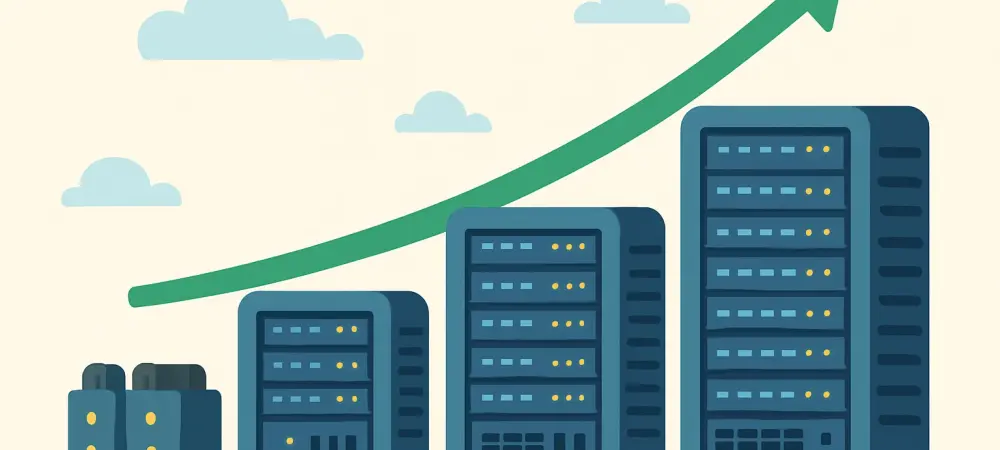
Did you know that global data consumption is doubling roughly every two years, fueled by the relentless rise of cloud computing, artificial intelligence, and streaming services? This staggering statistic underscores an urgent reality: the backbone of the digital economy—hyperscale data centers—is expanding at an unprecedented pace to keep up with humanity’s insatiable demand for connectivity. These massive facilities, often spanning hundreds of acres and powering the world’s largest tech giants, are not just infrastructure; they are the very foundation of modern life, enabling everything from remote work to real-time data analytics. This analysis dives into the current surge in hyperscale data center growth, explores real-world examples of this trend, incorporates expert perspectives, projects future implications, and distills key takeaways for understanding this transformative shift.
The Surge in Hyperscale Data Center Demand
Growth Metrics and Market Dynamics
The hyperscale data center market is witnessing explosive growth, with industry reports indicating a compound annual growth rate of over 20% in capacity additions worldwide. Investments in these facilities are projected to exceed $200 billion globally by the end of this decade, driven by major cloud providers like Amazon Web Services, Microsoft Azure, and Google Cloud. This surge reflects a fundamental shift in how data is processed and stored, as businesses and consumers alike rely on scalable, high-performance infrastructure to support their digital needs.
A key driver behind this boom is the rapid adoption of artificial intelligence and machine learning workloads, which require immense computational power and storage capabilities. Coupled with the proliferation of Internet of Things devices and a global spike in data consumption—estimated at over 180 zettabytes annually by some analysts—the demand for hyperscale facilities shows no sign of slowing. These metrics paint a clear picture: the digital economy’s growth hinges on the ability to build and operate these colossal centers at scale.
Beyond raw numbers, market dynamics reveal a competitive landscape where tech giants and specialized developers race to secure land, power, and connectivity. This urgency stems from the need to reduce latency and enhance user experiences, pushing companies to invest heavily in infrastructure that can handle peak loads without faltering. The result is a transformative wave reshaping the tech sector and beyond.
Shifting Geographic Focus
Traditionally, hyperscale data centers have clustered in established hubs like Northern Virginia, often dubbed the “data center capital of the world” due to its proximity to major internet exchange points. However, with land and power resources becoming scarce in such areas, attention is shifting toward emerging regions like Caroline County, Virginia. These new locations offer untapped potential, with lower costs and available space attracting developers seeking to meet growing demand. Caroline County, positioned between Ashburn and Richmond, exemplifies this trend, with projections estimating that data center projects could contribute millions in annual tax revenue to local economies. Infrastructure needs in these areas—ranging from upgraded power grids to enhanced road networks—are becoming focal points for regional planning. The economic ripple effects are significant, promising job creation and community development in places previously overlooked by the tech industry.
This geographic decentralization also highlights a broader strategy to mitigate risks associated with over-reliance on a few key hubs. By spreading infrastructure across diverse regions, companies aim to improve resilience against natural disasters and power outages while tapping into local incentives. The shift signals a reimagining of where and how digital infrastructure is built, with profound implications for regional economies.
Case Study: CleanArc’s Caroline County Campus
Project Overview and Scope
CleanArc Data Centers has embarked on an ambitious venture with a 650-acre campus in Caroline County, Virginia, strategically located near Interstate 95. This site, once a modest flea market, is being transformed into a state-of-the-art facility featuring three buildings, each housing two data halls. The project targets an initial capacity of 200MW by the third quarter of next year, with plans to scale to 300MW shortly after and eventually surpass 600MW.
The scale of investment—potentially reaching $8.8 billion—underscores the magnitude of this development in redefining regional infrastructure. Positioned between established tech corridors, the campus benefits from connectivity and accessibility, making it an ideal spot for hyperscale operations. CleanArc’s vision is to create a hub that not only meets current demands but also anticipates future growth in data processing needs.
This transformation is emblematic of how hyperscale projects repurpose underutilized land into critical digital assets. The campus design prioritizes efficiency and scalability, ensuring it can adapt to technological advancements and client requirements over time. Such foresight positions CleanArc as a leader in the evolving data center landscape.
Economic and Community Impact
The economic benefits of CleanArc’s project are poised to be substantial, with an estimated 50 full-time jobs created to support operations. Beyond employment, Caroline County anticipates an annual tax revenue boost of $13 million, representing a significant portion of its general fund budget. This influx of funds is expected to drive improvements in local services and infrastructure, benefiting residents directly.
To facilitate this development, the county has structured financial incentives, including annual grant payments to CleanArc and its tenants, funded by the increased tax revenue from the project. These arrangements effectively reduce the fiscal burden on the company while ensuring public gains, such as upgrades to schools, emergency services, and water systems. Road enhancements around the site will also improve accessibility for the broader community.
Alignment with regional development goals is another critical aspect, as projects like this one catalyze growth in areas eager for economic diversification. The partnership between CleanArc and local authorities demonstrates a model for balancing corporate interests with community needs, setting a precedent for future hyperscale expansions in similar regions. This synergy fosters sustainable progress on multiple fronts.
Industry Perspectives on Hyperscale Expansion
Insights from CleanArc’s CEO, Jim Trout, as shared in a prominent industry publication, emphasize a commitment to sustainable hyperscale development through clean energy integration. Trout highlighted the importance of aligning data center growth with environmental responsibility, noting that partnerships with renewable energy providers are central to the company’s strategy. This approach addresses one of the industry’s most pressing challenges: balancing expansion with ecological impact.
Broader industry commentary supports the trend of decentralizing data center hubs, with analysts pointing to land scarcity in traditional areas as a primary motivator. Emerging regions offer not only space but also favorable regulatory environments and economic incentives, making them attractive for large-scale projects. Experts caution, however, that challenges such as power availability and local opposition must be navigated carefully to ensure success.
These perspectives collectively underscore a pivotal moment for the sector, where innovation in location strategy and sustainability practices is reshaping operational norms. Industry leaders advocate for collaborative models that involve local stakeholders early in the planning process to mitigate friction. Such dialogue is seen as essential for sustaining the momentum of hyperscale growth in non-traditional areas.
Future Implications of Hyperscale Data Center Growth
Looking ahead, the trajectory of hyperscale data center expansion is likely to be shaped by a focus on sustainability, as energy demands soar alongside capacity needs. Innovations in cooling technologies and energy-efficient designs are expected to play a crucial role in reducing the environmental footprint of these facilities. The integration of renewable power sources will likely become a standard expectation rather than an exception.
The benefits of this growth extend beyond infrastructure, promising enhanced digital capabilities for industries like cloud computing, artificial intelligence, and the Internet of Things. Economic uplift in underserved regions is another advantage, as data centers bring jobs and investment to communities previously outside the tech orbit. However, challenges such as environmental concerns and potential community pushback over land use and resource allocation loom large on the horizon.
A balanced outlook must weigh optimistic scenarios—where technology and policy align to support sustainable expansion—against more cautious views that highlight risks of overdevelopment and strain on local ecosystems. The impact on reliant sectors will be profound, potentially accelerating digital transformation while necessitating robust frameworks to address societal and ecological trade-offs. Navigating these complexities will define the next phase of hyperscale evolution.
Navigating the Hyperscale Frontier
Reflecting on the past, the rapid rise in demand for hyperscale data centers has marked a turning point for the digital economy, with projects like CleanArc’s Caroline County campus illustrating the scale and ambition of this shift. The movement toward new geographic areas has alleviated pressures on traditional hubs, while economic benefits and infrastructure advancements have reshaped local landscapes. This era of expansion has highlighted both opportunity and responsibility in equal measure.
Looking forward, stakeholders are encouraged to prioritize sustainable practices by investing in green technologies and fostering transparent dialogue with communities. Policymakers and industry players need to collaborate on frameworks that address energy consumption and environmental impact without stifling growth. By championing responsible development, the hyperscale sector can set a global standard for harmonizing technological progress with societal well-being.