

The rapid migration of autonomous machines from the sterile safety of industrial enclosures into the complex and unpredictable pathways of civilian life represents a fundamental shift in how contemporary society conceives of technological assistance. This transition is not merely a technical upgrade but a philosophical evolution where robots are becoming active participants in social and professional environments. In hospitals, clinics, and customer service hubs, machines are no longer relegated to repetitive assembly lines. Instead, they are beginning to navigate hallways, provide comfort to patients, and respond to verbal instructions from staff who lack formal engineering backgrounds. As labor shortages persist and the demand for personalized care surges, this move toward human-centric robotics serves as a critical bridge between available resources and societal needs. The democratization of robotic control, the psychological refinement of social interfaces, and the development of tactile sensitivity are transforming these machines into intuitive extensions of human capability rather than isolated tools.
The Evolution and Practical Application: Human-Robot Collaboration
Gauging the Momentum: Growth in Collaborative and Social Robotics
Recent industry data indicates a sharp shift from rigid, single-purpose automation toward versatile, multi-modal systems capable of operating in messy real-world environments. The current market landscape shows that the demand for collaborative robots has surpassed traditional industrial models as businesses seek solutions that can adapt to human presence. Reports from major technology exhibitions highlight a rising trend in interoperability where humanoids, quadrupeds, and wheeled rovers function under a unified software layer. This enables different robotic forms to share data and coordinate actions, such as a wheeled rover transporting supplies to a humanoid that can perform the final delicate delivery. This synergy allows for a more flexible infrastructure that can scale according to the complexity of the task at hand.
Adoption statistics from 2026 to 2028 show an increasing reliance on generative AI to bridge the gap between complex coding requirements and user-friendly operation. By integrating large language models into robotic control systems, developers have effectively lowered the barrier to entry for small-to-medium enterprises that previously could not afford dedicated robotics engineers. This democratization of technology means that automation is becoming a standard feature in local logistics and specialized healthcare rather than a luxury for multinational corporations. The momentum is driven by the realization that robots are most effective when they can assist humans in real-time, adjusting their behavior based on the immediate needs of their human counterparts.
Bridging the Gap: Real-World Implementations of Accessible Robotics
Companies like OLO Robotics are utilizing natural language processing to allow warehouse managers and healthcare workers to program machines using plain English, bypassing the need for traditional languages like C++ or Python. This approach utilizes a cloud-based platform where users can describe a task, and the AI generates the necessary code and simulates the movements before the robot ever moves in the physical world. This safety-first methodology ensures that non-technical staff can deploy sophisticated automation without the risk of hardware collisions or procedural errors. By empowering domain experts—the people who actually understand the workflow—to control the hardware, the industry is seeing a more practical and nuanced application of robotics in diverse fields.
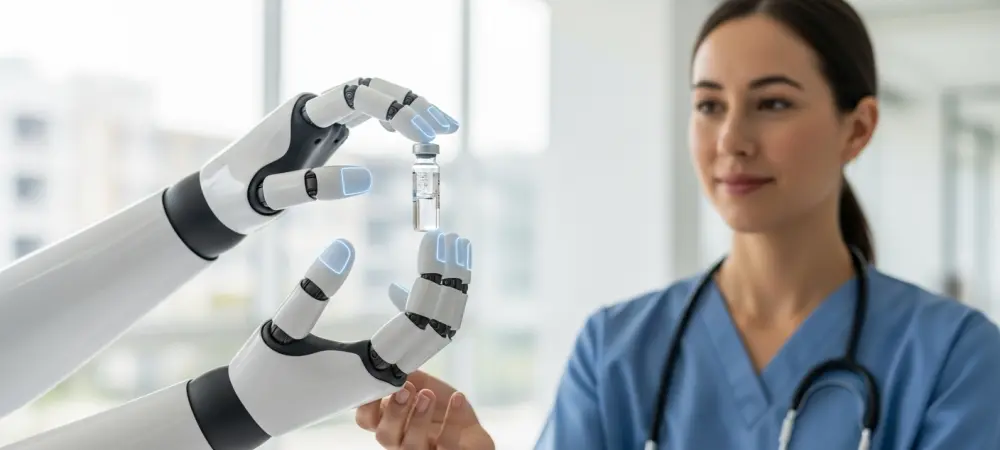
In social settings, the French startup Enchanted Tools has deployed Mirokaï robots at major airports and oncology institutes to act as concierges and companions. These machines utilize a character-driven design featuring fox-like ears and expressive animated faces, which are specifically crafted to foster trust and reduce user anxiety. This design philosophy recognizes that the success of a robot in a public space depends as much on its social interface as its mechanical efficiency. In pediatric oncology wards, for example, these robots serve as non-threatening companions that can engage children in games, making the clinical environment feel less sterile and intimidating. This intentional move away from hyper-realistic humanoid forms helps avoid the uncanny valley, making the machines more approachable for vulnerable populations. Haptic technology pioneered by firms like TouchLab is providing robots with a sense of touch through electronic skin, enabling delicate tasks such as patient handling and the manipulation of fragile manufacturing components. This electronic skin consists of ultra-thin sensors that can be wrapped around any robotic appendage, allowing the machine to perceive pressure, vibration, and texture with sub-millimeter precision. When a robot can feel the fragility of a glass vial or the firmness of a human arm, it can operate with a level of safety that was previously impossible. Furthermore, this technology allows for advanced remote operation where a human specialist can feel what the robot feels through a haptic glove, opening new possibilities for tele-medicine and hazardous waste management where physical presence is too dangerous.
Strategic Insights: From Industry Leaders and Innovators
Pioneers in the field emphasize that the democratization of robotics is essential for the long-term sustainability of the industry. By empowering domain experts to control hardware via cloud-based AI, the sector reduces its reliance on a limited pool of software engineers and accelerates the pace of innovation. Industry leaders argue that the most successful robotic deployments are those where the machine serves as a supportive tool for the worker, taking over the “dull, dirty, and dangerous” aspects of a job while leaving the complex decision-making to the human. This shift in strategy focuses on the “human-in-the-loop” model, where technology enhances human labor rather than replacing it.
Experts in human-robot interaction argue that navigating the psychological landscape is a necessity for public acceptance. They suggest that stylized, non-humanoid designs are more effective at reducing user anxiety than machines that attempt to mimic human features too closely. This aesthetic intelligence allows robots to be integrated into high-stress environments, such as emergency rooms, without causing distraction or alarm. Moreover, maintaining a clear distinction between the machine and the human helps manage expectations regarding the robot’s capabilities and limitations. By focusing on expressive, functional designs, developers can create a more harmonious relationship between people and the machines that assist them.
Thought leaders caution that while emotional engagement and haptic feedback increase utility, they also introduce new ethical frontiers regarding data privacy and professional boundaries. As robots become more integrated into caregiving roles, the necessity of human oversight remains paramount to ensure that the quality of care is not compromised by a reliance on automation. There are also concerns about the data collected by these machines, especially in sensitive environments like private homes or hospitals. Strategists advocate for robust policy frameworks that prioritize transparency and data security, ensuring that the integration of robots into society does not come at the expense of individual privacy or human dignity.
Projecting the Future: Implications of a Robotic Workforce
The future of the industry points toward telexistence, where specialists can operate machines across vast distances with full haptic feedback, revolutionizing fields like remote surgery and deep-sea exploration. This capability will allow the world’s best surgeons to perform life-saving procedures in rural or under-served areas without ever leaving their primary facility. Similarly, specialists in hazardous materials can manage industrial accidents from a safe distance, utilizing robots that possess the same tactile dexterity as a human hand. This trend will effectively decouple physical presence from physical labor, allowing expertise to be deployed wherever it is needed most, regardless of geographic barriers. Broader implications include a shift in the labor market where human roles transition from manual execution to orchestration. In this new paradigm, workers will manage fleets of diverse robotic forms that handle repetitive or dangerous tasks, moving from “doing” the work to “directing” it. This requires a new set of skills focused on systems management, ethical oversight, and human-robot communication. While the benefits include increased safety and efficiency, the socio-technical adjustments required to integrate these machines into public spaces will be significant. Society must adapt to the presence of autonomous agents in daily life, establishing new norms for how humans and robots share sidewalks, hallways, and workspaces.
The trend will likely move toward aesthetic intelligence, where the physical form of the robot is tailored specifically to the emotional and functional requirements of its environment. We will see robots designed with soft materials for childcare, rugged and utilitarian forms for logistics, and sleek, minimalist designs for corporate offices. This customization ensures that the robot’s appearance communicates its purpose and puts the user at ease. As these machines become more ubiquitous, the focus will remain on creating tools that enhance the human experience, suggesting a collaborative path forward where technology and humanity work in tandem to solve the most pressing challenges of the modern era.
Conclusion: Navigating the Integration of Robots into Society
The innovations that emerged from research labs and technology exhibitions during this pivotal period signaled a permanent transition from robotic spectacle to genuine social utility. It was determined that the path to successful integration required a focus on accessibility, tactile sensitivity, and social awareness rather than sheer mechanical power. By prioritizing human-centricity, developers ensured that the next generation of automation was aligned with human language, emotional needs, and safety standards. This shift allowed for the creation of more intuitive systems that empowered non-experts to utilize advanced technology in their daily professional lives.
To move forward, the industry established clear guidelines for “robotic orchestration,” focusing on the training of a workforce capable of managing these diverse fleets. Policy frameworks were developed to address the nuances of haptic data privacy and the ethical implications of using social robots in caregiving roles. The successful implementation of electronic skin and natural language interfaces proved that robots could be both sensitive and easy to command. These advancements ultimately fostered a society where machines were viewed as reliable partners that expanded the reach of human expertise. The focus remained on developing tools that enhanced the human experience, ensuring that as robots became ubiquitous, they remained firmly under human guidance and dedicated to human well-being.