

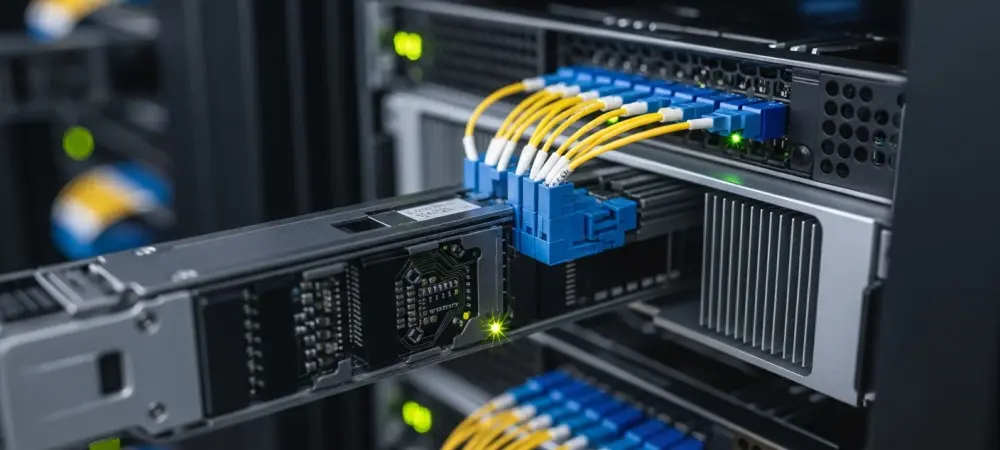
The battle for artificial intelligence supremacy is no longer confined to the abstract realm of algorithms and code; it is now being waged with concrete, steel, and silicon on an unprecedented scale. In this high-stakes race, Elon Musk’s xAI is making a colossal $20 billion bet on a new data center in Mississippi, signaling a critical trend: the frantic, large-scale build-out of physical infrastructure to power the next generation of AI. This move highlights that access to immense computational power has become the ultimate differentiator in the generative AI landscape. This analysis will dissect this trend by examining the driving forces behind the infrastructure boom, using xAI’s Mississippi project as a case study, and exploring the future implications for technology, economics, and public policy.
The Accelerating Arms Race for AI Compute
Surging Investment and Demand
The demand for computational power to train large-scale AI models is growing exponentially, transforming the industry’s financial landscape. This surge is evidenced by massive capital infusions, such as xAI’s recent $20 billion Series E funding round, which is directly fueling its aggressive infrastructure expansion. Capital is no longer just for research and development; it is now a critical resource for acquiring the raw compute power necessary to stay competitive.
This project is part of a broader industry trend where major AI labs are investing billions to secure the necessary hardware. The rush to build or lease processing capabilities is driving unprecedented growth in the specialized data center market. Companies are locked in a fierce competition not just for talent, but for the physical capacity to train and deploy their models, turning data centers into strategic assets as valuable as the algorithms themselves.
Case Study xAIs MACROHARDRR Supercomputer Facility
xAI’s new data center in Southaven, Mississippi, serves as a prime example of this trend in action. Pointedly named MACROHARDRR, in a clear nod to competitor Microsoft, the facility is being purpose-built to house the company’s Colossus supercomputer. This single location represents a monumental investment in compute capacity, designed to handle the immense workloads required to train and refine cutting-edge models like Grok.
Furthermore, this facility is not an isolated project but a crucial node in a much larger network. It joins two other regional centers to create a formidable 2-gigawatt compute cluster, a scale necessary for achieving breakthroughs in artificial intelligence. The project’s aggressive timeline, with operations expected to start as soon as next month, underscores the urgency and “insane execution speed” that Musk believes is essential to compete on a global stage.
The Strategic Alliance of Tech and Government
Public Private Partnerships as an Economic Engine
The rapid expansion of AI infrastructure is increasingly powered by a symbiotic relationship between tech giants and government bodies. Mississippi Governor Tate Reeves described the xAI deal as the “largest economic development deal” in the state’s history, a “record-shattering” event that positions the region as an emerging technology leader. This perspective from a key public official reinforces the trend of governments actively courting tech companies to build critical infrastructure within their borders.
These partnerships are viewed as transformative opportunities for regional economic growth and technological advancement. By attracting a flagship project like xAI’s data center, states like Mississippi aim to create a high-tech ecosystem that can attract further investment, skilled labor, and ancillary businesses. For governments, these deals are not just about tax revenue; they represent a strategic play to secure a foothold in the economy of the future.
Incentivizing the Infrastructure Boom
The viability of such massive projects is significantly enhanced by strong and targeted governmental support. The Mississippi Development Authority approved xAI for its Data Center Incentive, a powerful policy tool that provides a sales and use tax exemption on computing equipment and software. This directly lowers the enormous capital expenditure required to outfit a facility of this magnitude.
At the local level, the city of Southaven and DeSoto County are contributing with fee-in-lieu agreements, further sweetening the deal. These expert-designed financial incentives are not random acts of generosity; they demonstrate a clear and calculated strategy by policymakers. By creating a favorable financial environment, states make themselves competitive hubs for the AI industry, attracting high-value technology investments that might otherwise go elsewhere.
Future Projections and Industry Implications
The Evolving Hardware and Supply Chain
The xAI model of retrofitting existing buildings and renting Nvidia chips from third-party firms like Valor Equity Partners highlights a flexible, albeit capital-intensive, approach to scaling quickly. This strategy allows for rapid deployment but creates a significant dependency on a narrow set of suppliers. In the future, this trend may evolve, pushing more companies to invest in developing custom silicon to reduce reliance on single vendors and gain a competitive edge in performance and efficiency.
The competitive naming of the “MACROHARDRR” facility also hints at a future where infrastructure itself becomes a battleground for branding and market positioning. As the physical footprint of AI grows, the data centers that power it will become symbols of technological prowess. This could lead to an era where the public identity of an AI company is as much about its supercomputers as it is about its software.
Benefits Challenges and Long Term Consequences
The proliferation of massive AI data centers promises to accelerate technological progress and deliver significant regional economic benefits. The creation of high-tech jobs and the infusion of billions of dollars into local economies can be transformative. However, this build-out also poses substantial challenges, most notably the immense energy consumption required to power these facilities and the resulting environmental impact.
This trend could also lead to a future where AI capabilities are increasingly concentrated in the hands of a few corporations with the capital to build at this scale. Such a concentration of power raises critical questions about market competition, innovation, and the democratization of AI. As the barrier to entry becomes a multi-billion-dollar data center, the gap between the haves and the have-nots in the AI world may widen considerably.
Conclusion Laying the Foundation for the AI Revolution
The race for generative AI supremacy is fundamentally a race to build bigger, faster, and more powerful computational infrastructure. xAI’s multi-billion-dollar investment in Mississippi, strategically backed by public-private partnerships, exemplifies this critical trend. It demonstrates that massive capital, government incentives, and aggressive execution are the new pillars of success in the AI industry.
As companies continue to pour billions into these digital factories, the physical footprint of AI becomes as important as the algorithms themselves. This infrastructure build-out is not just a passing trend; it is the foundational work that will determine who leads the next technological revolution. The decisions made and the facilities built today are actively shaping the future of artificial intelligence for decades to come.