

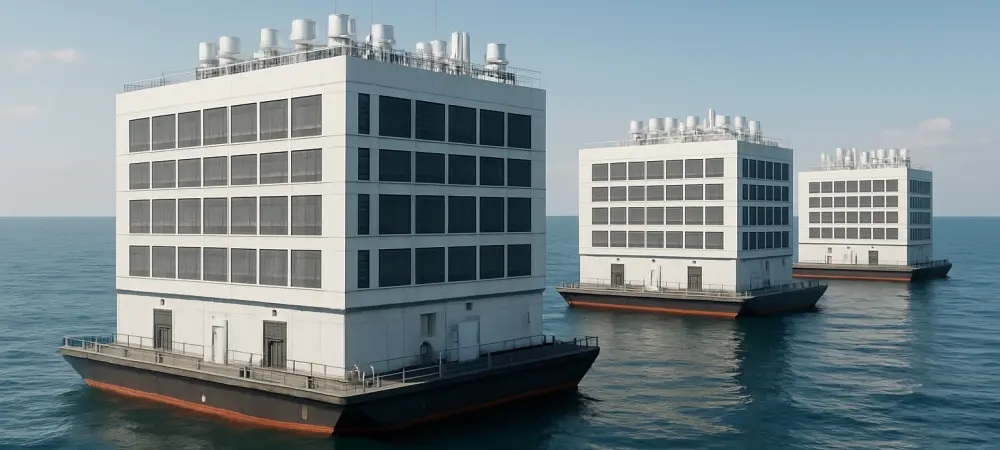
In a world where data generation is increasing exponentially, the search for efficient and innovative data storage solutions becomes paramount. One solution gaining attention is the concept of floating data centers—an intriguing blend of maritime technology and cutting-edge digital infrastructure. With digital data doubling every few years, these floating installations offer a unique opportunity to meet escalating demands with a sustainable approach. This analysis delves into the present advancements in floating data centers, showcasing their growing relevance and capturing expert perspectives on their future trajectory.
Current Developments in Floating Data Centers
Rise in Popularity and Adoption
Recent years have witnessed a remarkable surge in the consideration and adoption of floating data centers across various continents. This trend is supported by statistics indicating a global embrace of this technology, with companies increasingly opting for floating solutions to hedge against the limitations of conventional land-based data facilities. Data from industry reports reflect year-on-year growth in the deployment of floating data centers, cementing their role as a solution to the burgeoning need for data storage.
Practical Implementations Worldwide
Several successful floating data centers underscore the feasibility and potential of this approach. Leading the way is Nautilus Data Technologies, which initiated operations of its first floating data facility in California. Their success has encouraged other global projects, with multiple ventures springing up, such as one off the coast of Yokohama. These initiatives serve as pioneering models, illustrating how the integration of maritime and digital technologies can satisfy increasing data demands efficiently.
Expert Perspectives and Deliberations
Insights from Industry Specialists
The nascent floating data center segment has naturally attracted attention from industry experts who offer diverse analyses. Some highlight the environmental benefits, noting that using natural seawater for cooling significantly reduces carbon footprints. However, others point to logistical challenges, such as navigating maritime laws and ensuring robust connectivity to traditional networks. Nonetheless, the consensus is that floating data centers offer substantial advantages, including flexibility, efficiency, and scalability.
Strategic Considerations for Implementation
Experts advise that businesses evaluate both the opportunities and challenges inherent in adopting floating data centers. Key considerations include regulatory compliance, environmental assessments, and alignment with corporate sustainability goals. Harnessing existing maritime capabilities, like those of Mitsui O.S.K. Lines, can streamline the integration of floating data centers into global operations, showcasing an innovative way to marry traditional shipping with modern digital demands.
Predicting the Future Influence and Challenges
Pathway Toward Expansion and Innovation
Floating data centers are poised for significant expansion and innovation, with numerous companies already committed to advancing this technology. By converting ships into floating facilities, there is potential to augment existing infrastructures without compromising land resources. Future advancements might enhance environmental sustainability, given the eco-friendly designs integrating renewable energy sources alongside adaptable cooling systems.
Addressing Possible Constraints
Despite their promising benefits, floating data centers face hurdles such as stringent maritime regulations and technological constraints. Navigating international waters presents complex legal challenges, while the technical adaptation of retrofitted vessels demands continuous innovation. Overcoming these obstacles is vital to the sustained growth and adoption of this cutting-edge approach.
Summary and Forward-Looking Reflections
The exploration of floating data centers has chronicled an evolving trend at the intersection of digital needs and environmental considerations. As traditional data centers inch closer to their expansion limitations, these maritime solutions emerge as a critical innovation capable of redefining digital storage landscapes. Moving forward, stakeholders are encouraged to invest in this pioneering technology, reinforcing the transition toward sustainable digital infrastructures. With industry initiatives already in motion, floating data centers promise to revolutionize how the world perceives and handles burgeoning data needs.