

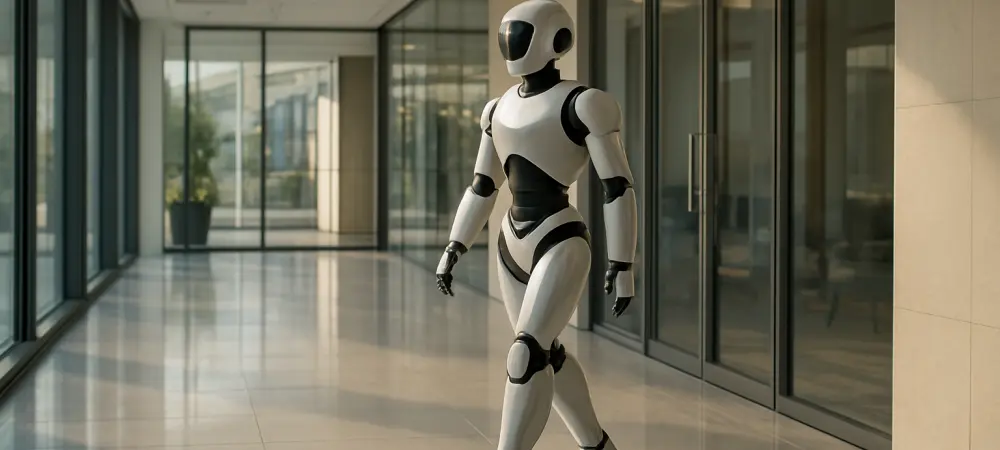
The sight of a bipedal machine shattering a world-class sprinting record while simultaneously failing to gently place a porcelain cup on a saucer highlights the jarring “utility gap” currently defining modern engineering. This paradox is the defining challenge of the current era, where the brute force of mechanical power has outpaced the subtle nuances of physical intelligence. While a robot can be engineered to perform a backflip or maintain balance on a sheet of ice through sheer computational speed, the seemingly simple act of hammering a nail or folding a towel remains a significant hurdle. This disconnect between specialized athletic performance and general domestic utility marks the critical transition point from scripted robotics to true situational awareness.
The technological pivot occurring between 2026 and 2030 centers on moving beyond pre-programmed responses toward adaptive intelligence. Historically, robots operated within the rigid confines of “if-then” scripts, functioning effectively only when the environment was perfectly controlled. However, the maturation of Embodied AI is fundamentally changing this dynamic by allowing machines to perceive and react to their surroundings in real time. This evolution represents the most significant shift in robotics since the introduction of the industrial arm, signaling a roadmap that moves from the structured predictability of the factory floor into the chaotic reality of the modern kitchen.
The Evolution of Robotic Capability: Beyond the Script
Data and Growth Trends in Locomotion and Stability
The maturation of bipedal balance has reached a state where terrain stability is largely considered a “solved” problem in the robotics industry. Performance statistics from the 2026 World Humanoid Robot Games in Beijing provided empirical proof of this trend, most notably when the Tiangong Ultra completed a 100-meter sprint in just 8.64 seconds. This feat, which surpassed human physical limits, demonstrated that the physics of high-speed locomotion are no longer the primary bottleneck for humanoid development. Industry adoption metrics now show a decisive shift in investment away from basic mobility, as capital flows toward more complex manipulation and environmental perception.
Current data suggests that from 2026 to 2028, the compound annual growth rate for specialized mobility platforms will stabilize while the market for dexterous hands will triple. This shift is driven by the realization that being able to walk is only valuable if the machine can perform a task upon arrival. Companies are prioritizing research into actuators that mimic the human muscle’s ability to absorb shock and provide variable tension, allowing robots to navigate uneven forest floors and crowded urban sidewalks with equal ease.
Real-World Applications and the “Utility Gap”
Despite the record-breaking sprints witnessed on the track, the “utility gap” becomes glaringly obvious in scenario-based events such as hospitality and domestic maintenance. During the recent global robot trials, the same machines that demonstrated world-class speed struggled to perform the basic tasks required for hotel room service, such as making a bed or identifying different types of silverware. These failures emphasize that industrial excellence in “curated” environments does not automatically translate to success in unstructured spaces where objects are not in fixed positions.
Notable companies leading the charge are now focusing on bridging this gap by deploying robots in hybrid environments like semi-automated warehouses. In these spaces, robots are forced to deal with varying package weights and irregular shapes while maintaining the speed required for commercial viability. This transition from scripted performance to practical utility is the current frontier, as engineers move away from “spectacle” engineering and toward the development of machines that can reliably handle the mundane variables of human life.
The Core Pillars of Embodied AI: Bridging Perception and Action
Tactile Sensing and Fine Motor Control
Dexterous manipulation is the critical role of the next decade, focusing on the handling of irregular, soft, or fragile objects like laundry and groceries. Unlike metal components on an assembly line, these items change shape when touched, requiring a robot to possess a sophisticated sense of “touch” that goes beyond simple pressure sensors. Advanced tactile feedback systems are being integrated into robotic fingertips, allowing the AI to adjust grip strength and finger positioning in milliseconds based on the friction and resistance it feels.
This real-time adjustment is what separates a machine that crushes a soda can from one that can successfully crack an egg or sort delicate produce. The development of synthetic skins embedded with high-density sensor arrays is enabling robots to identify textures and thermal properties, providing a layer of data that was previously ignored in favor of purely visual input. This multi-modal approach is essential for any machine intended to operate in a home or a healthcare facility.
Autonomous Navigation and Cognitive Flexibility
Moving beyond fixed paths requires robots to perceive, identify obstacles, and reroute in semi-open spaces without human intervention. The requirement for cognitive flexibility means that a robot must understand the difference between a permanent wall and a temporary obstacle like a human or a pet. The concept of “judgment” has emerged as the missing ingredient in robotic intelligence; while the physics of a backflip are mathematically consistent, the micro-decisions involved in folding a shirt require a level of adaptive reasoning that standard algorithms cannot provide.
Current advancements in Embodied AI allow machines to build dynamic maps of their environment, updating their internal models as furniture is moved or as people walk by. This allows for a level of fluid navigation that mimics human movement, where the robot does not simply stop when blocked but searches for a logical alternative. The goal is a machine that understands the context of its space, recognizing that a kitchen requires different movement patterns and safety considerations than a loading dock.
Human-Robot Synergy through Collaborative Robotics (Cobots)
The rise of “Cobots” serves as a pragmatic solution to immediate industrial needs, focusing on the safety and synergy of humans and robots working in tandem. By working alongside humans, the AI’s required complexity is reduced because the human can handle the high-level decision-making while the robot performs the repetitive or physically demanding portions of the task. This collaborative model increases adoption rates in the short term by mitigating the safety risks and high costs associated with fully autonomous systems.
Furthermore, cobots allow for a natural training environment where the AI learns from human interaction. This synergy is particularly effective in small-scale manufacturing and medical assistance, where precision and adaptability are both required. As these machines become more intuitive, the barrier between human worker and mechanical assistant continues to blur, creating a more integrated and efficient labor force.
Expert Perspectives on the Robotics Frontier
Thought leaders like Karen Liu have articulated a clear hierarchy of environments, suggesting that robotics will conquer factories and hospitals long before the chaotic domestic home. The argument centers on the fact that homes are the most unpredictable environments on the planet, filled with thousands of unique, non-standardized objects. Professionals in the field argue that the focus should remain on “steady decision-making” as the primary key performance indicator rather than athletic speed or physical power, as reliability is what drives consumer trust and economic viability.
There is also an ongoing expert debate regarding whether the humanoid form is an asset or an expensive, energy-intensive liability. While a humanoid robot can use tools and spaces designed for people, specialized machinery often performs specific tasks with much higher efficiency and lower cost. The consensus among industry veterans is that the form factor will eventually follow function; however, for general-purpose assistance, the humanoid shape remains the most versatile platform for navigating a world built by and for humans.
The Future Landscape: From Structured Industry to Domestic Integration
A phased deployment strategy is the most likely timeline for robotic integration, starting with the heavy logistics sector and moving toward healthcare and hospitality. As the technology matures and manufacturing costs decrease, the potential for a “Robot-as-a-Service” model will likely emerge, making these machines more accessible to small businesses and eventually households. This economic shift is expected to address critical labor shortages in elder care and industrial maintenance, providing a social safety net as the global population ages.
The eventual fusion of digital intelligence and physical dexterity will redefine the concept of a “useful” machine, moving it from a specialized tool to a general-purpose companion. However, the path is not without its challenges, including the economic implications of job displacement and the high energy requirements of mobile AI systems. Balancing these risks against the immense benefits of increased productivity and improved quality of life will be the primary task of policymakers and engineers alike as the decade progresses.
Conclusion: Redefining the Robotic Revolution
The shift from locomotion-focused engineering to perception-driven Embodied AI marked a fundamental change in how the industry approached machine intelligence. In the past, the focus remained on the spectacular feats of speed and agility that dominated public perception, yet the real progress was hidden in the subtle improvements of tactile feedback and situational logic. The transition required a shift in focus toward the integration of multimodal sensors that allowed for the handling of soft materials and irregular geometries. It became clear that the ability to navigate a crowded room was far more valuable to society than the ability to outrun a sprinter on a controlled track.
The realization that mobility was merely the first step shifted the industry’s focus toward the more difficult challenges of tactile intelligence and situational logic. This move ensured that the robotics revolution stayed grounded in practical utility rather than remaining a series of expensive laboratory experiments. By prioritizing steady decision-making and human-robot synergy, the field moved closer to a reality where machines could seamlessly assist in the most mundane aspects of daily life. The progress made in these areas laid the groundwork for a future where the distinction between digital thought and physical action finally disappeared.