

The digital backbone of the global economy is being strained under the unprecedented weight of artificial intelligence and the sprawling complexity of hybrid cloud ecosystems, creating an operational challenge of immense scale and urgency. As organizations push the boundaries of computation, the data centers that power their ambitions have evolved into highly distributed, densely packed environments. This rapid transformation, characterized by a mix of on-premises hardware, colocation facilities, and countless edge deployments, has rendered traditional management approaches obsolete. The sheer volume of data, coupled with the intense power and cooling requirements of modern workloads, demands a new level of operational intelligence and control. In this high-stakes environment, modern Data Center Infrastructure Management (DCIM) has emerged as the critical enabler of digital resilience and growth. Far from being a simple monitoring tool, today’s DCIM is a sophisticated command-and-control platform that provides the visibility, automation, and predictive insight necessary to ensure unwavering reliability. Its role extends beyond preventing outages to actively optimizing for peak efficiency and helping organizations meet increasingly stringent sustainability mandates. For any enterprise dependent on digital infrastructure, DCIM is the key to navigating the complexities of the modern technological landscape successfully.
This analysis will dissect the crucial trends shaping the DCIM market, from its rapid growth to the technological innovations driving its evolution. It will showcase how leading vendors are applying advanced concepts like AI and digital twins to solve real-world problems, consolidate expert perspectives on the most essential DCIM capabilities, and ultimately explore the future trajectory of infrastructure management in an increasingly autonomous and distributed world.
The Evolution and Adoption of Modern DCIM
Market Growth and Key Adoption Drivers
The data center infrastructure management market is experiencing a period of remarkable expansion, reflecting its escalating importance in the digital economy. Market projections indicate a significant growth trajectory, with the industry expected to swell from $3.02 billion to $5.01 billion by 2029, according to research from MarketsandMarkets. This financial growth is not merely a number; it represents a fundamental industry-wide acknowledgment that intelligent, centralized management is no longer a luxury but an operational necessity. The increasing complexity of IT environments has driven this demand, cementing DCIM’s role as a cornerstone of modern infrastructure strategy.
This surge in adoption is propelled by a confluence of powerful industry forces. The primary driver is the pervasive shift toward hybrid infrastructures, where workloads and data are scattered across on-premises data centers, colocation sites, and a rapidly expanding network of edge locations. Operators require a unified platform to manage this distributed ecosystem effectively. Concurrently, the explosion of high-density artificial intelligence workloads has introduced unprecedented power and cooling challenges, forcing a move toward more sophisticated, data-driven management techniques. Adding another layer of urgency is the mounting pressure on corporations to meet ambitious Environmental, Social, and Governance (ESG) goals, making DCIM’s energy optimization and reporting capabilities indispensable.
The maturation of DCIM from a niche tool to an essential platform is further highlighted by its formal integration into established industry standards. The inclusion of DCIM principles and best practices in pivotal publications, such as the ASHRAE DataCom Encyclopedia, solidifies its status as a core competency for data center professionals. This standardization signals that the industry has moved beyond early adoption and now views DCIM as a foundational element for designing, operating, and maintaining resilient and efficient digital infrastructures, putting it on par with other critical disciplines like power distribution and thermal management.
Leading Vendors and Innovative Applications
A key trend reshaping the DCIM landscape is the deep integration of artificial intelligence and machine learning to create predictive and proactive management systems. Vendors are moving beyond simple reactive alerts to offer platforms that can anticipate and prevent issues before they impact operations. Nlyte Software, for example, leverages its Operational AI engine to implement a “predict and avoid” strategy, analyzing data from facilities and IT systems to forecast potential outages and optimize workload placement for greater reliability. Similarly, Schneider Electric’s EcoStruxure IT platform employs AI to provide intelligent load-balancing recommendations, helping operators fine-tune energy consumption and improve efficiency without manual intervention. These applications demonstrate a significant shift toward intelligent automation, where the DCIM system acts as a co-pilot, guiding decisions with data-driven insights.
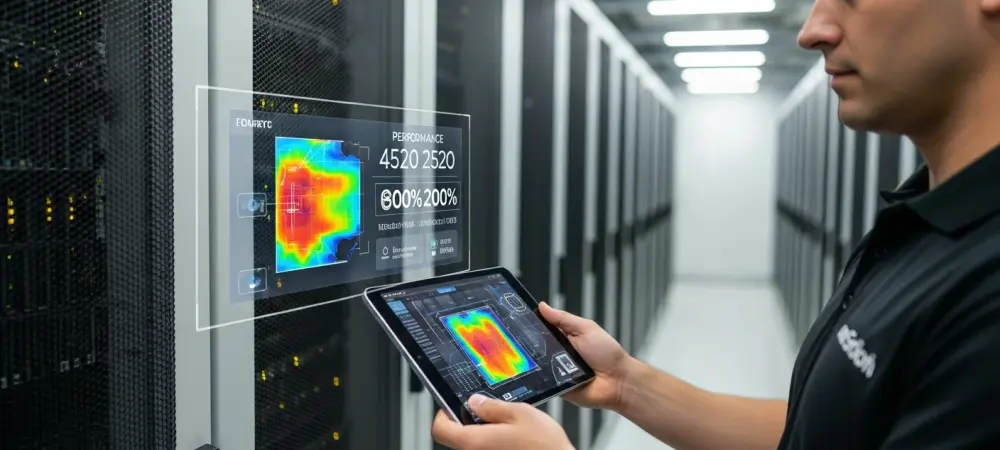
Enhanced visualization has also become a critical innovation, transforming how operators interact with and manage their infrastructure, especially in remote or distributed environments. The concept of the “digital twin,” a virtual replica of the physical data center, is now a reality. FNT Software positions its platform as a comprehensive digital twin of infrastructure operations, enabling operators to simulate changes and analyze their impact on power, cooling, and connectivity before implementation. Sunbird Software pushes this further with highly detailed 3D modeling, allowing technicians to remotely navigate floor plans, inspect individual racks, and visualize power and thermal data overlays. This level of granular, remote visibility is crucial for managing complex facilities efficiently and reducing the need for physical on-site presence. As sustainability transitions from a corporate ideal to a regulatory and financial imperative, DCIM platforms have become the primary tools for tracking and improving environmental performance. EkkoSense has built its platform around this need, focusing specifically on optimizing complex cooling systems to deliver substantial energy reductions. Its software provides real-time 3D visualizations of thermal performance, identifying inefficiencies and recommending adjustments to maximize cooling capacity and minimize waste. Furthermore, EkkoSense has integrated automated ESG reporting features, enabling organizations to effortlessly generate the sustainability reports required to meet corporate goals and comply with emerging environmental regulations. In another area of innovation, vendors are enhancing the on-site user experience. Cormant-CS, for instance, has integrated augmented reality (AR) into its mobile application. This allows technicians to use a smartphone or tablet to overlay digital information onto physical assets, streamlining tasks like asset identification, tracking changes, and accessing maintenance histories directly in the field.
Expert Perspectives on Critical DCIM Capabilities
The consensus among industry experts is that the fundamental purpose of DCIM has evolved. The paradigm has shifted decisively from passive monitoring, where systems merely report on the current state of affairs, to proactive and intelligent management. Modern platforms are now expected to function as predictive engines, using historical data and machine learning algorithms to forecast potential equipment failures, capacity shortfalls, and thermal anomalies. More importantly, these advanced systems are increasingly capable of automating responses, such as migrating workloads away from a struggling server or adjusting cooling unit setpoints in real time to handle a sudden thermal load. This transition empowers operators to move from a reactive, “break-fix” model to a strategic, predictive one that enhances resilience and operational stability. Comprehensive integration is another capability experts identify as non-negotiable in the modern DCIM ecosystem. A DCIM platform cannot operate effectively in a silo; it must serve as a central hub that aggregates data from a wide array of disparate systems. Nlyte’s integration with building automation systems like WebCTRL is a prime example, allowing for a holistic view that connects IT asset performance directly with facility-level power and cooling controls. Sunbird champions this approach by providing a suite of out-of-the-box connectors for enterprise platforms such as ServiceNow and VMware. This seamless, bi-directional data exchange automates workflows, enriches asset databases, and ensures that decision-making across IT and facilities teams is based on a single, consistent source of truth.
Furthermore, the importance of vendor-agnostic solutions cannot be overstated. Data centers are inherently heterogeneous environments, comprising equipment from dozens of different manufacturers. A DCIM solution that locks an operator into a single vendor’s ecosystem is impractical and limits flexibility. Platforms like Schneider Electric’s EcoStruxure IT are built on a vendor-neutral philosophy, enabling them to monitor and manage a diverse portfolio of IT and facility devices. This openness is crucial for gaining complete visibility across the entire infrastructure stack and allows organizations to select best-of-breed equipment without worrying about compatibility, thereby maximizing their return on investment and future-proofing their management strategy.
Finally, as data centers become more interconnected and reliant on software-defined controls, security has emerged as a paramount concern. A DCIM platform has access to critical operational data and, in many cases, control over physical infrastructure, making it a high-value target for malicious actors. Consequently, robust security features are now a core requirement. Leading vendors are addressing this by building security into the foundation of their platforms. Nlyte, for instance, offers advanced capabilities like mass firmware patching through its DCIM solution. This allows operators to identify vulnerabilities across thousands of heterogeneous devices and deploy security patches at scale, significantly reducing the data center’s attack surface and mitigating risks that could lead to costly downtime or data breaches.
Future Outlook: The Next Generation of Infrastructure Management
Looking ahead, the integration of artificial intelligence within DCIM is set to deepen profoundly, paving the way for the era of the autonomous data center. The next generation of DCIM will move beyond predictive analytics to enable fully autonomous operations where the system makes and executes real-time optimization decisions without human intervention. Imagine a platform that intelligently places new workloads based on real-time power, cooling, and network capacity, dynamically migrates virtual machines to balance thermal loads across a room, and automatically throttles non-critical systems to stay within a power budget during a utility demand-response event. This level of automation will be essential for managing the hyperscale and high-density environments of tomorrow with maximum efficiency and reliability. Sustainability will continue to evolve from a reporting function to a central operational driver, with DCIM at its core. Future platforms will provide the granular data and sophisticated modeling required for organizations to achieve aggressive carbon-neutral goals. This includes real-time tracking of carbon footprint based on the energy mix from the grid, water usage effectiveness (WUE) monitoring, and lifecycle management of assets to promote a circular economy. As new environmental regulations emerge globally, DCIM will become the indispensable tool for ensuring compliance, providing auditable data trails, and enabling operators to make informed decisions that balance performance with environmental responsibility.
Despite these advancements, the path forward is not without its challenges. The proliferation of IoT sensors throughout data centers will generate immense volumes of data, requiring highly scalable and efficient data processing architectures to derive meaningful insights. Securing cloud-based DCIM platforms and their connections to on-premises infrastructure will become even more critical as the threat landscape evolves. Perhaps most significantly, the industry faces a persistent skills gap. To overcome this, future DCIM tools must become more intuitive and automated, abstracting away complexity and empowering a broader range of IT and facilities professionals to manage sophisticated environments effectively. The user interface and experience will be just as important as the underlying technology.
Ultimately, the scope of DCIM is poised to expand far beyond the traditional four walls of the data center. The next evolution will see it become a unified management plane for the entire distributed digital infrastructure, from centralized cloud and core data centers to regional colocation facilities and thousands of remote edge sites. This “single pane of glass” will provide holistic visibility and control, enabling organizations to manage capacity, ensure resilience, and optimize performance across their entire technological footprint. DCIM will no longer be just about managing the data center; it will be about managing the digital enterprise.
Conclusion: Strategizing for a Smarter Data Center Future
The analysis of the Data Center Infrastructure Management landscape revealed a clear and rapid evolution. Driven by the intense demands of artificial intelligence and the distributed nature of hybrid IT, DCIM transformed from a monitoring utility into a strategic, intelligent management platform. Key trends crystallized around the integration of predictive AI, the development of comprehensive digital twins for enhanced visualization, and a powerful focus on sustainability as a core operational metric. These shifts underscored a broader industry movement toward more automated, integrated, and proactive infrastructure oversight. This evolution cemented the understanding that investing in a modern DCIM solution was no longer an optional expenditure but a strategic imperative. Organizations that embraced these advanced tools found themselves better equipped to maintain a competitive edge through enhanced operational resilience, improved efficiency, and the ability to meet critical ESG mandates. The decision to adopt next-generation DCIM became a defining factor for enterprises seeking to build a robust and agile digital foundation capable of supporting future growth and innovation.
Ultimately, the trajectory of DCIM pointed toward a future where data centers could operate with greater autonomy and intelligence. The journey encouraged data center operators and IT leaders to critically evaluate their existing management tools and processes. It prompted a call to action: to strategically adopt the next wave of DCIM platforms, not just to solve today’s challenges, but to prepare their organizations for the immense opportunities and complexities of the digital future that lay ahead.