

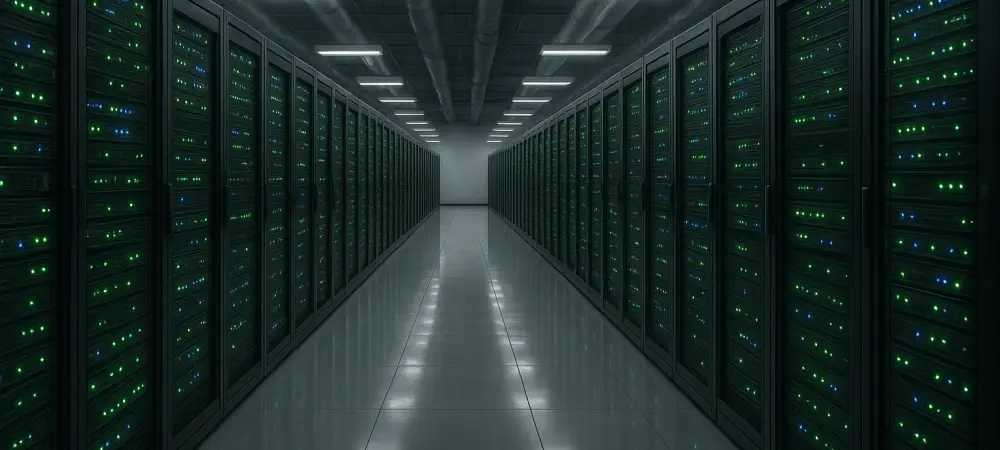
The silent hum of thousands of idle servers across the globe represents one of the most significant financial leaks in the modern digital economy, as enterprises scramble to meet the insatiable demands of artificial intelligence while their existing hardware sits largely dormant. While the narrative of the current decade focuses primarily on the shortage of high-end chips and the construction of massive new facilities, a quieter but more impactful trend is emerging within the existing walls of the enterprise data center. Optimization of current assets has moved from a secondary operational goal to a primary strategic imperative. As organizations face the dual pressures of soaring energy costs and the physical limitations of traditional cooling, the ability to identify and reclaim stranded capacity is becoming the ultimate competitive advantage.
Navigating the Landscape of Underutilized Infrastructure
Current Growth Trends and Market Statistics
The shift toward high-density computing is no longer a niche requirement for research labs but a baseline necessity for mainstream enterprise operations. Driven by the global surge in Artificial Intelligence and machine learning workloads, rack densities are climbing at an unprecedented rate, moving from an average of 10 kilowatts to well over 50 kilowatts in specialized environments. This rapid transition has exacerbated a long-standing issue known as the “visibility gap,” where disparate monitoring systems for cooling, power, and compute create a fragmented picture of actual usage. Data suggests that a significant percentage of available capacity remains stranded because facility managers and IT administrators cannot see the same real-time data, leading to cautious but wasteful overprovisioning.
Analyzing statistics from industry reports, such as those provided by Omdia, highlights the staggering economic impact of “zombie servers”—hardware that remains powered on but performs no useful work. In the current landscape of 2026, it is estimated that nearly 30 percent of servers in many corporate environments fall into this category. The rising adoption of predictive automation and AI-driven orchestration tools is finally addressing this waste by providing the granular transparency needed to identify these idle resources. These tools allow for a dynamic redistribution of workloads, ensuring that the existing electrical and thermal headroom is utilized to its full potential before any new capital expenditures are considered.
Real-World Applications and Success Stories
Industry leaders are already demonstrating the massive efficiency gains possible through more aggressive resource management. Google, for instance, has successfully implemented automated GPU sharing techniques that allow multiple workloads to utilize the same accelerator simultaneously. This approach has led to an increase in aggregate throughput of up to 50 percent, proving that the most valuable “new” capacity is often already sitting in the rack. By treating hardware as a fluid pool of resources rather than a collection of static units, these hyperscale operators are setting a blueprint for how smaller enterprise facilities can navigate the compute-heavy requirements of the 2026 to 2028 period.
In addition to software-based sharing, workload consolidation and horizontal pod autoscaling have become standard practices in sophisticated environments. Case studies from various sectors show that organizations are increasingly repurposing older facilities, which were originally designed for traditional enterprise applications, to handle AI inference and “Private AI” workloads. Rather than engaging in a full-scale training refit that could cost tens of millions, these firms are using integrated Data Center Infrastructure Management (DCIM) platforms to bridge the gap between IT teams and facilities management. This integration allows them to run modernized, compact workloads in spaces previously occupied by aging, inefficient hardware, effectively extending the lifecycle of the building itself.
Perspectives from Industry Thought Leaders
Analysts like Siraj Aziz have frequently pointed out the critical distinction between intentional safety reserves and operational waste. In a market where uptime is paramount, many operators have historically leaned toward extreme caution, keeping a significant percentage of their power capacity in reserve for failover events. However, Aziz argues that with modern predictive analytics, these “safety cushions” can be shrunk without increasing risk. The move from static redundancy to dynamic resilience allows for a much higher utilization rate, turning what was once “just-in-case” overhead into productive compute cycles for lower-priority or batch-processing tasks.
Bruce Bateman has championed a “stay in your lane” philosophy, which warns against the economic limits of facility upgrades. The expert consensus suggests that not every data center is physically capable of supporting the next generation of high-density hardware without a total teardown. Bateman often highlights the “cascading upgrade” trap, a situation where a simple hardware improvement leads to a chain reaction of unforeseen costs, such as the need for reinforced flooring, upgraded electrical switchgear, and advanced liquid cooling. Understanding the physical boundaries of an existing facility is essential for determining whether to optimize the current footprint or migrate to a more modern co-location provider. Infrastructure leaders are now largely in agreement that breaking down organizational silos is the only way to achieve true capacity transparency. In the past, the facilities team focused on the building and the IT team focused on the applications, with very little communication between the two. This lack of alignment led to situations where power was available but cooling was not, or where space was abundant but the electrical grid was at its limit. By fostering a culture of shared responsibility and data transparency, organizations are finding that they can unlock hidden capacity simply by aligning their operational goals.
The Future of Capacity Management and Strategic Evolution
The evolution of data centers from reactive physical sites to proactive, software-defined environments is accelerating. Looking at the trajectory from 2026 to 2030, the management of capacity will likely become entirely automated, with AI agents negotiating the placement of workloads based on real-time electricity pricing, thermal conditions, and latency requirements. As organizations hit the physical ceilings of traditional air-cooled racks, the long-term implications of liquid cooling and modular power distribution are becoming unavoidable. These technologies allow for much tighter packing of hardware, further emphasizing the need for precision management to avoid “hot spots” that could threaten system reliability.
Strategic evolution also involves the shift toward “Edge-to-Core” optimization. By balancing low-latency local processing with centralized compute power, organizations can distribute the physical load across multiple locations rather than centralizing everything in a single, overtaxed hub. This distributed model helps maintain sustainability goals by reducing the concentrated power consumption of a single site while also providing better service to end-users. Furthermore, the maturation of AI inference technology is allowing older data center assets to remain economically viable. Since inference requires significantly less power and cooling than large-scale model training, it offers a perfect secondary use for legacy infrastructure that might otherwise be decommissioned.
Summary and Strategic Outlook for Infrastructure Leaders
The investigation into capacity optimization revealed that the industry reached a critical turning point where hardware acquisition was no longer the fastest path to growth. Infrastructure leaders discovered that integrated visibility across the network, application, and facility layers was the only reliable method for eliminating the “visibility gap” that plagued legacy systems for decades. By focusing on the reclamation of existing, underused assets, organizations were able to find a cost-effective source of capacity that required no new floor space and no additional utility permits. This shift in focus allowed businesses to pivot their capital from basic infrastructure maintenance to high-value AI initiatives.
Strategic alignment became the defining factor for success as teams moved away from pursuing hardware for its own sake and toward specific business outcomes. The implementation of automated GPU sharing and predictive DCIM platforms transformed data centers from static cost centers into dynamic assets that could scale with the needs of the business. Organizations that mastered the art of rightsizing and workload consolidation gained a significant competitive advantage in a market where physical resources were increasingly constrained by environmental regulations and grid limitations. The era of overprovisioning was finally replaced by a disciplined approach to resource orchestration that prioritized efficiency over raw scale. Infrastructure leaders who embraced this evolution found that they could meet the demands of the 2026 to 2029 period without the environmental or financial burden of massive new construction projects. Ultimately, the transition to software-defined capacity management ensured that every watt of power and every rack unit was utilized to its fullest potential, securing the long-term viability of the enterprise data center in an increasingly resource-heavy world.