

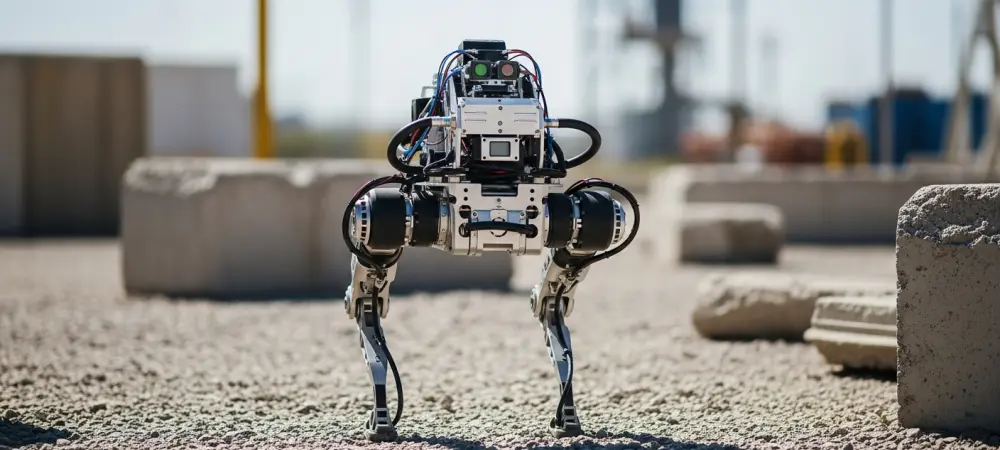
The cinematic dream of bipedal machines marching across devastated landscapes has finally crossed the threshold from science fiction into the cold reality of national defense budgets. This transition signals a fundamental shift in how modern wars are fought, moving toward a doctrine where technology takes the lead. As global powers adopt a strategy where machines confront other machines, the emergence of humanoid robotics represents the next frontier in reducing human risk on the frontlines while redefining what infantry is capable of achieving. This analysis explores Ukraine’s pioneering state-funded initiatives, the performance gap between current tracked units and new bipedal prototypes, and the long-term strategic implications of integrating humanoid machines into high-stakes combat environments.
The Current Landscape of Military Robotics Innovation
National Funding and Strategic Procurement Initiatives
Ukraine’s Brave1 platform recently took a historic step by officially categorizing humanoid robots as a top procurement priority. This strategic move includes the introduction of breakthrough grants exceeding 100 million hryvnias, roughly equivalent to $2.4 million, to incentivize domestic innovation. While humanoid technology remains in its early stages, simpler ground robots have already demonstrated incredible utility, conducting over 66,000 successful missions in the current year. This reliance on unmanned systems highlights a growing trend toward automated warfare. Ukraine is positioning itself as a defense-specific hub, aiming to compete with commercial humanoid advancements from the United States and China by focusing specifically on the rigors of the battlefield.
Real-World Applications and Current Field Tests
Currently, the San Francisco-built Phantom MK-1 remains the primary humanoid robot to undergo rigorous combat testing, offering invaluable data on bipedal locomotion in active zones. However, the immediate reality of robotic warfare still favors practical, “Wall-E” style wheeled or tracked units. These simpler systems recently achieved a historic milestone by capturing a fortified enemy position through coordinated robotic maneuvers without direct human infantry involvement. Despite the success of tracked platforms, developers are looking ahead to how humanoid units might bridge the gap between heavy machinery and delicate human tasks. Their potential lies in navigating complex trench systems and urban environments that remain largely inaccessible to traditional drones or heavy armored units.
Industry Perspectives on Technical Feasibility and Battlefield Utility
The Visionary Stance: Silicon Replacing Soldiers
Defense leaders such as Mykhailo Fedorov emphasize that the ultimate goal is a strategic evolution where silicon and steel replace human lives in high-risk zones. This vision prioritizes the preservation of personnel, even if the current technical hurdles seem daunting to modern engineers. The transition to a “technology fights technology” model requires a shift in military thinking, viewing robots not just as tools, but as primary combatants capable of holding ground. Moreover, the psychological impact of deploying autonomous bipedal units could alter the landscape of deterrence, forcing adversaries to reconsider the cost of engagement against a tireless, mechanical force.
The Engineering Reality: Payload and Endurance Gaps
Despite this optimism, industry experts point to a significant performance gap that prevents immediate widespread adoption. The Phantom MK-1, for instance, possesses a limited 20-kilogram payload capacity and a battery life of only two hours, which falls far short of the twenty-four-hour endurance required for standard infantry operations. Furthermore, many current prototypes lack the necessary waterproofing and ruggedization to survive the mud, dust, and rain of a real battlefield. Thought leaders suggest that for these machines to be effective, science-fiction aesthetics must be abandoned in favor of battlefield-hardened engineering that prioritizes resilience over form.
The Strategic Future: From Trench Warfare to Autonomous Bipedal Defense
Long-Term Evolution: Adapting Commercial Robotics
While tracked drones act as the current workhorses of the military, the investment in humanoids represents a long-term play to adapt complex commercial robotics for the specific demands of trench warfare. As global shipments of non-combat humanoids rise in the commercial sector, the defense industry will likely pivot to militarizing these existing platforms. This transition will focus on improving power density and environmental resilience to ensure that bipedal machines can function in the same environments as the soldiers they are meant to replace.
The Post-Human Battlefield: High-Dexterity Autonomy
The future trajectory suggests a dual-track development where specialized tracked units continue to handle logistics and heavy fire support, while humanoid units evolve to take over high-dexterity tasks. These tasks include clearing buildings, disarming explosives, and providing medical assistance in areas too dangerous for human medics. This post-human battlefield will require autonomous systems that can make split-second decisions, turning the humanoid robot into a versatile asset that extends the reach of a commander without risking a single life.
Navigating the Frontier of Bipedal Defense
The Brave1 initiative established a historic shift in how military procurement functioned, as it prioritized humanoid innovation despite the obvious limitations in battery life and payload capacity. This commitment demonstrated that the transition from simple robotic units to complex bipedal defenders was viewed as a marathon rather than a sprint. Stakeholders recognized that substantial capital and iterative testing in unforgiving environments were the only ways to bridge the gap between prototypes and functional soldiers. The decision to invest in these autonomous systems confirmed that the future of defense resided in technology that was ready to cross the line of fire first. Moving forward, the focus shifted toward modular designs that allowed for rapid field repairs and the integration of more efficient solid-state batteries to meet endurance needs.