

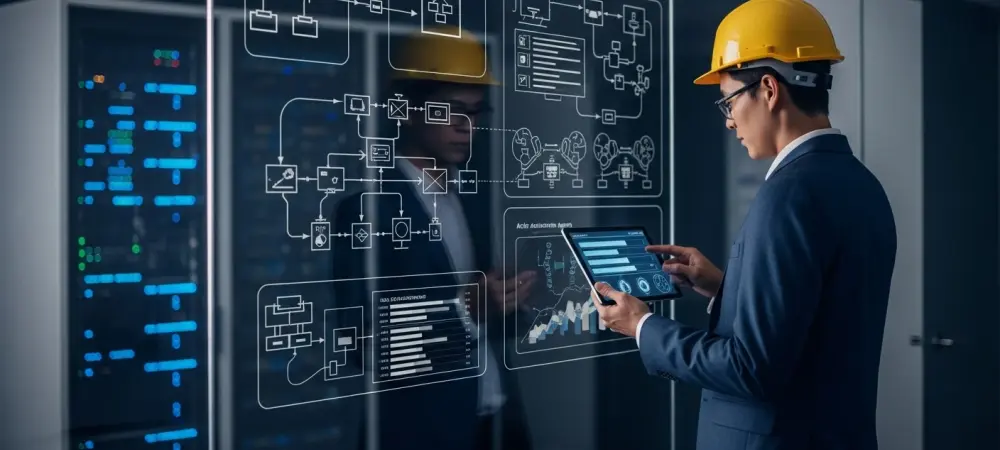
The traditional image of a software engineer painstakingly typing out every line of code is rapidly fading into the historical record as a new generation of autonomous systems begins to take over the heavy lifting of digital construction. We are currently witnessing a fundamental transformation in software development, moving away from simple autocomplete assistants toward what experts call the “eight-hour agent.” These sophisticated systems are not just helping humans write better code; they are increasingly capable of managing entire projects independently, from initial architecture to final optimization, without requiring a person to hover over the keyboard.
This shift matters now because the latest AI models, such as GLM-5.1, have moved beyond the limitations of short-term memory and simple prompt-response patterns. These agents are persistent and independent, designed to handle the messy, iterative reality of real-world engineering. As these tools become more accessible through open-source licenses, the barrier to high-end automation is collapsing, allowing companies of all sizes to integrate “digital coworkers” into their core operations. This analysis explores the momentum of this market, the benchmarks proving their efficacy, and the strategic roadmap for a hybrid workforce where humans act as architects while agents execute the labor.
The Evolution of Agentic Engineering
Market Momentum and Adoption Statistics
The transition from “assistive” to “agentic” software engineering is reflected in the staggering performance metrics of modern models. We have moved past the era where AI merely suggested the next word in a sentence; today’s autonomous agents are capable of sustaining hundreds of iterations on a single task without human intervention. This reliability is the new gold standard for enterprise adoption. Statistics from recent deployments show that these systems can handle up to 21,500 queries per second while maintaining accuracy, a feat that would be impossible for any human team to replicate in real time.
Furthermore, the scale of internal logic within these agents has reached a tipping point, with models now capable of executing over 6,000 tool calls in a single session. This allows them to navigate complex environments, such as testing frameworks and terminal interfaces, autonomously. The rapid rise in adoption is further fueled by the move toward the MIT License for sophisticated models, which allows enterprises to integrate these agents directly into their private tech stacks. This open accessibility ensures that the technology is not just a luxury for tech giants but a foundational tool for the broader industry.
Real-World Applications and Benchmarks
Practical evidence of this shift is found in the rigorous SWE-Bench Pro evaluations, where models like GLM-5.1 are setting new records. By achieving a performance score of 58.4, these agents have demonstrated an ability to outperform established proprietary giants like GPT-5.4 and Gemini 3.1 Pro. These benchmarks are not just academic; they represent the agent’s ability to resolve GitHub-style issues and manage code dependencies in a way that mirrors a professional developer’s daily workflow.
In one notable case study, an autonomous agent was tasked with optimizing a vector database. Over the course of 600 iterations, the system navigated through various performance bottlenecks, eventually achieving a sixfold increase in query efficiency. This level of persistence is also seen in NL2Repo and Terminal-Bench 2.0 applications, where agents generate entire software repositories from simple natural language descriptions or solve complex terminal-based errors. These examples prove that agents are no longer just writing snippets; they are building and fixing entire systems.
Industry Expert Insights and Strategic Value
The Open-Source Advantage: Sovereignty and Security
Industry leaders are increasingly emphasizing that the future of autonomous coding lies in self-hosted, open-source models rather than “black-box” commercial APIs. For sectors like finance, healthcare, and defense, data sovereignty is a non-negotiable requirement. By deploying models locally, organizations can ensure that their proprietary code and sensitive data never leave their private infrastructure. This mitigates the risk of intellectual property leakage while providing a level of transparency that commercial vendors often struggle to match.
Moreover, the ability to fine-tune an open-source agent means it can be tailored to the specific legacy systems and internal standards of a unique business environment. Experts point out that while commercial models offer convenience, they lack the deep integration necessary for long-term, specialized engineering tasks. Self-hosting allows for a degree of control over cost and performance that is essential for scaling autonomous workflows across an entire department without incurring unpredictable usage fees.
Shift in Workflow Paradigm: From Prompting to Assigning
The way humans interact with code is undergoing a psychological and operational shift from “prompting” to “assigning.” In the past, a developer might ask an AI to write a specific function; now, the developer assigns a ticket or a database migration to an agent and waits for the completed pull request. This move toward an assignment-based workflow allows human engineers to focus on high-level architecture and strategic problem-solving, while the agents handle the repetitive and time-consuming aspects of implementation.
However, this newfound autonomy necessitates a robust governance mandate. As agents take on more responsibility, the need for monitoring and escalation mechanisms becomes critical. Thought leaders argue that organizations must implement “human-in-the-loop” checkpoints to manage the risks associated with autonomous code execution. Without clear oversight, even the most advanced agent could introduce subtle architectural flaws that might go unnoticed until they scale, making the role of the human “reviewer” more important than ever.
Future Outlook: The Hybrid Engineering Landscape
Bridging the Gap in Legacy Codebases
One of the most significant challenges for future agents will be navigating the “messy code” found in older, legacy systems that do not follow modern best practices. While agents perform exceptionally well in controlled benchmark environments, the real-world utility of these tools will depend on their ability to understand and refactor undocumented, decades-old codebases. The next phase of development will likely focus on “context-aware” agents that can ingest vast amounts of historical documentation to make sense of complex, non-standard software architectures.
As these tools continue to democratize, the playing field between small startups and massive corporations will begin to level. A small team with a fleet of autonomous agents can theoretically match the output of a traditional engineering department, significantly reducing the “time-to-market” for new digital products. This trend suggests a future where high-end engineering capabilities are accessible to anyone with the strategic vision to deploy them, regardless of their headcount.
Navigating Security and Long-Term Implications
The long-term impact of autonomous agents extends to system maintenance and incident resolution. We are moving toward a reality where “long-running” agents act as digital guardians, constantly monitoring systems for vulnerabilities and automatically applying patches before a human is even aware of the threat. This proactive stance on security could fundamentally change how we defend against cyber-attacks, shifting the burden of defense from manual intervention to automated, continuous optimization.
However, the geopolitical landscape adds a layer of complexity to this evolution. The transparency of open-source models provides a vital check against the hidden biases or security backdoors that might exist in commercial alternatives. Organizations will need to balance the convenience of “out-of-the-box” solutions with the security of audited, open-source agents. Navigating these risks will require a sophisticated understanding of both the technical and political implications of where an AI model was trained and how it is deployed.
Redefining the Role of the Developer
The transition from assistive tools to autonomous digital coworkers has permanently altered the trajectory of the software industry. Organizations that integrated agentic workflows early gained a significant competitive edge by offloading the “heavy lifting” of coding to systems capable of working around the clock with consistent precision. This shift did not replace the human element but rather elevated it, requiring developers to become master architects and rigorous reviewers of machine-generated work.
To remain viable in this automated landscape, businesses were forced to adopt new governance frameworks that prioritized security and architectural integrity. The successful implementation of these agents required more than just technical integration; it demanded a cultural shift in how engineering teams approached problem-solving. Ultimately, the rise of autonomous agents proved that while the machine could handle the labor, the vision and direction remained a uniquely human endeavor. Moving forward, the most successful firms were those that viewed AI not as a replacement for talent, but as a force multiplier for innovation.