

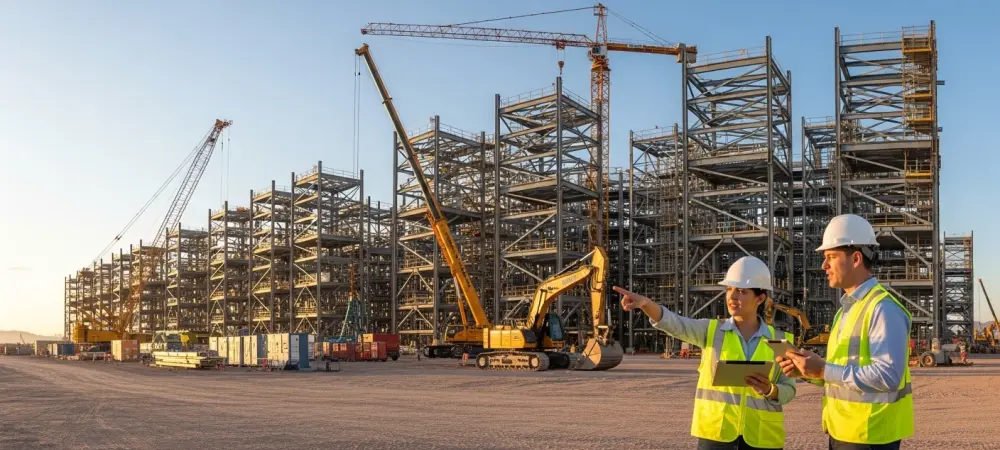
The ongoing transformation of the American industrial landscape has moved far beyond the quiet hallways of Silicon Valley software labs to become a nationwide movement defined by massive construction projects and heavy infrastructure. This monumental shift marks the transition of artificial intelligence from a digital novelty into a primary engine of national capital expenditure, fundamentally altering the trajectory of the broader economy. As billions of dollars flow into the physical foundations of the next technological age, the effects are felt across the power grid, the labor market, and the very fabric of domestic manufacturing. This analysis explores the current state of this build-out, the metrics defining its success, and the strategic shifts occurring within the professional and economic spheres as the United States solidifies its position as a global leader in the high-tech industrial revolution.
The Infrastructure Pivot: Data, Metrics, and Material Growth
Statistical Evidence of a Structural Economic Shift
The sheer scale of financial commitment from technology giants like Microsoft, Meta, Amazon, and Alphabet serves as the most visible indicator of this new economic reality. Quarterly reports now consistently showcase a surge in capital spending, with a substantial portion of these funds directed toward domestic construction and specialized hardware procurement. Moreover, government data on manufacturing construction spending reveals an unprecedented spike, largely driven by the demand for sophisticated facilities capable of housing advanced computing clusters. Financial institutions, including Goldman Sachs and JP Morgan, have highlighted that this integration of generative technology could potentially boost global GDP by approximately 7 percent, provided that the physical capacity keeps pace with software innovation.
Furthermore, the rise in private investment has been mirrored by a strategic realignment of corporate balance sheets, where long-term infrastructure assets are now prioritized over short-term digital marketing spends. This structural change indicates that major players view the current expansion not as a temporary bubble but as a necessary foundation for future revenue streams. Consequently, the heavy machinery and semiconductor sectors have experienced a sustained period of growth, as the demand for the material components of the digital world continues to outstrip supply.
The Physical Backbone: Real-World Implementation and Regional Hubs
The “bricks and mortar” reality of the artificial intelligence boom is most evident in the rapid expansion of specialized data centers and high-speed fiber-optic networks. These facilities are no longer simple warehouses for servers; they are highly engineered environments that require advanced cooling systems and massive amounts of land. This has created a ripple effect across the energy sector, as the sudden demand for electricity has forced utility companies to accelerate the modernization of the national grid and explore diverse generation sources. The pressure on the energy infrastructure has turned power availability into a primary competitive advantage for regional development.
In contrast to previous tech booms that remained concentrated in coastal cities, the current movement has spurred the growth of strategic hubs in states such as Virginia, Texas, and Arizona. These regions have become essential to the national strategy because they offer a combination of available land, robust power infrastructure, and a growing pool of skilled technical labor. The localized economic benefits are significant, as these projects bring high-paying jobs and long-term tax revenue to areas that were previously overlooked by the technology sector. This geographical diversification is helping to stabilize the national economy by distributing the benefits of high-growth industries across a broader area.
Strategic Perspectives: Expert Insights on the AI Value Proposition
Economists and industry leaders increasingly view the adoption of advanced computing tools as a fundamental change in business conduct rather than a simple software update. Expert consensus suggests that the primary value proposition lies in the ability of these systems to act as a supplementary tool for the workforce. By automating mundane administrative tasks and streamlining data processing, the technology allows professionals to focus on high-value, strategic work that requires human intuition and complex problem-solving. This shift is expected to mitigate some of the labor shortages in critical sectors by making each individual worker more productive and effective.
Market analysts also use current investment levels as a critical bellwether for future economic strength and currency stability. The consistent flow of capital into American technology projects has reinforced the global standing of the US Dollar, as international investors seek exposure to the most advanced industrial ecosystem. Furthermore, the focus on sustainable implementation is seen as a sign of maturity in the market. Rather than chasing every new trend, businesses are now focusing on how to integrate these tools into their core operations to achieve tangible efficiency gains and maintain a competitive edge in a rapidly evolving global marketplace.
Navigating the Horizon: Future Developments and Broader Implications
As the initial phase of heavy infrastructure construction matures, the focus is expected to shift toward a long-term productivity phase where the true value of these investments will be realized. However, this transition will likely face challenges, including the necessity for robust governance frameworks and enhanced data security measures. The ability of the national legal and regulatory systems to keep pace with technological advancement will be a deciding factor in the sustainability of the current boom. Regulatory compliance will become a major focal point for organizations as they navigate the complexities of privacy and intellectual property in an automated world.
The dual nature of the future outlook presents both opportunities for unprecedented workplace efficiency and risks associated with such massive capital outlays. While the potential for growth is immense, the ongoing demand for energy and resources requires a balanced approach to ensure that the expansion does not overwhelm the national infrastructure. Moreover, the integration of these technologies is likely to redefine the economic profile of the Sun Belt and other emerging tech regions, potentially shifting the balance of economic power within the country. Staying ahead of these trends will require a continued focus on both technological innovation and the human element of the labor market.
Synthesis: The Permanent Shift in the American Economic DNA
The transition from a niche technological race to a comprehensive industrial movement redefined the fundamental nature of the American economy. This period marked the moment when digital innovation was fully integrated into the physical world, creating a hybrid landscape where data and energy were the primary drivers of wealth. The success of this era depended on the ability to convert massive infrastructure investments into broad-based productivity gains that benefited more than just the technology sector. By focusing on the long-term utility of these systems, the nation secured a new foundation for growth that was both resilient and forward-looking. Actionable steps taken during this shift included the aggressive modernization of the energy grid and the implementation of large-scale workforce retraining programs. These initiatives ensured that the benefits of the investment boom were felt across all levels of society and that the infrastructure remained sustainable. The focus on regional hubs also provided a blueprint for how future industrial movements could be managed to maximize geographical equity. Ultimately, the artificial intelligence boom proved to be the defining narrative of the era, leaving a lasting legacy on the national economic landscape and setting the stage for a new century of industrial and technological leadership.