

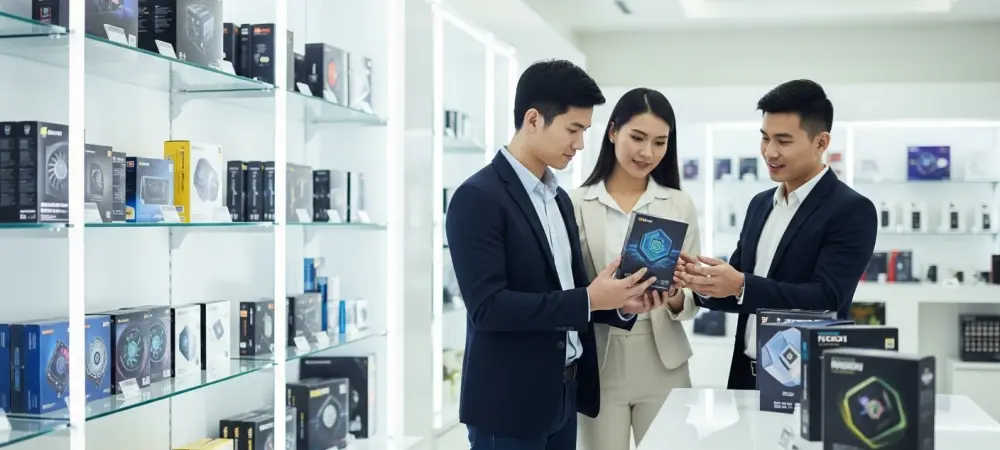
The landscape of consumer computing underwent a seismic shift recently as AMD secured an unprecedented clean sweep of the entire top fifteen spots on Amazon’s US Best-Sellers list for central processing units. This achievement reflects more than just a temporary spike in sales; it signals a fundamental realignment in the DIY PC market. Capturing approximately 45% of the Steam Hardware Survey further solidifies this position, proving that enthusiasts and mainstream users alike are moving away from historical brand loyalty. This analysis examines the underlying sales data, product strategies, and industry commentary that define this transition. The narrative of this market shift is defined by a two-pronged strategy of aggressive innovation and remarkable platform longevity. By maintaining presence in both the high-end and budget sectors, the brand has effectively cornered the market for custom builders. As the following exploration reveals, this dominance is not merely a result of a single product launch but the culmination of a decade-long architectural pivot.
Quantifying AMD’s Surge in the Retail Sector
Analyzing Market Share Statistics and Amazon Sales Rankings
Holding every single one of the top fifteen rankings on a major retail platform like Amazon is a statistical anomaly that highlights the current intensity of consumer preference. The Ryzen 7 9800X3D, in particular, has emerged as a high-velocity benchmark for high-end demand, often selling out immediately upon restocking due to its unmatched gaming performance. This retail velocity is mirrored in digital metrics, where the brand’s steady climb to a 45% share in the Steam Hardware Survey suggests a broad-based adoption.
The data indicates that consumer behavior is shifting toward a preference for specialized hardware over general-purpose processors. While previous years saw a more balanced distribution between competing brands, the current concentration in the top rankings shows that the enthusiast segment is now almost entirely unified. This momentum suggests that the balance of power in retail hardware has moved decisively toward a single provider.
Real-World Application: The Dual-Platform Strategy
The dominance in the retail sector is uniquely built on a dual-platform strategy that bridges the gap between different consumer generations. While many competitors force users to upgrade entire motherboards frequently, the longevity of the AM4 platform allows the Ryzen 5 5500 and 5600 to remain incredibly popular in the budget segment. These legacy chips continue to outsell newer, more expensive alternatives by offering sufficient performance for everyday tasks and entry-level gaming. In contrast, the introduction of 3D V-Cache technology in “X3D” variants has established a gold standard for specialized gaming performance at the high end. These processors consistently outrank their standard counterparts because they offer tangible benefits in frame rates that users can see in real-world applications. This multi-tiered approach highlights a significant struggle for the Intel “Arrow Lake Refresh,” which has found it difficult to maintain a consistent presence in the best-seller charts.
Expert Perspectives on Competitive Market Dynamics
Sasa Marinkovic, AMD’s Senior Director of Marketing, recently noted that retail visibility is now at an all-time high, driven by the visible presence of the brand across all consumer touchpoints. This visibility is not accidental; it is the result of a concerted effort to align product releases with the actual needs of the DIY community. Technical experts often point to the “price-to-performance” ratio as the primary engine behind this winning streak, noting that shoppers are more informed than ever before.
In contrast, professional opinions regarding Intel suggest a period of declining momentum, largely due to technical hurdles and power efficiency challenges facing their Core Ultra series. The industry consensus reinforces the idea that performance leads, but value and stability secure the sale. As competitors struggle to match the thermal efficiency of the Ryzen series, the market continues to reward the brand that delivers the most consistent user experience.
Future Outlook: Sustaining Momentum in a Shifting Industry
Sustaining this level of success requires a delicate balance between supporting the aging AM4 architecture and encouraging a necessary migration to the newer AM5 platform. While legacy support earned immense goodwill, consumer resistance to higher price points, as seen with the Ryzen 9 9950X3D, suggests that there are limits to what even the most dedicated enthusiasts will pay. The transition must be handled carefully to avoid alienating the budget-conscious builders who formed the foundation of this growth.
Furthermore, a near-monopoly in the DIY space carries the inherent risk of stagnation or eventual price inflation, which might open a door for a strategic pivot from Intel. If the competition can resolve their manufacturing hurdles and regain their footing in the mid-range sector, the current dominance could be challenged. The industry must now watch how these pressures influence the next generation of silicon design and whether the current leader can maintain its aggressive innovation pace.
Conclusion: A New Era for Consumer Computing
The success of AMD was rooted in a combination of high-end innovation and strategic legacy support that catered to every segment of the market. This period served as a transformative moment in hardware history, where technical superiority met accessible pricing to redefine builder expectations across the globe. Moving forward, the industry began prioritizing efficiency and platform longevity over raw clock speeds, a trend that fundamentally changed how products were marketed.
This shift ensured that competitive pressure remained high, forcing all manufacturers to reconsider how they engaged with a more informed and demanding consumer base. Builders recognized that the era of annual socket changes had effectively ended, and manufacturers adapted by focusing on long-term value propositions. These changes ultimately fostered a more sustainable hardware ecosystem that valued the user’s investment as much as the raw performance of the silicon.