

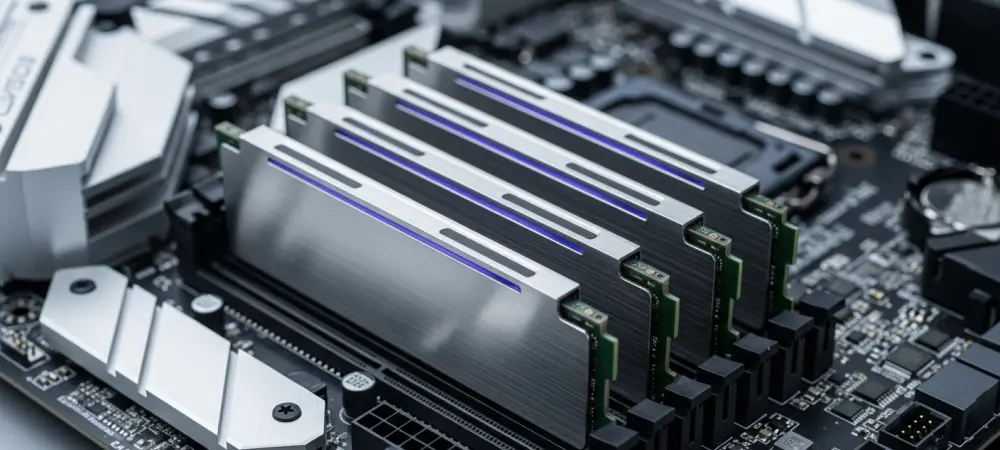
The high-stakes landscape of modern desktop computing has undergone a radical transformation as the arduous tradition of manual memory overclocking gives way to sophisticated, manufacturer-validated automation protocols that redefine the relationship between hardware stability and peak system responsiveness. The pursuit of peak performance is shifting from a grinding manual labor in the BIOS to a more refined era of precision-tuned hardware. Enthusiasts who once spent weekends adjusting hexadecimal values and running exhaustive stress tests now find themselves at the threshold of a turnkey revolution. This shift is epitomized by the arrival of the AMD EXPO Ultra Low Latency standard, which represents a critical milestone in memory technology designed to bridge the gap between casual users and hardcore overclockers by standardizing aggressive subtiming profiles that were previously the exclusive domain of professional tuners.
By leveraging the EXPO 1.2 update, the hardware industry is moving toward a model where peak efficiency is guaranteed rather than discovered through trial and error. This analysis investigates the technical mechanics of the latest memory standards, evaluates how these advancements interact with diverse Ryzen architectures, and assesses the economic feasibility of maintaining such a high-end trend in an increasingly volatile global market. The transition suggests a future where the “silicon lottery” is no longer a barrier to entry for mainstream consumers seeking professional-grade system throughput.
The Evolution of Memory Optimization Standards
The trajectory of the memory market has moved decisively away from the simplistic chase for raw MegaTransfers per second. In the early stages of DDR5 development, the industry focus remained firmly on reaching higher clock speeds, often at the expense of internal efficiency and thermal stability. Recent adoption trends indicate a pivot toward tightening internal delays to improve system responsiveness. Modern applications, particularly those involving complex physics simulations and high-refresh-rate gaming, are increasingly sensitive to the latency between CPU requests and memory responses. As a result, the market is seeing a rise in “Ultra Low Latency” (ULL) profiles that prioritize the reduction of nanosecond-level delays over the marketing appeal of inflated frequency numbers. Adoption statistics for the EXPO 1.2 standard reveal an increasing reliance on “binned” silicon, where manufacturers pre-validate high-quality integrated circuits to guarantee stability at aggressive settings. This shift is largely a response to the inherent variability of the DDR5 manufacturing process. By selecting the highest-performing chips—frequently referred to as A-die or M-die in enthusiast circles—memory vendors can offer profiles that push the boundaries of what is possible without risking the system crashes that typically accompany manual tuning. This trend effectively democratizes extreme performance, allowing users to achieve results that once required specialized knowledge and significant time investments.
The growth in the DDR5 sector highlights a move toward automated profiles like ULL to eliminate the traditional risks associated with the silicon lottery. In the past, achieving ultra-low latency was a matter of luck and persistence, as two identical kits of RAM could exhibit vastly different stability characteristics. Today, the integration of these profiles into the standard motherboard ecosystem ensures that the hardware can communicate its optimal capabilities to the firmware with surgical precision. This evolution reflects a broader trend in consumer electronics where complexity is hidden behind a layer of intelligent automation, ensuring that the hardware operates at its true potential immediately upon installation.
Part 1: Adoption Trends and the Shift Toward Subtiming Precision
A significant aspect of the current memory evolution is the focus on subtiming precision rather than just primary CAS latency. While primary timings provide a general overview of memory speed, the hundreds of subtimings that govern row-to-row delays and refresh intervals are where the most substantial performance gains are currently found. Industry data shows that by optimizing parameters such as tREFI (Refresh Interval) and tRC (Row Cycle Time), manufacturers can extract significantly more performance from existing silicon than by simply increasing the voltage to achieve a higher clock speed. This granular approach to tuning has become the new benchmark for high-performance DDR5 kits.
The move toward these aggressive profiles is also driven by the increasing complexity of modern processor architectures. For instance, the Zen 5 architecture from AMD features a highly sophisticated memory controller that thrives when internal delays are minimized. The trend toward ULL profiles is a direct response to the architectural needs of these processors, ensuring that the CPU is never left waiting for data to be retrieved from the system RAM. This synergy between the processor and the memory represents a more holistic approach to system design, where the individual components are tuned to complement one another’s strengths and weaknesses.
Furthermore, the standardization of these profiles has led to a more predictable secondary market for PC components. When a memory kit is sold under the ULL banner, it carries a level of prestige and a performance guarantee that standard kits lack. This has created a new “premium enthusiast” segment within the market, where consumers are willing to pay a validation premium to avoid the headaches of manual troubleshooting. The shift toward precision-tuned hardware is not just a technical trend but a cultural one, as the community moves away from the “overclocking for sport” mindset and toward a “performance for utility” philosophy.
Part 2: Implementation in High-Performance Consumer Hardware
Practical deployment of these sophisticated memory profiles is most visible in notable collaborations between industry leaders. A prime example is the partnership between AMD and G.Skill for the Trident Z5 NeoX series, which serves as a flagship for the ULL movement. These kits are specifically designed to leverage the latest EXPO 1.2 specifications, featuring hand-screened components that are capable of maintaining stability at extremely tight timings. By providing a pre-validated environment, these collaborations allow users to achieve top-tier performance with a single toggle in the BIOS, bypasssing the need for manual voltage adjustments or timing entries.
Case studies involving the MSI X870E motherboard platform demonstrate how essential modern firmware updates are for facilitating these advanced profiles. The motherboard serves as the vital link between the memory and the CPU, and without robust BIOS support, even the highest-quality RAM would be unable to reach its full potential. Manufacturers have invested heavily in ensuring that their board designs can handle the specific signal integrity requirements of ultra-low latency DDR5. This involves more than just software; it requires physical optimizations in the PCB trace lengths and power delivery systems to ensure that the aggressive ULL profiles do not introduce electrical noise or data corruption.
Real-world benchmarks show that this technology is being applied to mitigate significant bottlenecks in simulation-heavy games and ray-traced environments. In titles that demand high levels of CPU-to-memory communication, such as complex grand strategy games or open-world simulations with high NPC counts, the transition to ULL memory can yield double-digit improvements in average frame rates. More importantly, the technology significantly improves 1% low frame rates, which are the primary indicator of a smooth, stutter-free experience. By tightening the subtimings, the system can more effectively handle the bursty nature of modern game engine workloads, providing a level of fluidity that was previously unattainable on standard memory profiles.
Expert Consensus on Automated Memory Architectures
Industry specialists and hardware engineers have reached a consensus that for modern architectures, specifically those like Zen 5, memory subtimings now carry more weight than primary latency settings. The technical reasoning lies in the way the memory controller manages the flow of data. While the CAS latency is the most marketed figure, it only represents one part of the access cycle. Experts point out that parameters like tREFI, which dictates how often the memory must pause to refresh its cells, have a more profound impact on the total available bandwidth and effective latency. By increasing the refresh interval in a controlled, validated environment, ULL profiles allow the memory to spend more time processing data and less time on internal maintenance.
Thought leaders in the field of hardware engineering also emphasize that while technologies like 3D V-Cache mitigate much of the reliance on fast RAM, ULL remains vital for standard processors to reach their full potential. The massive L3 cache found in specialized gaming CPUs acts as a buffer that can hide slow memory performance, but standard processors do not have this luxury. Experts suggest that ULL is the key to closing the performance gap between standard processors and their more expensive, cache-heavy counterparts.
Professional tuners and extreme overclockers have noted that the democratization of these settings poses a challenge to the traditional niche of manual overclocking. By offering roughly 95% of the achievable performance with none of the associated stability risks, EXPO ULL has effectively replaced the need for manual tuning for the vast majority of enthusiasts. While the final 5% of performance can still be found through hours of painstaking manual adjustments, the risk-to-reward ratio has shifted significantly. The consensus is that automated memory architectures have matured to a point where they can provide a professional-grade experience to anyone with the right hardware, marking a fundamental shift in the enthusiast landscape.
The Technological Trajectory and Economic Landscape
As memory controllers become more intelligent, they will likely gain the ability to adjust subtimings in real-time based on the specific workload and the thermal environment of the system. This would represent a transition from static overclocking profiles to dynamic, adaptive optimization. Such a trajectory suggests that the relationship between the CPU and RAM will continue to tighten, eventually leading to systems that can self-optimize for any given task without any user intervention at all.
However, this upward technological trend faces significant challenges from global DRAM market volatility. The production of high-quality, binned silicon is subject to the same supply chain pressures and raw material costs that affect the broader semiconductor industry. Rising component costs may keep ultra-low latency kits relegated to the premium enthusiast bracket for the foreseeable future. There is a persistent concern that the “validation premium” charged by manufacturers for these pre-tuned kits could widen the performance gap between different socioeconomic tiers of consumers. If the price of high-end DDR5 continues to fluctuate, the mainstream adoption of ULL standards may be slower than the technical community anticipates.
Broader implications of this trend include a permanent shift in consumer expectations. As “plug-and-play” performance becomes the baseline for even the most complex hardware optimizations, the tolerance for difficult-to-tune or unstable hardware will diminish. This shift will force manufacturers to prioritize quality control and validation even more heavily in their product development cycles. The long-term evolution of platforms like AM5 suggests that AMD and its partners will continue to refine these standards to maintain a competitive edge. By focusing on the maturity of the platform and the ease of achieving peak performance, the industry is setting a new standard for what a high-end computing experience should look like.
Conclusion: Balancing Peak Performance and Economic Reality
The implementation of EXPO Ultra Low Latency standards represented a pivotal shift in how the PC industry approached memory performance. It was observed that these profiles delivered a measurable 10% to 15% performance uplift in CPU-limited scenarios while simultaneously simplifying the user experience by removing the complexities of manual BIOS adjustments. The technology proved particularly effective for standard Ryzen processors, where the lack of massive onboard cache made system memory latency a primary bottleneck. By standardizing aggressive subtimings and validating them through rigorous manufacturing processes, the industry successfully closed the gap between factory settings and enthusiast-level tuning, allowing a wider range of users to access the full potential of their hardware.
The technical achievements of the EXPO 1.2 update were significant, yet the value proposition remained heavily influenced by the fluctuating market prices for high-end DDR5 components. While the performance gains were undeniable, the economic reality of the 2026 market meant that these premium kits often carried a price tag that challenged the budget of many builders. It became clear that while the hardware was capable of extraordinary feats, the decision to upgrade was often a matter of timing the market correctly rather than purely a question of technical necessity. The emergence of ULL as a standard highlighted the ongoing tension between the desire for peak performance and the constraints of global supply chains and manufacturing costs.
Moving forward, the focus should remain on monitoring the stabilization of the DRAM market before committing to premium-tier memory upgrades. For those seeking the absolute peak of system responsiveness, the ULL trend offered a reliable and validated path, but for the average consumer, waiting for these technologies to trickle down into more affordable segments proved to be a prudent strategy. The industry showed a clear path toward a future where high-performance computing is defined by intelligent automation and precision engineering. As these standards continue to mature, the priority for developers and consumers alike will be to ensure that these advancements remain accessible, ensuring that the benefits of low-latency computing are not limited to the highest end of the market. High-performance memory has transitioned from a niche hobby into a standardized utility, and the success of this transition will depend on the continued balance between technical innovation and economic accessibility.
Technical Performance Trajectory Summary
The analytical data gathered during the transition toward the EXPO 1.2 standard confirmed that memory subtimings had become the most critical factor in maximizing the performance of modern desktop architectures. While raw frequency remained a secondary consideration, the tightening of internal delays provided a level of system fluidity that was previously impossible without manual intervention. As the market continues to evolve, the integration of these profiles will likely become the baseline for all high-performance computing platforms. However, the immediate adoption of these premium kits will remain a luxury for those who prioritize the absolute leading edge of technology, while the rest of the market waits for these innovations to become the standard across all price points. The era of manual tuning has not ended, but it has been successfully augmented by a new age of professional-grade automation.