

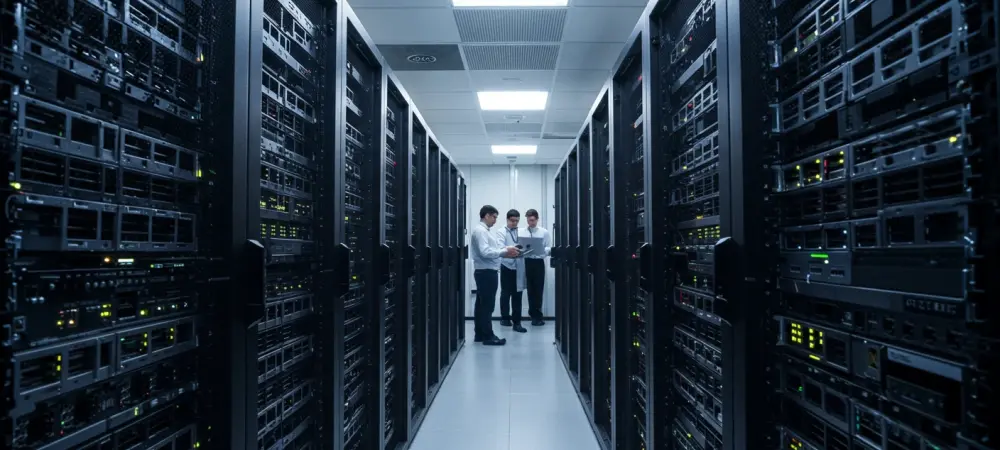
Artificial Intelligence (AI) is reshaping industries at an unprecedented pace, transforming business operations and consumer interactions. At the heart of this transformation is AI processing in data centers, which has become vital as organizations strive to leverage big data and machine learning capabilities. Modern data centers are increasingly adopting AI to manage the immense amount of data generated, streamline operations, and foster innovative solutions across various sectors. This analysis explores the market dynamics and growth trends, insights from industry experts, and future prospects in AI processing within data centers.
Market Dynamics and Growth Trends
Data and Adoption Metrics
The integration of AI processing in data centers has seen remarkable growth, as demonstrated by several industry reports. Research suggests that AI workloads increasingly drive infrastructure investments, with AI server deployments expected to constitute a significant portion of data center resources. Reports indicate a surge in market share devoted to AI-optimized servers, projected to grow substantially in the coming years. This trend is fueled by the exponential rise in data generation and the need for advanced analytics to process such vast datasets efficiently.
Real-World Applications and Innovations
AI processing is not just a theoretical concept but a palpable reality in many data centers today. For instance, tech giants and innovative startups alike are employing AI to optimize energy usage, monitor system health, and predict hardware failures. Companies like Google and Microsoft have set benchmarks by using AI for effective cooling and energy management, significantly reducing their carbon footprints and operating costs. Such developments illustrate the widespread adoption and pioneering advancements rapidly transforming data centers into more intelligent and efficient infrastructures.
Expert Insights and Industry Perspectives
Experts in the field emphasize AI’s transformative potential in revolutionizing data center operations. They highlight AI’s ability to handle workloads that traditional architectures find challenging, thus improving overall efficiency and performance. However, industry leaders also point out challenges such as data security, ethical considerations, and the need for specialized skill sets to manage these sophisticated technologies. Yet, there is a collective belief that AI will significantly shape the future of data centers by driving innovation and enhancing competitive advantages for businesses.
Future Prospects and Implications
Speculation about the future role of AI processing in data centers is rampant, with many forecasting an evolving landscape marked by more intelligent and autonomous systems. The anticipated benefits include enhanced processing power, reduced operational costs, and the ability to unlock new market potentials across different industries. However, challenges, such as ensuring data privacy and managing the significant investments required, remain pertinent. The rapid advancement of AI technologies promises not only potential gains but also necessitates careful consideration of possible risks, including ethical and governance issues.
Conclusion and Forward-Looking Statements
This analysis reflects on AI’s profound impact on data centers, showcasing its growing integration and significance in driving data-centered innovations. The findings emphasize AI’s capacity to revolutionize data center operations, pushing boundaries in efficiency and intelligence. The potential future of AI processing in data centers beckons with opportunities to enhance capabilities and redefine industry standards. However, embracing these innovations requires forward-thinking strategies, addressing both the technological advancements and the accompanying challenges to fully benefit from AI-driven data center evolution.