

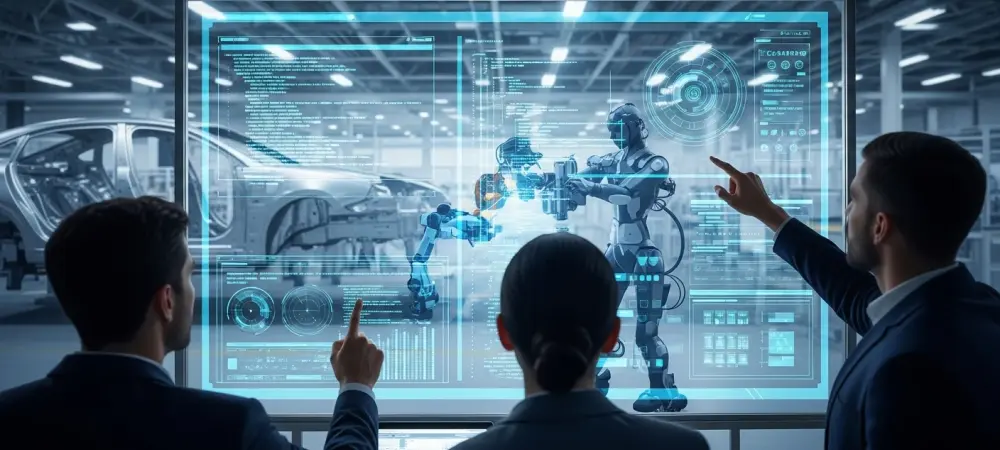
On the polished floors of a Hyundai factory, a new kind of worker is learning the ropes—one made not of flesh and bone, but of circuits, steel, and sophisticated artificial intelligence from Google DeepMind. The sight of Boston Dynamics’ advanced robots, Atlas and Spot, undertaking complex tasks signals a pivotal shift where AI and robotics are no longer separate domains but a deeply integrated force. This trend marks the migration of humanoid robots from isolated research labs into the structured chaos of real-world industrial applications. The partnership between these tech giants offers a compelling glimpse into the future of intelligent automation and its profound market implications.
The Current Landscape: Market Acceleration and Practical Application
The Humanoid Robotics Gold Rush
A technological gold rush is underway in the humanoid robotics sector, characterized by surging investment and fierce competition. An increasing number of companies, particularly in the United States, are now in a high-stakes race to develop the first commercially viable humanoid robot capable of operating in both industrial and, eventually, domestic environments. This competitive pressure is fueling rapid innovation and pushing the boundaries of what is mechanically and computationally possible.
This intense market dynamic underscores the strategic necessity of forming powerful alliances. In a field where expertise in both intricate hardware and advanced AI is paramount, no single company can easily dominate. Consequently, major partnerships are becoming a key strategy for gaining a competitive advantage, pooling resources, and accelerating development timelines to capture a commanding position in this emerging multi-billion-dollar industry.
Case Study: A Factory Trial Forges the Future
The collaboration between Google DeepMind and Boston Dynamics, unfolding within Hyundai’s automotive factories, serves as a landmark case study for this trend. This initiative involves integrating Google’s powerful Gemini Robotics AI model into the operational core of Boston Dynamics’ iconic Atlas and Spot robots. The goal is to move beyond pre-programmed routines and endow the machines with the ability to perceive, reason, and act with greater autonomy.
Choosing an automotive production line for this trial is a calculated and strategic move. As Boston Dynamics’ parent company since 2021, Hyundai provides a controlled yet complex environment. Automotive plants are already highly automated, making them ideal settings to test and deploy sophisticated robotic systems safely and effectively. This real-world crucible is designed to push the robots’ capabilities far beyond what can be achieved in a laboratory setting.
The Brains and Brawn: Expert Collaboration as a Key Driver
The partnership represents a strategic fusion of world-class, specialized expertise. Google DeepMind brings its unparalleled leadership in artificial intelligence and machine learning to the table, providing the “brains” for the operation. In contrast, Boston Dynamics contributes its decades of experience in advanced robotic locomotion, navigation, and hardware engineering—the “brawn.” This synergy is critical for overcoming the immense challenges of creating a truly adaptable humanoid robot.
At the heart of this collaboration is the development of novel visual-language-action models. These sophisticated AI frameworks are designed to enhance a robot’s ability to understand verbal and visual commands, process its surroundings, and translate that understanding into precise physical actions. This collaboration is setting a precedent for the industry, demonstrating that future breakthroughs will likely emerge from a similar model where specialized AI and hardware companies unite to solve problems too complex for any one entity to tackle alone.
The Road Ahead: Future Developments and Broader Implications
The Learning Curve: From Repetition to Adaptation
A central pillar of this trend is the shift from simple, repetitive automation to dynamic, on-the-job learning. The robots deployed in the Hyundai trial are not merely executing a fixed set of instructions; they are expected to improve their skills and efficiency over time through direct experience. This continuous learning model is a game-changer for the field of robotics.
The vast amounts of data gathered during the factory trial will create a powerful feedback loop, directly informing the refinement of Google’s Gemini AI model. Each task performed, whether successful or not, becomes a valuable lesson that enhances the AI’s underlying capabilities. This iterative process is poised to accelerate the evolution of humanoid robots, paving the way for more versatile and intelligent machines that can adapt to a wide array of industries beyond manufacturing.
The Competitive Frontier and Ethical Considerations
The intense race to commercialize humanoid robots carries broad implications, fostering an environment of rapid innovation while also introducing potential risks. On one hand, this competition promises significant benefits, such as enhancing productivity and improving worker safety by delegating dangerous or physically strenuous tasks to machines. This could lead to more resilient supply chains and new efficiencies across the global economy.
However, this forward momentum also brings significant challenges to the forefront. The prospect of widespread job displacement necessitates proactive societal conversations about workforce transitions and education. Moreover, the deployment of highly autonomous systems in the workplace raises critical questions about safety, accountability, and ethics, highlighting an urgent need for new regulatory frameworks to govern this powerful technology.
Conclusion: Redefining the Future of Work
The Google DeepMind and Boston Dynamics partnership crystallized a defining trend: the fusion of advanced AI with sophisticated robotics is no longer a futuristic concept but a present-day reality driving industrial evolution. The analysis showed that the accelerating market competition, coupled with a collaborative model that pairs AI and hardware specialists, has created the perfect conditions for a technological leap forward. This pivotal moment signaled a definitive transition toward a more automated and intelligent future. These developments are not only set to transform the landscape of industrial manufacturing but have also laid the groundwork for the broader integration of humanoid robots into the fabric of society.