

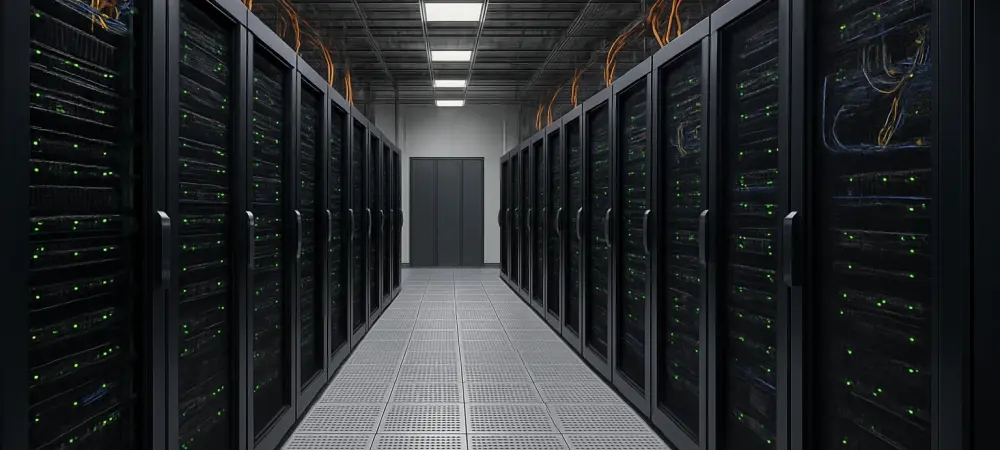
As artificial intelligence reshapes the global landscape with unprecedented speed, the hunger for robust, secure, and energy-efficient data centers has reached a critical peak, pushing industries and governments to rethink infrastructure on a massive scale. Imagine a world where national security, technological innovation, and energy resilience converge in a single groundbreaking project. This is no longer a distant vision but a reality taking shape at Naval Air Station (NAS) Lemoore in California, where a pioneering partnership is setting the standard for AI-optimized data centers. This collaboration not only addresses the explosive computational demands of AI but also underscores a vital trend in marrying cutting-edge technology with unyielding security and sustainability.
The Rise of AI-Optimized Data Centers
Market Growth and Adoption Trends
The demand for data centers tailored to AI workloads is surging at an extraordinary rate, driven by the need for high-density computing to support complex algorithms and real-time analytics. Industry reports project that the global market for AI-driven data center infrastructure will grow exponentially over the next decade, with investments in high-performance computing facilities expected to double by 2030. This growth reflects the increasing reliance on AI across sectors, from healthcare to defense, where processing power is no longer a luxury but a necessity.
Federal agencies and private enterprises alike are ramping up investments in AI-ready facilities to keep pace with technological advancements. According to recent studies, government spending on such infrastructure has risen by over 30% in the past few years, signaling a strategic push to maintain a competitive edge and security. This trend is not limited to the United States; the global expansion of data centers, particularly in regions prioritizing digital transformation, highlights a universal shift toward AI-centric solutions.
A key driver behind this adoption is the recognition that traditional data centers are ill-equipped to handle the intensive power and cooling requirements of AI systems. As a result, both public and private sectors are pivoting toward specialized designs that prioritize scalability and efficiency, setting the stage for innovative projects that redefine operational standards.
Real-World Implementation: The NAS Lemoore Initiative
At the forefront of this trend stands the 100MW AI-optimized data center at NAS Lemoore, a collaborative effort between Ameresco, CyrusOne, and the US Navy. Located on the border of Kings and Fresno Counties in California, this facility is engineered specifically for high-density computing and AI workloads, utilizing CyrusOne’s Intelliscale platform to manage the rigorous demands of advanced processing tasks. This project exemplifies how tailored infrastructure can meet the unique challenges of modern technology.
A standout feature of this initiative is its integration of a dedicated microgrid, developed by Ameresco, incorporating engine generators and advanced control systems. This setup ensures energy resilience, providing uninterrupted power even in off-grid scenarios, which is crucial for the mission-critical operations housed at the facility. Such a design addresses the high energy consumption of AI systems while safeguarding against disruptions that could compromise federal missions.
Security remains paramount in this endeavor, with the data center adhering to stringent federal standards such as FedRAMP, FISMA High, and Department of Defense Impact Levels 5 and 6. By incorporating air-gapped architectures and zero-trust security models, the project guarantees data integrity for sensitive workloads, demonstrating a blueprint for secure, on-premise computing solutions that other military and government entities might emulate.
Insights from Industry Leaders and Stakeholders
The significance of the NAS Lemoore project is echoed by key figures involved in its development, starting with Captain Jeffry Findlay, the executive officer at the naval base. He emphasizes that this initiative aligns seamlessly with national goals of AI advancement and energy dominance, enhancing operational capabilities for critical federal missions. His perspective highlights the strategic value of such infrastructure in bolstering defense readiness.
Nicole Bulgarino, president of Federal Solutions & Utility Infrastructure at Ameresco, views this collaboration as a landmark achievement in meeting the dual demands of AI data center performance and energy resiliency. Her comments reflect the importance of innovative energy solutions in supporting the computational needs of tomorrow, positioning this project as a model for future developments.
John Hatem, EVP and CEO of CyrusOne, adds another layer of insight by underscoring the foundational role of data centers in the US information economy and AI innovation. He notes that secure, high-performance facilities like the one at NAS Lemoore are essential for maintaining technological leadership, reinforcing the idea that such infrastructure is not just a technical asset but a national priority.
Future Outlook for AI-Driven Data Center Infrastructure
Looking ahead, the trajectory of AI-optimized data centers points toward deeper integration of microgrids and hybrid energy solutions to ensure continuous power in high-stakes environments. As AI workloads grow more complex, the need for reliable, independent energy sources will become even more pronounced, potentially leading to widespread adoption of similar systems across military and civilian sectors. This shift could redefine how infrastructure supports technological progress.
The benefits of these advancements extend beyond operational efficiency to include enhanced national security and global technological leadership. However, challenges persist, particularly in balancing the immense energy demands of AI systems with sustainability objectives. The pivot away from earlier mentions of solar power in the NAS Lemoore project raises questions about long-term environmental strategies, highlighting a tension that future initiatives must address.
Across industries, the implications of this trend are vast, with public-private partnerships likely to multiply as AI adoption accelerates. The evolution of security-focused, energy-independent infrastructure will play a pivotal role in shaping sectors ranging from defense to commerce, suggesting that collaborations like the one at NAS Lemoore could become the norm rather than the exception in building the digital backbone of the future.
Closing Thoughts
Reflecting on the journey of AI-optimized data centers, the collaboration at NAS Lemoore stands as a powerful testament to what is possible when technology, security, and energy resilience converge. This project, blending private sector expertise with public sector needs, showcases a path forward in an era defined by digital innovation. Moving ahead, stakeholders across industries are encouraged to explore similar partnerships, invest in hybrid energy solutions, and prioritize security standards to build infrastructure capable of supporting the next wave of AI advancements. By focusing on these actionable steps, the foundation for sustained leadership in technology and defense is laid, ensuring readiness for the challenges and opportunities that await.