

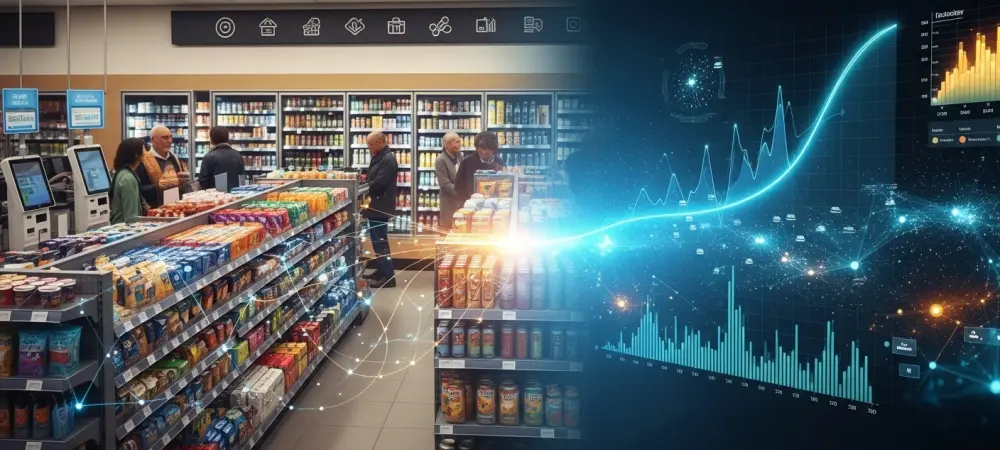
The corner store’s transformation from a simple pit stop for fuel and snacks into a sophisticated micro-retail hub has quietly ignited a high-stakes operational revolution. As these modern convenience stores evolve into complex, multi-faceted retailers, they face unprecedented challenges where tight margins and perishable goods mean the cost of an inaccurate forecast is higher than ever. This analysis examines the transformative trend of leveraging Artificial Intelligence (AI) to inject precision, agility, and proactive management into convenience retail forecasting, exploring its current applications, expert insights, and future trajectory.
The Current Landscape AI Adoption in Convenience Retail
The Data-Driven Imperative Market Growth and Statistics
The operational complexity of today’s convenience store is expanding at a rapid pace, largely driven by the surge in fresh and prepared food categories. Consumers now expect to find everything from artisanal sandwiches and fresh salads to hot meals, shifting the inventory mix dramatically toward products with extremely short shelf lives. This category growth necessitates a far more sophisticated forecasting approach than traditional methods can provide, as the financial penalty for overstocking—spoilage and waste—is immediate and severe. Simultaneously, understocking popular items during peak hours leads directly to lost sales and erodes customer loyalty.
This imperative for better prediction is reflected in market trends. According to industry analysis, the adoption of AI and machine learning solutions within the broader retail sector for inventory management is projected to grow significantly from 2026 to 2028. While the convenience retail segment has historically been slower to adopt new technologies, it is now rapidly catching up. The clear return on investment from reduced waste and maximized sales is pushing operators to embrace intelligent forecasting systems, moving them from a position of technological curiosity to one of strategic necessity.
AI in Action Real-World Applications and Case Studies
Leading convenience retail chains are already demonstrating the powerful impact of AI-driven forecasting. These early adopters are moving beyond simple historical sales data, integrating a host of external variables to create dynamic demand models. For instance, a chain with locations across a metropolitan area can use an AI platform to automatically correlate hyper-local weather forecasts with sales data, proactively increasing orders for cold beverages ahead of a heatwave or stocking up on hot coffee and soup before an expected cold snap. Similarly, the system can analyze local event calendars, flagging a nearby concert or sporting event to anticipate a surge in demand for snacks and drinks.
The technology enabling this shift is becoming increasingly accessible. Both specialized third-party platforms and sophisticated in-house systems are being deployed to tackle the unique challenges of the c-store environment. These systems use machine learning algorithms to analyze purchasing patterns down to the hour for each specific location, optimizing inventory for highly perishable items like breakfast sandwiches and prepared lunches. The result is a significant reduction in spoilage and a near-elimination of stockouts on high-demand, high-margin products, directly boosting the bottom line while enhancing the customer experience.
Expert Perspectives The Shift from Reactive to Proactive Operations
Retail analysts and industry leaders consistently emphasize that AI-driven forecasting is fundamentally altering the DNA of convenience store management. The core of this transformation is a monumental shift from a reactive to a proactive operational posture. Traditionally, managers would review past sales reports to make educated guesses about future orders. This method, however, leaves them perpetually one step behind actual consumer behavior, often leading to costly errors in either overstocking or understocking.
Experts point out that the primary advantage of AI is its capacity to process massive, dynamic, and disparate datasets in real time. A human manager cannot possibly compute the combined influence of traffic patterns, weather forecasts, ongoing promotions, and local events on the demand for hundreds of different products. AI, however, excels at identifying these complex correlations, allowing managers to anticipate demand shifts before they happen. This foresight enables them to make smarter, data-backed decisions that align inventory and labor directly with predicted customer flow and purchasing intent.
In a business model defined by low margins, this newfound precision offers a critical competitive advantage. The consensus among industry veterans is that AI’s ability to minimize waste while capturing every potential sale is no longer a luxury but a foundational element of a profitable c-store operation. By fine-tuning inventory to meet anticipated demand, retailers can protect their slim profit margins from the costly drains of spoilage and missed sales opportunities, creating a more resilient and financially stable business.
The Future Trajectory AI’s Evolving Role and Implementation Blueprint
Core Capabilities Driving Next-Generation Forecasting
The next generation of forecasting is being driven by several core AI capabilities, the first of which is granular demand sensing. AI systems are moving beyond daily or weekly totals to analyze data by the hour and by individual store. This hyper-local approach allows the technology to learn the unique purchasing DNA of each location, automatically distinguishing between the morning coffee rush at a store near a corporate park and the late-night snack demand at an outlet along a major highway. This creates uniquely tailored forecasts that reflect real-world customer patterns with unparalleled accuracy.
Building on these precise forecasts, AI enables dynamic inventory and labor optimization. When a system can accurately predict customer traffic and product demand for Tuesday’s lunch rush, it can trigger just-in-time replenishment for perishable goods, ensuring maximum freshness and minimal waste. Furthermore, this same data can inform data-driven staff scheduling. Managers can align labor with predicted customer flow, ensuring the store is adequately staffed to handle peak periods without incurring the cost of overstaffing during lulls, optimizing service and controlling expenses simultaneously.
Perhaps the most powerful feature of these systems is their capacity for continuous learning and adaptation. Unlike static forecasting models, AI algorithms are self-improving. They constantly analyze new sales data, recalibrating their predictions as consumer behavior evolves, new products are introduced, or market trends shift. This ensures the forecasting system remains highly accurate and relevant over time, adapting to a changing retail landscape without requiring constant manual intervention and complex adjustments.
Strategic Implementation Challenges and the Human in the Loop
Despite the compelling benefits, the path to adoption is not without its challenges. The primary technical hurdle is the need for clean, reliable, and integrated data. For an AI system to function effectively, it requires a seamless flow of information from point-of-sale (POS) systems, inventory management software, and supply chain logistics. Many operators must first invest in unifying these disparate data sources. Moreover, a significant cultural challenge lies in change management. Store managers and staff must be trained to trust the technology’s recommendations and understand how it enhances, rather than complicates, their daily responsibilities.
Looking forward, the role of AI will evolve from simply predicting demand to actively prescribing actions, suggesting specific order quantities and promotional strategies. However, this evolution underscores the indispensable role of human oversight. Experienced managers provide the crucial context that a system cannot, such as knowledge of a new local competitor or an unannounced road closure. The most effective implementation model is a “human-in-the-loop” approach, where AI provides powerful data-driven recommendations, but human managers retain the final authority to review, adjust, and approve, combining computational power with invaluable real-world experience.
Conclusion Securing a Competitive Edge with Intelligent Forecasting
This analysis has shown that Artificial Intelligence is no longer a futuristic concept but an essential tool for navigating the immense operational complexities of the modern convenience retail environment. The strategic adoption of AI-driven forecasting directly addresses the industry’s most pressing challenges, turning volatile demand into a predictable and manageable variable.
The tangible benefits that emerged from this shift were clear and impactful. Retailers who embraced this technology experienced minimized spoilage of perishable goods, a direct increase in sales through the prevention of stockouts, and optimized labor costs aligned with actual customer traffic. The result was not just improved profitability but also a more efficient and resilient supply chain, better equipped to respond to the dynamic needs of consumers.
Ultimately, this trend revealed that integrating intelligent forecasting is a strategic imperative for any convenience store aiming for long-term success. In a fiercely competitive market, the ability to leverage data for precision, agility, and proactive management has become the definitive factor in securing profitability and building lasting customer loyalty.