

The long-held boundary separating artificial intelligence as a source of information from its role as a direct executor of tasks is rapidly dissolving, heralding a pivotal shift for the modern business landscape. This emerging trend, known as agentic AI, promises to eliminate the persistent friction between insight and action, fundamentally reshaping enterprise workflows and productivity. This analysis explores the rise of agentic AI, using Anthropic’s integration of interactive apps in Claude as a prime example, while examining expert insights, strategic implications, and the future trajectory of this transformative technology.
The Rise of Integrated AI Execution Environments
From Conversational AI to Collaborative Workflow Hubs
The evolution of enterprise AI has moved beyond simple chat interfaces toward fully integrated execution environments, an industry-wide trend driven by the need to reduce operational friction. The core objective is to create a seamless workflow where AI does not merely suggest a course of action but actively participates in its execution. This shift aims to eliminate the inefficient, error-prone cycle of toggling between applications, copying and pasting data, and manually translating an AI-generated plan into discrete tasks within separate software tools.
This transition reflects a clear market demand for more capable systems. Businesses are increasingly seeking AI that can not only understand a request but also act upon it within the context of existing processes and platforms. This desire for AI to function as a true digital collaborator is fueling the adoption of sophisticated agentic systems, pushing developers to build platforms where conversation and execution are two sides of the same coin.
Anthropic’s Claude as a Case Study in Agentic Integration
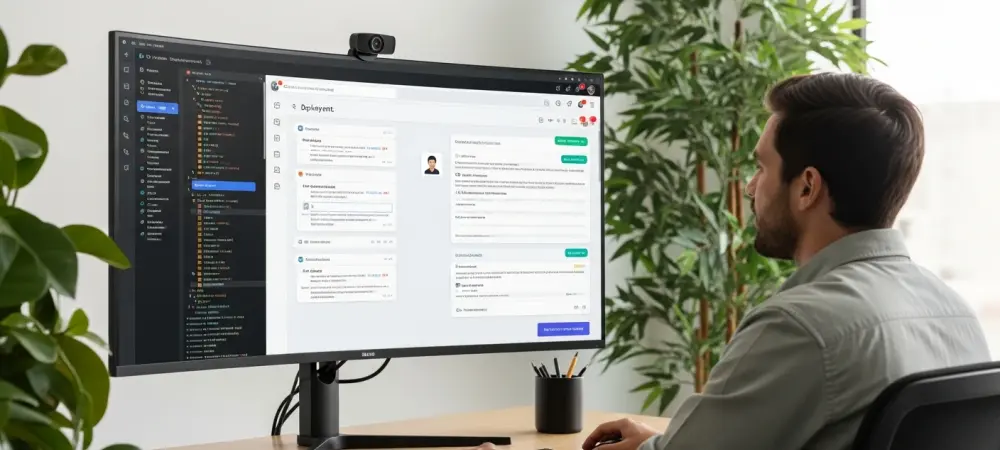
Anthropic’s recent introduction of “interactive apps” within its Claude model serves as a powerful case study for this agentic shift. This feature allows popular business tools such as Asana, Figma, Slack, and Canva to run as dynamic user interface components directly inside the Claude conversation window. Instead of receiving a text-based suggestion, a user can now interact with a live project plan or design file, bridging the gap between discussion and implementation.
The technological backbone for this capability is the Model Context Protocol (MCP) Apps, an extension that enables the embedding of rich, interactive elements within a conversational stream. This protocol moves beyond static text, allowing for a dynamic exchange where the AI and user can collaborate on a shared digital canvas. For example, a project manager can ask Claude to create a new task in Asana, and an interactive Asana card will appear directly in the chat, allowing for real-time edits and confirmation, which significantly enhances both transparency and user trust in the agent’s actions.
Expert Perspectives on the Agentic AI Shift
Industry analysts view this move toward embedded agency as a critical step in overcoming the hurdles that have stalled many AI pilot programs. According to Akshat Tyagi of HFS Research, early agentic AI pilots often failed due to unpredictability, a lack of effective governance, and significant integration challenges. By embedding agents directly within user workflows, as Anthropic has done, these systems become more predictable and governable, drastically lowering the barriers to enterprise adoption.
This integration offers tangible productivity benefits that extend to technical teams as well. Forrester analyst Charlie Dai highlights that a more streamlined integration model accelerates the creation of complex, multi-step workflows for developers. It simplifies the underlying “plumbing” required to connect disparate systems, allowing developers to build and iterate on sophisticated agentic solutions more rapidly.
Moreover, this development illuminates a fundamental architectural split in the enterprise AI market. Avasant’s Chandrika Dutt points to two distinct strategies emerging: one where external applications run inside an AI model’s interface, championed by Anthropic and OpenAI, and another where AI capabilities are embedded inside existing productivity suites, as seen with Microsoft and Google. This divergence reflects different philosophies on how to best merge AI with daily work, setting the stage for a competitive evolution in platform design.
The Future Trajectory Opportunities and Hurdles
The potential for productivity gains extends well beyond developers to encompass all business users. By consolidating essential tools into a single, intelligent interface, agentic platforms drastically reduce the need for context switching. This allows employees to stay focused and execute complex tasks more efficiently, as the AI handles the logistical heavy lifting of coordinating actions across multiple applications. However, this consolidation of power and data introduces significant security challenges. Abhishek Sengupta of Everest Group warns that running third-party code within a unified interface elevates the security risk, as enterprises are now executing code they did not write themselves. This reality places a much greater burden of due diligence on organizations, which must now thoroughly vet each integrated app to protect against potential vulnerabilities.
In anticipation of these concerns, platforms are being engineered with built-in security and governance features. Key measures include UI sandboxing to isolate third-party code, mandatory reviews of all interface templates before they are rendered, and comprehensive auditing of all messages exchanged between an application and the AI client. These safeguards are not just features but prerequisites for earning the trust required for widespread enterprise adoption. The trend’s future evolution will likely see a rapid expansion of these app ecosystems, alongside a potential convergence of the competing architectural models as enterprise demand for seamless, agent-driven execution solidifies.
Conclusion Embracing the New Era of Enterprise AI
It became clear that the enterprise AI landscape had shifted decisively from conversational tools to integrated, agentic systems designed to execute complex tasks. This evolution represented a fundamental change in the human-AI collaboration model, moving from a passive, advisory relationship to an active, participatory one.
Anthropic’s strategy with Claude and its interactive apps marked a leading example of a new architectural approach, one that brought the work directly into the AI interface. This model has since set a new benchmark for what businesses expect from their AI platforms.
Moving forward, organizations faced the critical task of strategically evaluating these emerging agentic platforms. The path to adoption required a careful balance, weighing the immense potential for transformative productivity gains against the non-negotiable need for robust security, governance, and user trust in this new era of intelligent automation.