

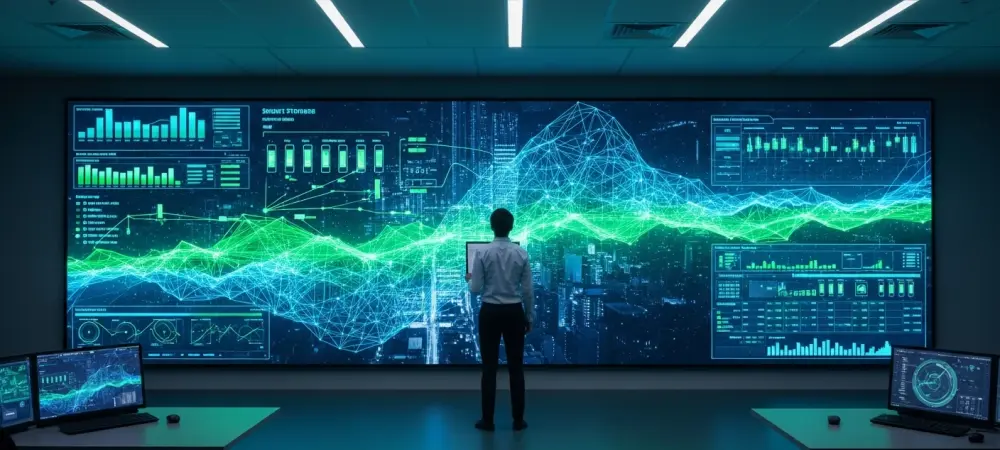
The transition from the manual constraints of the traditional thermostat era to the seamless integration of autonomous energy partners reflects a shift that mirrors the self-operating intelligence once reserved for 20th-century science fiction. For decades, the management of electricity remained a reactionary task, requiring human intervention to adjust settings based on fluctuating utility costs and visible grid instability. However, the emergence of agentic artificial intelligence changed this dynamic by moving beyond passive data monitoring toward active and independent execution. This technological evolution allows systems to function as sophisticated digital partners capable of navigating the complexities of modern energy markets without constant human oversight.
This shift is particularly significant as global energy prices continue to fluctuate and aging infrastructure struggles to meet the demands of a digitized world. Agentic AI represents a fundamental departure from the software of the past, which merely presented information for a human to interpret. Instead, these new systems operate with a level of autonomy that allows them to perceive environmental changes, think through potential strategies, and execute optimal solutions in real-time. By bridging the gap between data collection and physical action, these autonomous ecosystems are redefining how households and industries interact with the power grid.
The Rapid Rise and Implementation of Autonomous Energy Ecosystems
Market Trajectory and Global Adoption Statistics
The deployment of autonomous energy solutions has reached a massive scale across the globe, indicating a rapid departure from traditional utility management. Current data suggests that over 200,000 power stations are already operational across 80 different countries, creating a vast network of intelligent nodes. This widespread adoption is driven by the tangible economic benefits observed in diverse geographic markets. For instance, in European regions such as Sweden and Poland, the integration of autonomous switching and storage technology resulted in a 50% reduction in electricity costs for many early adopters. These savings are not merely the result of better data but are the direct outcome of AI agents making high-speed decisions that humans simply cannot replicate.
Beyond cost savings, these autonomous storage solutions serve a critical role in stabilizing infrastructure in regions where the grid remains unreliable. In South Africa, for example, agentic systems are increasingly used to manage the frequent disruptions that threaten local economic stability. By predicting outages and managing battery reserves with millisecond precision, the technology ensures that essential services remain functional. This trend underscores a broader movement toward energy resilience, where the intelligence of the system compensates for the physical shortcomings of the traditional power grid.
Practical Applications and Agentic Specializations
The current implementation of agentic AI moves far beyond the “fitness tracker” approach that defined previous iterations of smart-home technology. Older applications were often limited to providing retroactive data, leaving the difficult work of execution to the human user. In contrast, modern models like the SigenAgent operate as proactive partners. These systems do not just report on what happened; they actively schedule energy consumption to align with the lowest possible price points and the highest availability of renewable sources. This transition from suggestive to executive software represents the true core of the agentic revolution.
Within these ecosystems, specialized AI agents perform distinct roles to maximize efficiency. The Energy Manager functions as a household autopilot, handling the daily flow of power between solar arrays, storage units, and the grid. Meanwhile, the System Doctor provides diagnostic maintenance by performing continuous scans of hardware health. This has been particularly transformative for industrial settings, where automated fault localization has reduced the time required to identify technical issues from several hours to just fifteen minutes. Additionally, the Power Trader agent allows even small residential setups to participate in high-frequency energy markets, buying and selling electricity as prices peak throughout the day.
Expert Perspectives on the Agentic AI Revolution
Industry leaders suggest that the distinction between advisory and agentic technology is the most important development in software history. Expert Jason Schneider emphasizes that while previous AI iterations functioned primarily as consultants, the agentic model actually performs the work for the user. This shift alleviates the mental burden of managing complex systems, allowing technology to act as a surrogate for human labor. When a system is empowered to make decisions rather than just offer tips, it transforms from a tool into a productive asset that generates value independently.
The philosophy of treating AI as a synthetic partner rather than a simple chatbot is a central theme among technologists like Tony Xu. This perspective views AI as an integral part of an autonomous ecosystem that learns from its environment to meet long-term goals. Similarly, Dean Chiaravallotti points out that the widespread adoption of renewable energy depends heavily on trust and security. He argues that for consumers to fully embrace solar and wind, the systems must be secure enough to operate without constant supervision. Agentic AI provides this foundation by ensuring that energy management is reliable, predictable, and protected against the volatility of the external market.
Furthermore, the rise of autonomous energy systems supports the Micro Enterprise Model, which allows smaller entities to scale their operations without a corresponding increase in headcount. By automating the drudgery of resource management, AI allows entrepreneurs to focus on strategic growth rather than administrative maintenance. This integration of intelligence into the backbone of business operations enables a level of agility that was previously only available to large corporations with dedicated energy departments. The technology effectively democratizes efficiency, giving small players the same competitive edge as global giants.
Future Projections and Strategic Implications
The evolution of energy management is moving toward a state of total ecosystem autonomy, where the loop of perceiving, thinking, executing, and optimizing occurs continuously. This transition is expected to trigger a significant global productivity boom as the role of the human operator shifts. Rather than spending time working in the tedious details of energy scheduling, individuals and organizations are now able to work on high-level strategic objectives. This change in focus represents a massive redirection of human cognitive energy away from repetitive maintenance and toward innovation and creative problem-solving.
However, this progress is not without its risks, and many experts warn that AI must remain a tool rather than a crutch. The necessity for human-centric oversight remains paramount, even as systems become more independent. Transparency in how these agents make decisions is essential to maintaining control over the larger strategic direction of a home or business. There is also the challenge of integrating disparate data silos to ensure that energy management does not exist in a vacuum but is instead aligned with overall operational goals. Addressing these hurdles will require a balanced approach where technological capability is matched by human wisdom and governance.
Navigating the Era of Self-Directed Operations
The transition from retroactive monitoring to proactive, autonomous energy scheduling marked a significant milestone in the history of industrial development. Stakeholders realized that the ability to delegate complex decision-making to agentic systems provided an unprecedented level of control over both costs and resource reliability. The era of the manual thermostat was effectively replaced by a more sophisticated model where energy independence became a tangible reality for millions of users worldwide. These advancements proved that intelligence, when applied to physical infrastructure, could stabilize even the most volatile markets.
The integration of specialized agents demonstrated that operational reality finally caught up to the ambitious visions of past decades. By focusing on the synergy between human strategy and machine execution, the industry established a new standard for global productivity. The systems not only optimized electricity usage but also paved the way for broader applications of autonomous logic across various sectors of the economy. Ultimately, the successful deployment of agentic AI in energy management provided the necessary framework for a future where technology acted as a reliable and self-improving partner in the pursuit of sustainable growth.