

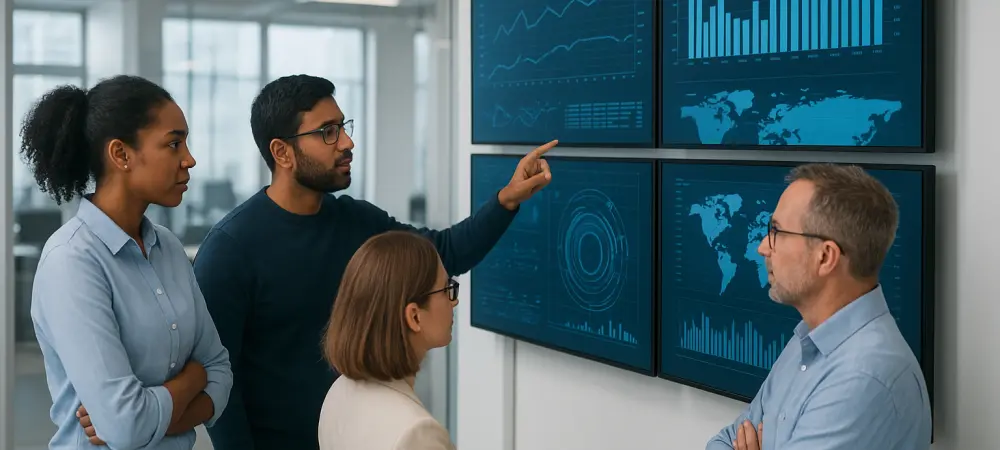
The velocity at which artificial intelligence workloads evolve today has rendered traditional, static cloud blueprints essentially obsolete before the ink on the contract even dries. Organizations are currently finding that a cloud architecture established just months ago can no longer support the high-density processing required by the latest generative models. This rapid obsolescence leads to a critical state of infrastructure drift, where the gap between actual performance and theoretical capacity creates unnecessary overhead and risk.
The Shift Toward Living Systems in Cloud Management
Traditional cloud management strategies relied on rigid, long-term planning that assumed a stable workload profile, yet the current technological climate demands far greater agility. Infrastructure drift is no longer a minor technical nuisance; it has transformed into a significant operational liability that compromises security and inflates budgets. When hardware and software layers fall out of alignment with the business objectives, the resulting friction slows down deployment cycles.
To address this, organizations are adopting tools like the Evolving Architecture platform from InfrOS, which treat cloud setups as fluid systems. This objective approach focuses on real-time adaptation rather than periodic manual updates, ensuring that every virtual machine remains optimized for current tasks. By shifting the perspective from static maintenance to continuous evolution, companies can bridge the gap between their initial architectural intent and the reality of day-to-day operations.
The Growth and Practical Application of Adaptive Systems
Statistical Drivers and Market Momentum
The transition toward adaptive systems is being fueled by a staggering level of investment in specialized computing resources. Current market data suggests that spending on AI-optimized infrastructure-as-a-service is hitting $42 billion this year, 2026, as companies scramble to build out capacity for machine learning. This massive capital allocation reflects a fundamental move away from general-purpose environments toward highly tuned, specific architectures. Moreover, the complexity of managing multi-cloud portfolios across AWS, Azure, Google Cloud, and Oracle Cloud has surpassed human cognitive limits. Manual tracking of assets in these disparate environments is no longer viable, leading to the rise of automated platforms that provide continuous oversight. These systems do not just monitor activity; they actively search for opportunities to streamline operations, allowing businesses to keep pace with the market without ballooning their engineering headcount.
Real-World Deployment and Modernization Strategies
Modern enterprises such as PPC and Redion US are demonstrating the tangible benefits of replacing manual audits with automated clarity. Instead of relying on quarterly reviews that are outdated by the time they are finished, these industry leaders use continuous observability to maintain architectural integrity. This strategy involves the use of infrastructure as code, allowing teams to define their cloud environments through software scripts that are versioned and tested with high precision. Before any major change is deployed, these organizations utilize emulation-based validation to predict outcomes. By creating a digital twin of their infrastructure, they can benchmark the impact of architectural shifts on both performance and cost. This validation process ensures that modifications are backed by hard data rather than intuition, significantly lowering the risk of service disruptions or unexpected billing spikes that often follow a major migration.
Expert Perspectives on Infrastructure Evolution
Executive insights from industry veterans highlight the necessity of a paradigm shift in how we perceive the foundation of digital services. Naor Porat, the CEO of InfrOS, emphasizes that infrastructure is no longer a one-time setup but a system that must evolve in lockstep with AI demands. In his view, successful companies are those that treat their cloud footprint as a dynamic resource that expands and contracts based on real-time telemetry.
To help engineering teams navigate these constant changes, professionals have adopted a rigorous Gain/Risk/Effort scoring system. This framework provides a standardized way to evaluate whether a proposed architectural change is worth the human labor involved. By balancing the potential engineering effort against the anticipated operational benefits, managers can prioritize high-impact tasks. This data-driven prioritization is essential for keeping lean teams focused on what truly moves the needle. Strategic integration now involves a unified infrastructure operating system that brings together functions like FinOps and compliance. This holistic approach ensures that cost-saving measures do not inadvertently compromise security or regulatory requirements. Thought leaders argue that this convergence is the only way to manage the massive scale of modern cloud footprints without losing sight of fiscal responsibility or technical excellence.
The Future Landscape of Cloud Adaptation
The technological trajectory is pointing toward a future where self-healing architectures become the standard for high-performing organizations. These systems will eventually have the capability to automatically remediate drift without human intervention, identifying and fixing cost inefficiencies in real-time. This level of autonomy will allow human engineers to move away from mundane maintenance and focus on high-level architectural innovation.
However, the transition to fully autonomous systems will not be without challenges, particularly regarding tool over-reliance and the necessity of benchmarking. As organizations lean more heavily on automated decision-making, the requirement for rigorous, independent validation will increase. A robust hybrid and multi-cloud strategy will remain a prerequisite for resilience, ensuring that an enterprise is not tethered to the limitations or pricing whims of a single provider.
Conclusion: Bridging the Gap Between Planning and Reality
The industry successfully recognized that the era of static cloud blueprints had passed, shifting instead toward an evidence-based model of architectural evolution. IT leaders prioritized the adoption of automated validation tools that allowed them to test infrastructure changes before they impacted live environments. This proactive stance helped businesses eliminate the hidden costs of infrastructure drift and ensured that their digital foundations were always ready to support the next generation of workloads.
Moving forward, the primary focus shifted to the integration of automated remediation and sophisticated scoring systems to guide engineering efforts. Organizations that embraced this change found themselves far more capable of managing the volatile costs and technical demands associated with massive multi-cloud portfolios. Ultimately, the ability to modernize infrastructure in real-time became the defining characteristic of market leaders, who used these adaptive systems to turn their cloud data into a sustainable competitive advantage.