

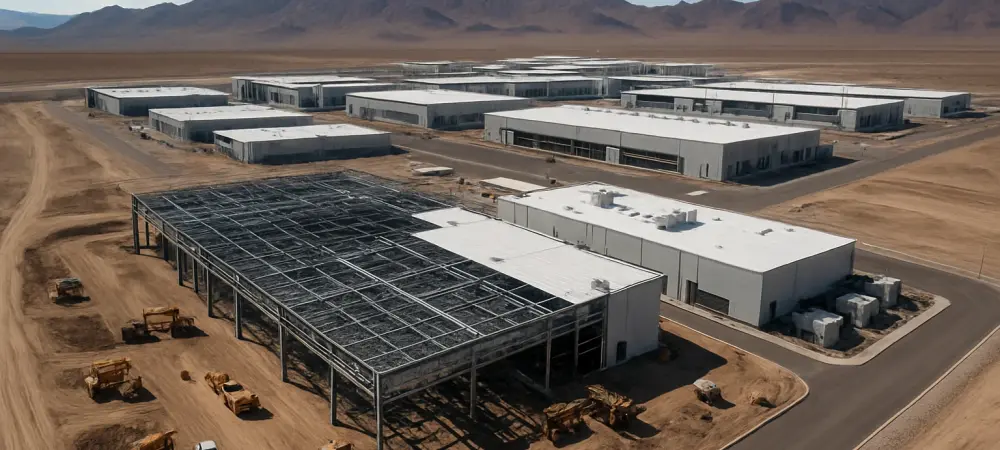
What does it mean when a single company snaps up over a thousand acres in a quiet Nevada county, promising to transform it into a digital powerhouse? In a world where data fuels everything from business to entertainment, Tract, a leading data center developer, has made a staggering acquisition of 1,060 acres near Silver Springs in Lyon County. This isn’t just a real estate deal—it’s a seismic shift in how technology infrastructure is shaping rural landscapes and local economies. The sheer scale of this project, with potential for 1.6 gigawatts of data center capacity, demands attention from industry watchers and communities alike.
Why Nevada’s Land Grab Sparks Industry Buzz
The recent purchase by Tract in Lyon County isn’t merely about acquiring land; it’s a calculated step toward cementing Nevada’s status as a data center hub. Northern Nevada, already home to significant tech infrastructure, benefits from cool climates, tax breaks, and pro-business policies that attract companies like Tract. This 1,060-acre site near Silver Springs, with an initial 700 megawatts under utility study, positions the region to handle an unprecedented surge in data demand driven by cloud computing and AI technologies.
Beyond the numbers, this deal signals a broader trend of tech giants and developers eyeing less urbanized areas for expansion. Rural counties like Lyon offer vast, affordable land and fewer zoning hurdles compared to metropolitan centers. For industry observers, Tract’s move highlights how strategic acquisitions can redefine entire regions, turning quiet corners of the state into critical nodes in the global digital network.
The Stakes: Data Centers as Economic Engines
Data centers are more than just buildings filled with servers; they are the backbone of a digital economy that powers streaming, e-commerce, and remote work. Nevada’s emergence as a key player in this space isn’t accidental—its policies and geography make it a magnet for investment. Tract’s latest acquisition underscores the state’s growing role in supporting national data needs, with capacity plans that could rival some of the largest facilities in the country.
For local communities, the implications are profound. Lyon County stands to gain hundreds of jobs, from construction to long-term tech roles, alongside infrastructure upgrades that often accompany such projects. This development could serve as a catalyst for economic diversification in a region traditionally reliant on agriculture and small-scale industry, placing Silver Springs on the map as a tech destination.
Inside Tract’s Ambitious Nevada Play
Tract’s acquisition in Lyon County comes with a clear roadmap: develop up to 1.6 gigawatts of data center capacity, starting with 700 megawatts already under review. This follows meticulous planning, including successful rezoning and a development agreement with county officials, ensuring a smoother path to construction. Building on their existing 11,000-acre presence in Storey County, which supports a 2-gigawatt capacity, Tract is doubling down on Nevada as a cornerstone of its operations.
The economic ripple effects are already a topic of discussion. Lyon County’s business-friendly stance has paved the way for Tract to promise not just jobs but also significant investment in local infrastructure. However, challenges loom, including a legal dispute with Switch, a competitor in Storey County, which reveals the high-stakes competition within this booming sector. Despite such hurdles, Tract’s focus remains on scaling up to meet exploding demand.
Nationally, Tract’s vision extends far beyond Nevada’s borders. With planned data center parks in states like Texas, Virginia, and Arizona, the company aims to create a network of shovel-ready sites for tech giants. This Silver Springs project is a critical piece of that puzzle, showcasing how a single acquisition can align with a broader mission to address America’s data infrastructure shortfall over the coming years, from 2025 to 2030 and beyond.
Voices from the Ground: Hopes and Realities
Graham Williams, Chief Investment Officer at Tract Capital, didn’t hold back enthusiasm about the Silver Springs venture. “Joining this community and contributing to its growth is a privilege,” Williams stated, highlighting a commitment to collaboration with Lyon County. This sentiment reflects a deliberate effort to integrate industrial growth with local priorities, ensuring that the benefits of such a massive project are felt on the ground.
County Manager Andrew Haskin mirrored this optimism, noting Tract’s alignment with the county’s economic goals. “Their approach fits our vision for sustainable, business-friendly development,” Haskin remarked. Yet, beneath the positive rhetoric, there’s an undercurrent of caution—local stakeholders are keenly aware that large-scale projects can strain resources like water and power if not managed carefully. These perspectives paint a picture of cautious hope for what lies ahead.
Navigating the Future: Opportunities for Businesses and Residents
For businesses looking to enter the data center space, Tract’s model offers a compelling shortcut. By handling the heavy lifting of zoning and land entitlement, Tract reduces risks and delays, allowing companies to focus on building and operating facilities. This streamlined approach could attract a wave of tech firms to Lyon County, further amplifying the region’s economic impact.
Local residents and community leaders, meanwhile, have a unique chance to shape this transformation. Understanding the potential for job creation and investment is crucial, as is voicing concerns about environmental or infrastructure challenges early in the process. Advocating for training programs to prepare locals for tech-related roles could ensure that the benefits of Tract’s presence are widely shared, creating a win-win scenario.
This acquisition serves as a blueprint for balancing industrial expansion with community needs. Other regions considering similar developments can look to Lyon County as a case study in engagement—how to partner with developers while safeguarding local interests. The path forward involves active dialogue, ensuring that growth doesn’t come at the expense of quality of life for those who call Silver Springs home.
Reflecting on a Digital Milestone
Looking back, Tract’s acquisition of 1,060 acres in Lyon County stood as a defining moment in Nevada’s journey toward becoming a data center powerhouse. The promise of 1.6 gigawatts of capacity, coupled with strong partnerships with local officials, set a high bar for how tech infrastructure could drive economic progress. Despite competitive tensions, such as the legal clash with Switch, Tract’s commitment to community integration offered a model worth emulating. The next steps hinged on sustained collaboration—local leaders needed to prioritize transparency and resource planning to handle the demands of such a massive project. Businesses had to seize the opportunity to partner with developers like Tract, leveraging prepared sites to meet data demands. For communities, the focus shifted to securing tangible benefits, from jobs to training, ensuring that this digital boom left a lasting, positive legacy for Silver Springs and beyond.