

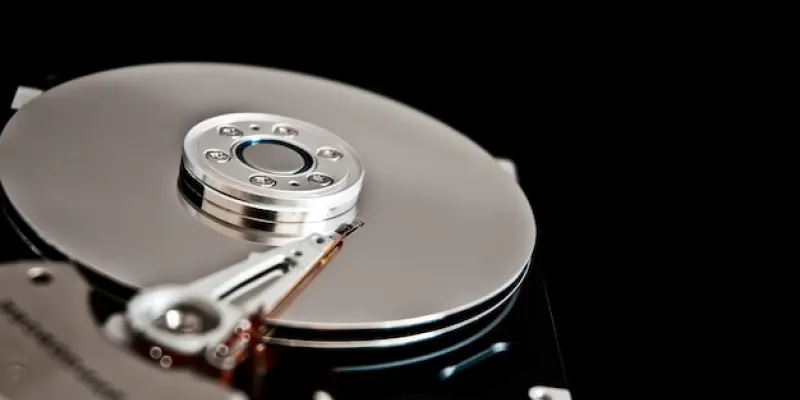
In a significant development for users seeking expanded storage solutions, Toshiba has introduced new 24TB hard drives specifically designed to enhance private cloud storage and network-attached storage (NAS) systems. This fresh addition to Toshiba’s N300 and N300 Pro lines marks an increase in capacity by 2TB over the previous highest offerings, providing a welcome upgrade for users with limited drive bays. This breakthrough allows users to upgrade their storage by simply swapping out their drives, eliminating the need to add extra systems.
Enhanced Capacity and Efficiency
Benefits for NAS Systems
The N300 series hard drives support up to 12 drive bays and boast a workload rate of 180 TB per year, making them suitable for small to medium-sized business environments as well as home offices. In contrast, the N300 Pro series can handle up to 24 drive bays with an impressive workload capacity of up to 550 TB per year. This feature is particularly advantageous for enterprises with more demanding data management needs, ensuring reliable performance even under heavy use.
Equipped with a helium-sealed design, these 3.5-inch drives offer power efficiency and durability, complemented by a standard rotational speed of 7200 RPM and a substantial 1GB buffer. The drives also incorporate integrated sensors that help mitigate rotational vibrations, which significantly enhances the reliability and longevity of the drives. This advancement underscores Toshiba’s commitment to producing high-capacity HDDs that meet the surging demand for efficient data storage solutions.
Versatile Applications
While solid-state drives (SSDs) have seen significant advancements in terms of cost and capacity, traditional hard drives continue to be a more cost-effective solution when it comes to storing large volumes of data. For NAS or personal cloud setups, where vast amounts of data need to be stored and accessed regularly, high-capacity HDDs like the N300 series strike the right balance between performance and cost.
Toshiba’s newly released models are not the company’s first venture into the 24TB storage range. The firm previously introduced 24TB CMR and 28TB SMR drives aimed at data centers and large-scale operations. However, these earlier models primarily catered to enterprise use and were less accessible to the average consumer market. The introduction of the new N300 series thus represents a strategic move to bring high-capacity storage solutions within reach of a broader audience, including small offices and individual users.
Market Availability and Pricing
Consumer Accessibility
E-commerce platforms have made the new N300 series readily available, ensuring that users can easily acquire these high-capacity drives. Notably, the 24TB N300 Pro is listed at $649.99 on Amazon, a price point higher than many units in some of the top-rated hard drive lists, yet still offering competitive value for those in need of substantial storage expansion. These drives provide a practical solution for users looking to enhance their storage capabilities without the need for additional hardware, aligning with the growing trend towards more efficient and expandable storage solutions. Toshiba’s announcement illustrates the company’s ongoing dedication to advancing HDD technology, making these new drives a valuable addition for users needing robust performance and capacity. This launch is especially significant for organizations requiring large-scale data storage capacities, as well as for individual users who need reliable and high-performing storage solutions for their personal cloud or NAS systems.
Advancing HDD Technology
Toshiba’s commitment to innovation in HDD technology has positioned the company as a key player in the evolving landscape of data storage solutions. The new N300 and N300 Pro series represent a crucial step forward in meeting the increasing storage demands of modern users. With the rise of data-intensive applications and the proliferation of digital content, the need for high-capacity, dependable storage solutions has never been more critical.
The introduction of these drives not only enhances Toshiba’s portfolio but also sets a new benchmark for what users can expect from high-capacity HDDs. As data storage requirements continue to grow, the ability of these drives to deliver reliable performance and substantial storage capacity will be instrumental in supporting a wide range of applications, from business operations to personal cloud setups.
Future Considerations and Industry Impact
Evolving Storage Demands
As the technology landscape continues to evolve, so too does the need for more advanced and efficient storage solutions. The introduction of Toshiba’s 24TB N300 and N300 Pro drives highlights the company’s proactive approach to addressing these growing storage demands. By providing high-capacity, reliable, and accessible storage options, Toshiba is enabling users to keep pace with the rapid expansion of digital data.
Looking ahead, the continued development of HDD technology will be key to supporting the increasing volume of data generated by various applications. Innovations such as Toshiba’s helium-sealed design and integrated vibration sensors set the stage for future advancements that will further enhance the performance and reliability of high-capacity hard drives, ensuring they remain a viable and cost-effective solution for large-scale data storage needs.
Strategic Advantages
For organizations and individual users alike, the ability to efficiently manage and store large amounts of data is crucial. Toshiba’s new drives provide a strategic advantage by offering a versatile and scalable solution that can adapt to a wide range of storage requirements. Whether for business operations, personal cloud setups, or NAS systems, the N300 and N300 Pro series deliver the capacity and performance needed to meet contemporary data storage challenges. The release of these new drives underscores Toshiba’s role as a leader in HDD innovation and highlights the company’s commitment to providing cutting-edge storage solutions. As data storage needs continue to evolve, Toshiba’s advancements in HDD technology will play a pivotal role in shaping the future of data management and storage.
Moving Forward
Toshiba has made a significant breakthrough for users in need of more storage by launching new 24TB hard drives. These drives are specifically aimed at improving private cloud storage and network-attached storage (NAS) systems. This latest offering in Toshiba’s N300 and N300 Pro lines brings a 2TB increase in capacity compared to the previous models, marking a substantial upgrade. Users who have limited drive bays will particularly benefit from this development, as they can now boost their storage capacities simply by replacing their existing drives with these new 24TB models. This innovation eliminates the necessity of adding extra systems, thus simplifying the upgrade process. With this advancement, Toshiba ensures users have access to cutting-edge storage solutions, fostering improved data management and efficiency. By offering more storage within the same space, Toshiba’s new hard drives cater to businesses and individuals who require high-capacity, reliable storage without the hassle of expanding their current infrastructure.