

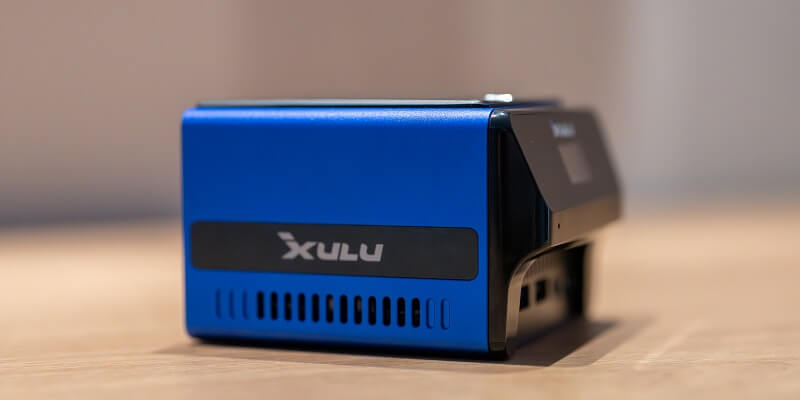
Today, we delve into the realm of mini PCs, and in particular, the Xulu XR1 Lite Mini PC. Born as a crowd-funded project on Kickstarter, this innovative device has taken the tech world by storm, amassing over $100,000 within a few days of its launch. Thanks to its unique design and compact form factor, the XR1 Lite Mini PC offers impressive power and performance in a diminutive package.
The Power of Efficient Chips
One of the key factors contributing to the popularity of mini PCs like the XR1 Lite is the integration of more powerful and efficient chips from leading manufacturers, Intel and AMD. These advanced processors bring superior computing capabilities to compact devices, catering to the demands of modern users who seek a portable yet high-performing computing solution.
AMD’s Contribution to the Mini PC Ecosystem
When it comes to the evolution of the mini PC ecosystem, credit must be given to AMD. The company’s Accelerated Processing Units (APUs) have played a significant role in providing the perfect balance between CPU and GPU capabilities for mini and tiny PCs. AMD’s APUs offer an array of options that make sense for the compact form factor, ensuring users can enjoy a seamless and efficient computing experience.
Xulu XR1 Lite Mini PC Specifications
The XR1 Lite Mini PC from Xulu boasts the latest AMD Ryzen 5000 APU flavors, built on the efficient Lucienne family. The heart of the XR1 Lite Mini PC is the powerful AMD Ryzen 3 5300U CPU, featuring 4 cores, 8 threads, 6 MB of cache (L3+L2 combined), and a formidable boost clock of up to 3.8 GHz. This compact yet mighty CPU ensures smooth multitasking, snappy responsiveness, and impressive performance even for demanding tasks.
Power and Thermal Design of the XR1 Lite Mini PC
Efficiency meets customization with the XR1 Lite’s flexible power and thermal design. The CPU operates under a Thermal Design Power (TDP) of 15W, which can be further adjusted according to individual preferences, ranging from 10W to 25W. This unique feature allows users to fine-tune the power consumption and performance balance of the XR1 Lite Mini PC, tailoring it to their specific needs.
Vega Graphics Core in the XR1 Lite Mini PC
Delivering visual excellence in a compact form, the XR1 Lite Mini PC incorporates a Vega graphics core as its primary component. This graphics core packs a punch, ensuring enhanced graphics performance for gaming, content creation, and multimedia experiences. Users can immerse themselves in stunning visuals and vivid detail, all within the confines of the sleek chassis of the XR1 Lite.
Memory and Storage
To complement its impressive processing capabilities, the XR1 Lite Mini PC is equipped with 8GB of DDR4 Dual-Channel memory. This ample memory ensures smooth multitasking, efficient data handling, and snappy responsiveness, allowing users to breeze through applications, tasks, and workflows with ease. Furthermore, the XR1 Lite offers various storage options, allowing users to choose what suits their needs best.
I/O Ports and Connectivity Options
Connectivity is key in the modern world, and the XR1 Lite Mini PC has not overlooked this aspect. On the I/O front, users will find an array of ports, including 3 USB 3.2 Gen2 ports, a USB 3.2 Gen 2 Type-C port, a USB 3.2 Gen 1 port, two USB 2.0 ports, dual HDMI 2.1 ports, a single 2.5GbE LAN port, an audio jack, and a reset button. With this comprehensive selection of ports, users can effortlessly connect various peripherals, displays, and networking devices, allowing them to expand and customize their setup for optimal productivity.
Powering the XR1 Lite Mini PC
Efficiency extends to power delivery, as the XR1 Lite Mini PC can be powered through a standard 12V DC-In port. This widely compatible power input ensures hassle-free operation, whether at home, in the office, or on the go. Users can rely on a stable power source, empowering them to focus on their tasks without interruption.
With the Xulu XR1 Lite Mini PC, the combination of a compact design, efficient chips from AMD, and a host of impressive features has brought forth a powerful computing solution. The XR1 Lite Mini PC stands as a testament to advancements in technology, offering users a portable yet high-performing device that meets their computing needs with ease. Whether you are a student, professional, or tech enthusiast, the XR1 Lite Mini PC is an excellent choice that exemplifies the merging of power and compactness. Experience the future of computing in the palm of your hand with the Xulu XR1 Lite Mini PC.