

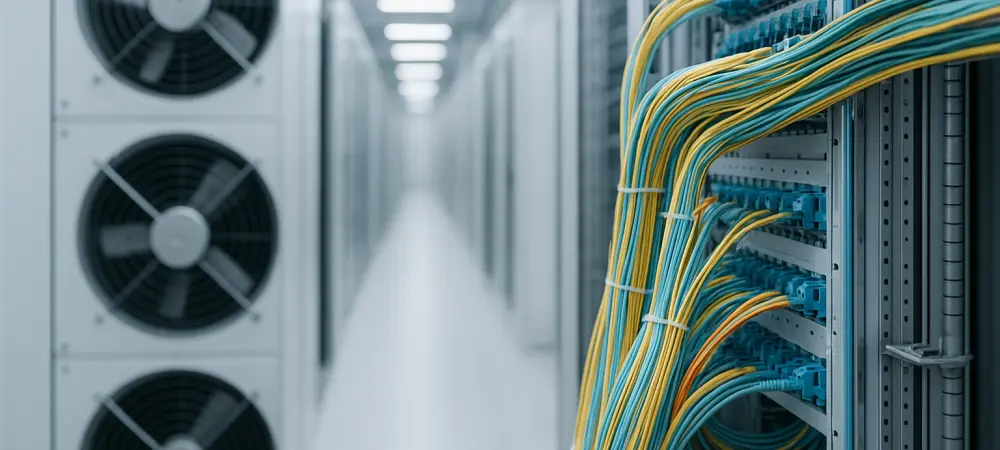
Online gaming environments use remote servers to synchronize complex matches between players worldwide, ensuring that gameplay remains fluid and responsive during peak usage. This reliance on remote infrastructure illustrates how modern data centers have become the invisible backbone of the 21st century, transforming the abstract concept of the cloud into a massive physical reality. While many users perceive the internet as a weightless space, it actually depends on warehouse-sized facilities filled with thousands of high-powered servers that act as a central nervous system for the global economy. Every digital action, from sending a simple email to conducting a complex bank transfer, relies on the immense processing power housed within these specialized environments to function. The recent explosion of Artificial Intelligence has acted as a massive catalyst for expansion, creating a global race to build more facilities capable of handling high-performance workloads for deep learning.
Powering Daily Connections and Entertainment
The Infrastructure of Social Media Platforms
The most visible impact of this infrastructure is felt through the social media platforms that define modern leisure. Apps like Instagram and TikTok may live as icons on a smartphone, but their entire functionality is dictated by remote servers that retrieve and deliver content within milliseconds. Without the constant communication between a handheld device and a data center, the seamless experience of scrolling through a feed or uploading a high-resolution photo would be impossible. These facilities manage the heavy lifting of content moderation, recommendation algorithms, and user data encryption at a scale that was once unimaginable. For instance, when a user uploads a short-form video, it is instantly replicated and cached across various geographic edge locations to ensure that viewers in different regions experience zero lag. This complex distribution network is what allows viral trends to spread globally in minutes, supported by the hardware that powers billions of daily interactions.
Beyond simple content delivery, these centers play a critical role in managing the massive datasets required to train the algorithms that keep users engaged. Every like, share, and comment is processed to refine a personal profile, requiring millions of calculations to occur in the background every second. This high-frequency processing demands specialized server racks equipped with advanced cooling systems to prevent hardware failure during periods of extreme usage. From 2026 to 2028, companies have increasingly moved toward localized data processing to reduce the distance data must travel, further improving the speed of social interactions. By distributing the workload across a global grid of server farms, tech companies can ensure that their platforms remain accessible even if one specific region experiences a localized outage or a surge in traffic. The physical security of these sites is equally vital, featuring multi-factor authentication and biometric access to protect user privacy.
High-Definition Streaming and Online Gaming
Streaming services and online gaming also rely on these robust networks to maintain a smooth, buffer-free user experience. Data centers store vast libraries of high-definition content for platforms like Netflix and YouTube, using advanced delivery systems to ensure video plays instantly across the globe. This involves sophisticated load balancing where traffic is routed to the nearest server to minimize latency and packet loss. In the gaming world, these facilities bridge the gap between players on different continents, synchronizing complex virtual environments and ensuring that fast-paced gameplay remains fluid for everyone involved. As game sizes grow and graphics become more demanding, the hardware within these centers must evolve to include high-end graphical processing units that can render environments in the cloud. This shift toward cloud gaming means that even users without expensive local hardware can enjoy premium titles, provided they have a connection.
The evolution of streaming technology has pushed data centers to adopt even higher throughput standards to accommodate 8K resolution and immersive virtual reality content. To support this, many facilities have integrated dedicated fiber optic lines that allow for nearly instantaneous data transfer between regional hubs. This infrastructure is particularly important for live events, such as professional sports or concerts, where millions of viewers are accessing the same stream simultaneously. The ability to transcode video on the fly into different formats for varying device capabilities is a resource-heavy task that occurs entirely within the server rack. This ensures that a viewer on a mobile phone in a rural area and a viewer on a smart TV in a major city both receive the best possible quality. Furthermore, the integration of artificial intelligence into streaming platforms allows for predictive caching, where popular content is moved to the edge of the network before users even request it.
Securing the Global Economy and Professional Future
Digital Storage and Real-Time Navigation
A common misconception is that digital data exists without a physical home, yet every file saved to a service like iCloud or Google Drive occupies space on a real-world server. To prevent data loss, these facilities use physical redundancy, duplicating files across multiple locations so that memories and professional documents remain safe even if a personal device breaks. This level of convenience requires a massive amount of hardware and a constant supply of electricity to keep the digital archives accessible at all times. Modern data centers are designed with Tier IV reliability, meaning they possess redundant power supplies, cooling systems, and network paths to achieve near-perfect uptime. For the average user, this means that their tax records, family photos, and medical history are available on-demand, protected by advanced fire suppression systems and physical security protocols that rival those of high-security government buildings.
Beyond simple storage, data centers have become indispensable for the logistics of daily travel and navigation. Apps like Google Maps and Waze process real-time satellite data and traffic patterns from millions of users simultaneously to suggest the most efficient routes. This allows drivers to react to accidents or road closures instantly, a feat of processing that is only possible because of the immense computing infrastructure working behind the scenes. These centers ingest billions of data points every hour, utilizing machine learning to predict traffic congestion before it actually happens. This predictive capability has revolutionized the shipping and logistics industry, enabling companies to optimize delivery routes and reduce fuel consumption. As autonomous vehicle technology continues to integrate into city infrastructures, the role of local edge data centers will become even more critical. These localized hubs will handle the split-second decision-making data required for vehicle communication.
Financial Integrity and Distributed Work Systems
In the world of commerce and finance, data centers serve as the primary engine room for secure transactions and fraud prevention. Financial institutions utilize powerful servers to monitor spending patterns in real-time, allowing them to flag suspicious activity and block fraudulent purchases before damage occurs. This requires massive computational throughput to cross-reference thousands of variables in the milliseconds between a card swipe and an approval. Furthermore, during high-traffic shopping events, the resilience of these facilities ensures that the digital marketplace can handle millions of concurrent transactions without crashing. This stability is maintained through elastic cloud computing, where server capacity scales up automatically to meet sudden spikes in demand. Without this backend agility, global trade would grind to a halt during major holiday sales or economic shifts. Banks also use these facilities to manage high-frequency trading platforms with extreme precision.
As the professional world shifted toward remote and hybrid models, data centers solidified their role as a fundamental utility for the modern workplace. Tools such as Zoom, Slack, and collaborative cloud software allowed teams to remain productive regardless of their physical location. For the modern business, access to data center processing was considered just as essential as electricity or office space, providing the foundation for the next generation of technological breakthroughs and research. To maintain competitiveness, organizations prioritized investments in secure, scalable infrastructure that supported distributed workforces. Leaders focused on multi-cloud strategies to avoid vendor lock-in while ensuring that data residency requirements were met in different jurisdictions. Moving forward, the emphasis on sustainability led to the adoption of carbon-neutral sites that utilized heat reclamation systems. These advancements demonstrated that the future of work depended on robust and ethical management.