

The rapid proliferation of the term “AI factory” throughout the technology industry, particularly following its prominent use at major events like the Consumer Electronics Show, has created a significant semantic challenge for enterprises and investors. While the phrase evokes a powerful image of industrial-scale intelligence production, its application is far from uniform, leading to a landscape of confusion where the same term can describe anything from a metaphorical software framework to a colossal, purpose-built data center. This lack of a universally accepted definition means that discussions about building, buying, or investing in an AI factory can be fraught with misunderstanding, as different stakeholders may be operating under entirely different assumptions about the scale, scope, and very nature of the concept. The ambiguity is not merely academic; it carries substantial financial and strategic risks for any organization looking to navigate the complex world of artificial intelligence infrastructure.
The Tangible Infrastructure
A New Breed of Data Center
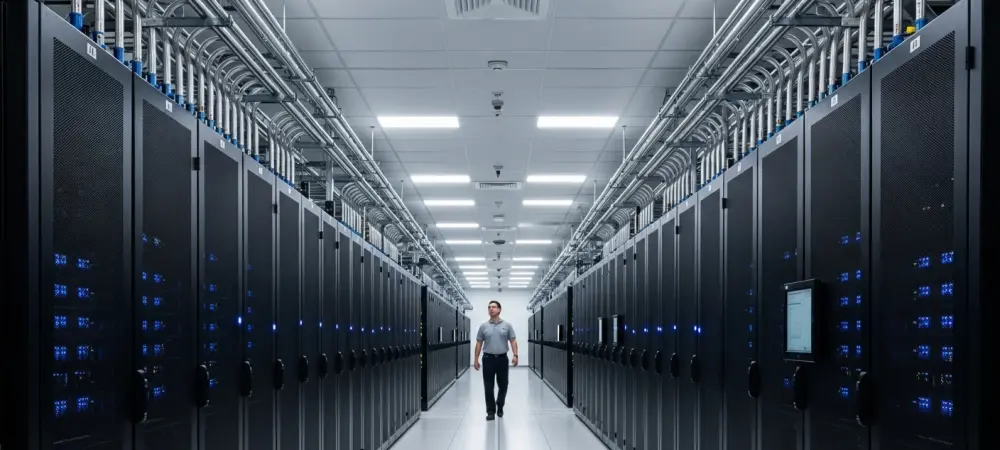
One of the most powerful and widely cited interpretations frames the AI factory as a new kind of physical facility, fundamentally distinct from the traditional data centers that have long served as the backbone of the digital world. Industry leaders, including Nvidia CEO Jensen Huang and Siemens CEO Roland Busch, have championed this view, defining an AI factory as a purpose-built structure designed not just to store data, but to actively process it and generate intelligence. This represents a crucial paradigm shift from a passive repository to an active production center. Unlike a conventional data center, which is optimized for data retrieval and storage, the AI factory is engineered for the computationally intensive workloads of training and running large-scale AI models. These facilities are seen as the modern equivalent of industrial power plants, generating the intelligence that will fuel the next wave of economic and technological advancement. The core premise is that the unique demands of AI necessitate an entirely new class of infrastructure, one that is as specialized for its task as a manufacturing plant is for producing physical goods. This specialized nature translates into a set of extreme and unprecedented infrastructure requirements that far exceed those of standard enterprise data centers. The immense computational density of AI hardware generates massive amounts of heat, making advanced liquid cooling systems not a luxury but an absolute necessity. The power consumption of these facilities can be staggering, often requiring dedicated substations and industrial-grade power management controls that resemble those of a heavy manufacturing operation rather than a typical IT building. Furthermore, the physical weight of the concentrated server racks and cooling infrastructure can be so significant that, as noted by Bill Vass of Booz Allen Hamilton, these buildings may require specialized construction, such as reinforced concrete floors, to provide adequate support. In a fascinatingly recursive application of technology, many of these AI factories are themselves managed and optimized by AI systems and digital twins, which continuously monitor and adjust operations to maximize efficiency and performance, creating a self-improving production environment.
The All-in-One Hardware Solution
In stark contrast to the vision of multi-billion-dollar, purpose-built facilities, another prominent definition shrinks the concept of an AI factory down to a more contained, pre-configured system of hardware and software. In this view, the factory is not a massive building but a packaged, turn-key solution that can be deployed relatively quickly within a customer’s existing environment. This interpretation democratizes the concept, making the power of a dedicated AI environment accessible to organizations that may lack the capital, expertise, or real estate to construct a specialized data center from the ground up. The focus here is on integration and ease of use, providing a pre-validated stack of servers, networking components, and software that is optimized for specific AI workloads. This approach transforms the AI factory from a monumental construction project into a product that can be ordered, delivered, and operationalized in a fraction of the time, lowering the barrier to entry for advanced AI development and deployment.
Major technology vendors have embraced this model, offering products that they market as complete AI factories. For instance, AWS provides an “AI Factory” as an on-premises hardware and software bundle that is fully managed by AWS, effectively extending its cloud services into a client’s own physical space. This hybrid approach gives customers control over their data locality while still benefiting from the provider’s management expertise. Similarly, Lenovo has conceptualized its AI factories as packaged server racks, which can range in size from a single unit to hundreds. These systems arrive at a customer’s site fully assembled and pre-configured for their specific AI use case, requiring only connections to power and the network to begin operations. This “factory in a box” model abstracts away much of the underlying infrastructure complexity, allowing data scientists and developers to focus on building models rather than managing hardware.
The Abstract Frameworks
A Methodological Approach to Development
Moving away from physical hardware entirely, some experts define the AI factory as a more abstract concept: a standardized and methodical approach to AI development and deployment. Proponents of this view, such as Thomas H. Davenport and Randy Bean in the MIT Sloan Management Review, describe it as an established foundation that comprises technology platforms, established methods, curated data, and a library of reusable algorithms. This interpretation reframes the “factory” not as a place where AI is made, but as a systematic process for making AI. It is an operational framework designed to industrialize the creation of AI systems, turning what is often a bespoke, artisanal process into a streamlined, repeatable, and scalable production line. By providing a common set of tools, standards, and components, this methodological factory aims to make the development and scaling of AI applications faster, more efficient, and significantly less expensive.
The primary advantage of viewing the AI factory as a methodology is the focus on reusability and efficiency. In this model, data scientists and engineers do not have to start from scratch with every new project. Instead, they can draw from a repository of pre-built components, proven development patterns, and standardized data pipelines. This approach mitigates risk by ensuring that new AI systems are built on a solid, tested foundation and promotes consistency across an organization’s AI initiatives. It enables a more agile development cycle, where new models can be prototyped, tested, and deployed more rapidly. This systematic approach is crucial for scaling AI capabilities beyond a few isolated projects to a core business function that can deliver consistent value. The “factory” here is a set of best practices and shared resources that accelerates innovation by eliminating redundant work and standardizing the end-to-end AI lifecycle.
An Ecosystem and Functional Analogy
One of the broadest definitions extends the concept to encompass a comprehensive ecosystem. The European Commission, for example, envisions an AI factory as a synergistic combination of computing hardware, extensive data resources, and specialized human talent, all working in concert to produce advanced AI models and applications. This holistic view recognizes that successful AI development is not just about hardware or software but requires the integration of technology, information, and people. In this context, the EC has also introduced the term “AI Gigafactories” to specifically refer to massive, dedicated data centers designed for training the next generation of foundational AI, thereby merging the ecosystem concept with the large-scale physical interpretation for the most demanding tasks. This definition emphasizes the need for a national or regional strategy to cultivate all the necessary components for a competitive AI industry.
Another insightful, non-physical interpretation comes from consulting firms like Deloitte, which define the AI factory through a functional analogy to a traditional manufacturing plant. This business-centric view describes a combination of hardware, software, and services that supports the entire AI lifecycle, from data ingestion to model deployment and monitoring. In this analogy, the factory takes in raw materials—such as power, data, and foundational large language models—and uses a structured production process to create a finished product: intelligence. This output can be quantified using metrics like token throughput, which serves as a measure of the factory’s productivity. This framing helps business leaders understand AI development in familiar operational terms, focusing on inputs, outputs, and efficiency. It provides a practical model for managing and measuring the return on investment for AI initiatives, treating the generation of intelligence as a core business process.
Navigating the Ambiguity
The exploration of the term “AI factory” revealed a technology concept that was defined more by its broad, aspirational appeal than by any single, concrete meaning. Its application was found to be inconsistent and often “sloppy,” used interchangeably to describe everything from a metaphorical software framework to a hyper-specialized, multi-billion dollar data center. This widespread ambiguity presented a significant challenge for any organization attempting to engage with the technology. The critical takeaway was that for any company looking to invest, it was essential to demand absolute clarity from vendors and partners. Understanding precisely what was being offered—whether it was a physical building, a series of server racks, a software platform, or a development methodology—became a prerequisite for avoiding costly misunderstandings and ensuring that investments aligned with strategic goals. Ultimately, the lack of consensus reflected a rapidly evolving and still-maturing market where the language had yet to catch up with the diverse manifestations of the technology.