

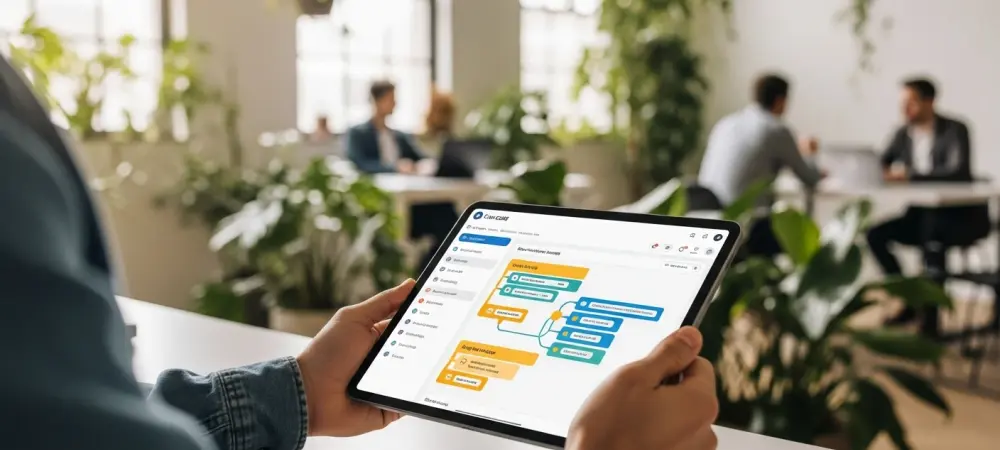
The contemporary office environment has undergone a radical transformation where the hum of manual activity has been replaced by the silent, efficient processing of autonomous digital systems. In this new landscape, the concept of a stagnant business day is obsolete, as modern organizations operate within a frictionless 24/7 cycle that requires neither coffee breaks nor sleep. The defining characteristic of the most successful enterprises today is their ability to distance themselves from the “manual grind,” delegating repetitive labor to a sophisticated digital engine that processes data with unwavering precision.
This shift toward continuous execution has created a distinct economic divide. Companies that resisted the transition to total automation now find themselves struggling to compete with lean, agile teams that produce ten times the output with a fraction of the staff. The current corporate standard is no longer about human endurance; it is about the mastery of automated ecosystems that handle the heavy lifting of operations. This allows the human element of the workforce to pivot toward high-level strategy, creative vision, and ethical governance, finally liberating intellectual capital from the shackles of administrative drudgery.
The End of the “Manual Grind” and the Rise of Always-On Systems
The transition from the traditional eight-hour workday to a perpetual execution model has fundamentally altered the competitive landscape. For years, businesses were limited by the physical and mental constraints of their employees, leading to bottlenecks during off-hours and weekends. However, the current standard utilizes an “always-on” framework where lead generation, customer support, and data synchronization occur in real-time, regardless of the time zone or office lights. This evolution has turned small, tech-integrated startups into formidable competitors capable of outmaneuvering legacy corporations that remain bogged down by human-led data entry.
Furthermore, the chasm between automated and manual firms has become an unbridgeable reality for those who failed to adapt. Automation is no longer an optional upgrade; it is the vital infrastructure that sustains modern commerce. By deploying ecosystems that function autonomously, businesses have achieved a state of “continuous execution” that eliminates the lag time once inherent in professional workflows. As a result, the role of the employee has shifted from being a cog in the machine to acting as the architect of the system, overseeing the digital engines that drive the brand forward.
Why Autonomous Workflows Have Become the New Corporate Standard
Operational survival in the current economy is predicated on extreme speed and the elimination of friction. Businesses have moved away from reactive models—where errors were fixed only after they caused damage—to proactive systems that predict and prevent issues before they manifest. This transition is fueled by the need for resource optimization that does not require massive headcount hikes. By automating the core pillars of business logic, companies can scale their revenue exponentially while maintaining a lean, nimble workforce that can pivot instantly to meet market demands.
Moreover, the era of data silos has officially ended. In the interconnected environment of the present, every piece of software is required to communicate with its counterparts in real-time. This connective tissue ensures that information flows seamlessly across departments without human intervention. When sales data, marketing metrics, and inventory levels are synchronized automatically, the margin for error evaporates. This integration allows for a level of institutional intelligence that was previously impossible, transforming raw data into a strategic asset that guides every corporate decision.
The Specialized Engines Driving Modern Enterprise Productivity
The current technological landscape is dominated by specialized automation categories that keep businesses in a state of perpetual motion. HubSpot serves as the primary intelligence hub for many, identifying and advancing high-value prospects through the sales funnel without a single manual click. Similarly, Jasper AI has revolutionized communication by eliminating creative bottlenecks, allowing brands to maintain a consistent voice across all digital channels at a scale that would have once required an entire department of copywriters. To bridge the gaps between disparate platforms, Zapier provides the essential trigger-action logic that ensures data migrates instantly across the enterprise. On the analytical side, Delve AI synthesizes user behavior and competitor trends into high-precision consumer profiles, allowing for surgical marketing accuracy. Meanwhile, Surfer SEO automates the technical rigors of search visibility, and Microsoft Power Automate streamlines internal administrative flows. Together, these tools form a cohesive engine that reduces cross-departmental friction and ensures that no task is ever left to chance.
Expert Perspectives: The Low-Code Revolution and Human Synergy
Industry researchers have observed a democratization of technology that has rewritten the rules of corporate hierarchy. The rise of “low-code” and “no-code” dashboards has removed the technical barriers that once separated the IT department from the rest of the company. Today, non-technical staff in marketing, HR, and finance can build complex, automated workflows with intuitive visual tools. This shift has empowered every level of the organization to optimize their own processes, leading to a bottom-up revolution in efficiency.
The collaborative labor model has also reached a point of stability. Findings indicate that the relationship between AI and human workers is no longer one of replacement, but of synergy. While AI handles the data-heavy, repetitive tasks, humans provide the “creative sparks” and the ethical oversight necessary to maintain brand authenticity. Case studies from across the globe demonstrate that firms achieving 24/7 operational continuity are those that have successfully integrated AI-driven execution with human-centric strategy, creating a hybrid workforce that is both highly productive and deeply innovative.
A Framework for Transitioning to an Automated Business Model
To remain relevant in this fast-paced economy, organizations followed a structured path toward total integration. The process began with a rigorous audit of repetitive friction, identifying the “dead zones” where manual tasks slowed the speed of business. Once these bottlenecks were identified, leaders focused on building automated bridges, selecting tools with robust API connectivity to ensure a seamless flow of data. This architectural approach was essential for creating a unified system where information moved effortlessly from one stage of the lifecycle to the next.
The final stage of this transition involved a fundamental shift in workforce training. Instead of focusing on “doing the work,” employees were trained to “manage the systems” that performed the tasks. This required an iterative optimization mindset, where AI-generated insights were used to constantly refine and improve automated processes. By shifting the human focus toward strategic oversight, companies successfully turned their operations into self-improving engines of growth. The transition was not merely a technical upgrade, but a complete reimagining of what it meant to be a productive enterprise in a world without manual limits.