

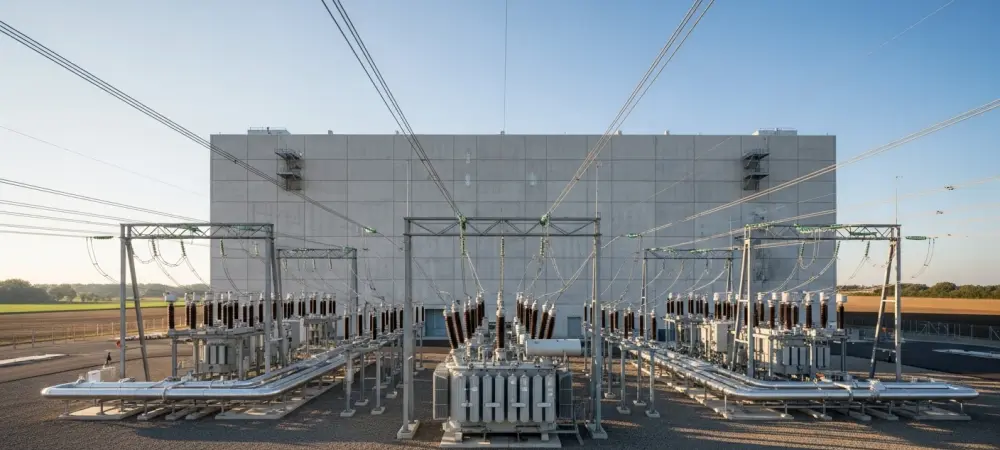
The silent hum emanating from massive, windowless concrete structures now defines the skyline of once-sleepy rural towns, signaling a pivot toward an era where physical infrastructure dictates the limits of digital intelligence. While Wall Street celebrates every multi-billion-dollar data center announcement as a win for the future of artificial intelligence, the physical reality on the ground tells a much more complicated story. In small towns across the country, massive windowless warehouses are appearing overnight, promising a high-tech revolution but often delivering little more than a strained power grid and a massive water bill. This movement does not merely represent a construction boom; it is a speculative gold rush where the chips are silicon, the currency is electricity, and the risks are being quietly shifted onto the public.
The acceleration of this infrastructure build-out creates a paradox where digital progress necessitates significant physical degradation. Investors look at the rising stock prices of hardware manufacturers and see a clean, upward trajectory, yet the foundations of that growth are buried in trenches and cooling pipes. The narrative often ignores the friction between the borderless nature of software and the very real borders of local resources. Consequently, the disconnect between market enthusiasm and logistical feasibility has become the defining tension of the current technological landscape.
Why the Data Center Boom Matters Today
The pivot toward artificial intelligence has fundamentally altered the tech industry’s DNA, moving it from a world of software and code to one of massive physical footprints and heavy industrial demands. As hyperscalers like Microsoft, Google, and Amazon race to secure their dominance, their aggressive expansion is colliding with real-world constraints such as limited energy, dwindling water supplies, and skeptical local governments. Understanding this phenomenon is crucial because the AI revolution isn’t happening in a vacuum; it is reshaping local economies and national infrastructure in ways that could have permanent consequences if the projected demand fails to materialize as expected.
This industrialization of the internet represents a departure from the “asset-light” models that defined the previous decade. In the current environment, the ability to process massive datasets depends entirely on the proximity to high-voltage power lines and stable water sources for heat dissipation. This shift forces technology companies to negotiate with entities they previously ignored, such as public utility commissions and agricultural boards. Because these facilities have lifespans measured in decades, the decisions made today regarding land use and energy allocation will lock communities into specific economic paths for the foreseeable future.
Analyzing the Forces Driving the Infrastructure Surge
Data centers are often marketed to rural communities as modern-day manufacturing hubs, but the long-term job growth rarely matches the initial hype. Unlike traditional factories, these facilities are highly automated and require very few staff members once the construction phase ends. This creates a ghost economy where massive facilities occupy vast tracts of land while contributing minimal employment opportunities to the local workforce. To accommodate the massive energy spikes required for AI training, utility companies must often fast-track expensive substation upgrades and transmission line reinforcements, the cost of which frequently falls on residents.
In the current market, spending has become a form of theater where tech giants use multi-billion-dollar capital expenditure announcements to signal to investors that they are winning the AI race. This creates a self-reinforcing cycle where high spending is equated with future dominance, leading to a situation where infrastructure is built based on stock market expectations rather than confirmed enterprise demand. Recognizing that the public grid cannot keep up with their ambitions, tech companies are increasingly acting like energy utilities by investing in their own power generation assets. While this secures their compute power, it further isolates these tech giants from the communities they inhabit, creating a two-tiered energy system.
Expert Perspectives on Market Psychology and Demand
Industry analysts point to a significant lag between the construction of AI infrastructure and actual corporate adoption. While tech companies are building at a sprint pace, the average enterprise moves at a walk, slowed by security concerns, legal reviews, and the high cost of implementation. Expert consensus suggests that the current gold rush is banking on a level of rapid, universal AI integration that history suggests is unlikely for most legacy businesses. This disconnect raises questions about whether the billions of dollars flowing into specialized chips and concrete will result in a sustainable return on investment or merely a surplus of underutilized hardware.
Historical precedents in the tech sector warn of the dangers of overcapacity and the fragility of speculative bubbles. If the wave of enterprise AI spending remains a ripple rather than a tsunami, the industry may face a period of massive write-down and underutilized facilities. This market misalignment suggests that the current building boom is fueled more by the fear of missing out among C-suite executives than by immediate, scalable revenue streams. Analysts emphasize that while the potential of AI is immense, the timeline for its monetization is often stretched thin by the practical realities of business integration and the sheer cost of maintaining these high-energy environments.
Navigating the Realities of the AI Expansion
To mitigate the risks of the data center boom, local governments shifted their focus toward more rigorous impact assessments. They moved beyond the allure of glossy brochures and began implementing user-pays models for grid upgrades to ensure that tech giants, rather than local ratepayers, covered the costs of industrial-scale energy demands. These administrations also prioritized water-neutral cooling technologies as a non-negotiable prerequisite for zoning approval, reflecting a new commitment to resource preservation. By demanding transparency in resource consumption, these communities established a precedent for balanced growth that protected the long-term interests of the citizenry.
Investors and policymakers eventually looked past corporate signaling to evaluate the gold rush through the lens of actual utility. This involved tracking the pace of AI software integration within non-tech industries rather than just monitoring the hardware sales of GPU manufacturers. A more balanced approach focused on efficiency optimization rather than just aggressive expansion, ensuring that the infrastructure built remained sustainable for the economic climate. Ultimately, the industry learned that the true value of the digital future was not found in the size of the warehouse, but in the measurable productivity gains delivered to the broader economy. These strategic adjustments ensured that the expansion served as a foundation for genuine progress rather than a monument to speculative excess.