

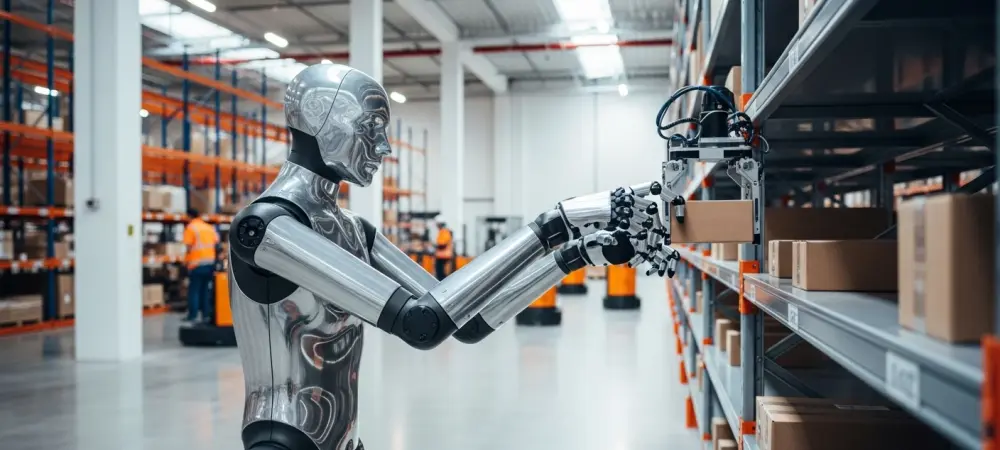
Walking through the crowded halls of the Stuttgart Trade Fair center during the LogiMAT exhibition, the rhythmic mechanical clicking of bipedal machines signals a profound shift in how the global supply chain manages its most complex physical challenges. The exhibition serves as a critical barometer for the current state and future trajectory of industrial automation, highlighting a significant tension in the robotics sector between the established dominance of Autonomous Mobile Robots and the emerging presence of humanoid forms. While the floor is saturated with mature technologies like automated guided vehicles, the arrival of these human-centric models has sparked a profound conversation about the next logical step in solving the labor crisis. The central inquiry in Stuttgart is whether these designs represent a solution or a high-cost distraction, marking a shift from experimental curiosities toward floor-ready tools.
This transition in industrial automation represents a departure from traditional “fixed-form” machinery to more adaptable assets. Industry experts are currently examining the fine line between the efficiency of wheeled platforms and the versatility of bipedal movement. The current atmosphere suggests that the barometer of innovation is moving away from the hype of the future toward the immediate needs of the warehouse floor. As experimental models evolve into potential workers, the focus has shifted to whether these machines can truly integrate into the existing workflows of European logistics providers. The debate is no longer about the technical possibility of bipedal movement but rather its economic and operational viability in a landscape where traditional automation has already set a very high bar for performance and reliability.
A Technological Standforward at LogiMAT 2026: Gimmick or Game-Changer?
The tension between established automation and emerging humanoid forms was the defining theme of the Stuttgart event. For years, the logistics industry has relied on wheeled robots that excel at moving pallets across flat surfaces, yet these machines remain limited by their inability to interact with environments built for humans. Humanoid robots are now challenging this status quo, offering a form factor that can navigate stairs, climb over obstacles, and use tools designed for the human hand. This has forced a confrontation between those who believe in the “function dictates form” mantra and those who see the human shape as the ultimate general-purpose tool. The skepticism from traditional robotics giants remains high, yet the sheer volume of humanoid prototypes on display suggests that the industry is preparing for a paradigm shift that could redefine the workforce.
The inquiry into whether these machines are a solution or a distraction hinges on the practical application of bipedal designs in real-world scenarios. While traditional automation is incredibly efficient in a perfectly structured warehouse, most logistics facilities are still “brownfield” sites designed for people. In these environments, the high cost of redesigning infrastructure to accommodate wheels often outweighs the cost of the robot itself. Humanoids promise to bypass this issue by occupying roles previously reserved for human employees without requiring any changes to the physical layout. This shift toward spatial-aware assets marks the beginning of an era where robots are expected to adapt to the warehouse, rather than forcing the warehouse to adapt to the robot.
The Drivers of a New Industrial ErWhy Form Factor Now Matters
Europe is currently navigating a demographic cliff that is fundamentally changing the economics of industrial labor. With a shrinking workforce and aging population, the number of available manual laborers is declining at a rate that traditional automation cannot fully address. In many European regions, the total cost of labor has reached a tipping point of €40 per hour when benefits and overhead are included. This economic reality is driving companies to seek machines that can take over “dull, dirty, or dangerous” tasks that younger generations are increasingly unwilling to perform. The focus is no longer just on incremental efficiency gains but on the survival of logistics operations in the face of a disappearing workforce.
The “human-designed” constraint of modern infrastructure provides the strongest argument for the humanoid form factor. Traditional wheeled automation struggles with the irregular shelving, narrow aisles, and vertical transitions found in older European facilities. While building a new, fully automated warehouse is an option for some, the vast majority of businesses must operate within existing footprints. Humanoid robots are being positioned as the bridge between these two worlds, offering the ability to pick items from standard shelves and move them across multi-level floors. By addressing the need for machines that can function in spaces designed for humans, manufacturers are providing a way for companies to automate without the massive capital expenditure of a total facility redesign.
From Eastern Innovation to European Deployment
The vanguard of this humanoid movement is currently led by Chinese manufacturers who are moving rapidly from conceptual models to actual production line deployments. Companies such as UBTech and Unitree have already begun testing their machines in domestic automotive factories, particularly within the massive production lines of companies like BYD. These machines are not just walking; they are performing high-precision tasks such as quality inspections and component handling. This aggressive push from the East has forced European firms to accelerate their own robotics roadmaps to remain competitive. The arrival of these Chinese-made robots in the European market signals a new phase where innovation is being imported from regions with a higher tolerance for rapid prototyping and deployment.
Bridging the dexterity gap is the current focus of these technological leaders, moving beyond simple locomotion toward intricate manipulation. Use cases now include everything from the delicate picking of glass bottles to the magnetic gripping of heavy industrial components. The industry is witnessing a clear shift toward “General Purpose Robots” that can be repurposed for different tasks throughout the day. A robot might spend the morning unloading a truck and the afternoon performing detailed inventory counts. This adaptability is the core value proposition of the Chinese vanguard, as they aim to provide a machine that is a flexible asset rather than a single-task tool. As these models enter European logistics hubs, they are being evaluated on their ability to handle the diverse and often unpredictable nature of modern retail and industrial picking.
The Intelligence Revolution: Software as the Robot’s “Brain”
The true value of future robotics is increasingly found in the AI-driven library of transferable tasks rather than the physical frame of the machine. We are seeing the emergence of a “Skill Marketplace,” where the rigid proprietary programming of the past is being replaced by downloadable humanoid skills. Instead of hiring a programmer to spend months teaching a robot how to pick up a specific box, companies can now download a pre-trained skill set that has already been perfected through millions of iterations. This transition toward modular intelligence allows for much faster deployment and reduces the technical barrier to entry for smaller logistics firms. The software is becoming the defining feature of the robot, enabling it to learn and adapt to its environment in real time.
To accelerate this learning process, developers are heavily utilizing virtual reality and physical AI to teach machines complex tasks in simulated environments. By training a digital twin of the robot in a high-fidelity simulation, engineers can compress years of real-world experience into a matter of days. This “sim-to-real” pipeline is crucial for teaching humanoids how to handle the nuances of human environments, such as avoiding collisions with people or adjusting to shifting loads. As hardware continues to commoditize and prices fall due to mass production, the intelligence of the robot will be the primary differentiator. This software-centric approach ensures that a robot purchased today can become more capable over time through over-the-air updates, much like a modern smartphone or electric vehicle.
Strategic Implementation: A Framework for Future-Proofing Logistics
The implementation of humanoid robots requires a strategic framework that prioritizes the task over the form of the machine. While the bipedal design is impressive, it is not always the most efficient choice for every warehouse operation. A pragmatic approach involves evaluating when bipedal movement provides a clear asset, such as navigating stairs, and when wheeled stability remains superior for bulk transport. Many logistics providers are now adopting “pragmatic humanoids” that combine a human-like torso for manipulation with a traditional mobile base for faster and more stable movement. This hybrid strategy allows companies to capture the benefits of human-like dexterity while avoiding the mechanical complexity and energy consumption of walking. Planning for the 2031 horizon requires a five-year window for testing, refinement, and capital allocation to ensure that the technology is ready for full-scale adoption. Large-scale European firms are currently running pilot programs to manage a mixed fleet of robots, integrating AMRs for high-speed transport with humanoids for more intricate manipulation tasks. This heterogeneous integration is the most likely future for the logistics sector, where different machines work in concert under a single warehouse management system. By establishing these frameworks now, companies can ensure they are not left behind as the labor market continues to tighten. The focus remained on finding the right balance between the proven reliability of existing tools and the transformative potential of the humanoid form.
The evolution of these technologies was documented as a necessary response to an era of unprecedented labor challenges and technological advancement. Industry leaders observed that the introduction of humanoid forms into the warehouse did not immediately replace existing systems but rather filled the gaps that traditional automation could not reach. The successful integration of these machines depended on the maturity of physical AI and the ability to demonstrate a clear return on investment. As the exhibition in Stuttgart concluded, the consensus shifted toward a future where the human shape was no longer a novelty but a strategic tool for maintaining global productivity. Companies eventually realized that the value of these machines resided in their ability to adapt to a world designed for people. Logistics providers who embraced this hybrid future positioned themselves to thrive in a landscape defined by both human ingenuity and robotic precision.