

The sight of thousands of unsold electric sedans gleaming under the desert sun has become a haunting visual metaphor for the identity crisis currently gripping the world’s most famous automaker. Tesla’s first-quarter delivery report for 2026 arrived like a cold splash of water, revealing a significant miss that saw only 358,023 vehicles reach customers despite a production run of over 408,000 units. This gap of 10,000 units below analyst expectations suggests that the frantic pace of the previous decade has finally met the hard reality of a saturated market. This moment represents a fundamental pivot point for a company that once seemed invincible. As stock prices dipped by 4% in the wake of the news, the narrative shifted from how many cars Tesla can build to whether the company can successfully transition into a robotics and artificial intelligence firm. The stakes are immense, as the brand must now prove that its future value lies not in steering wheels and chassis, but in autonomous brains and humanoid limbs that can perform tasks once reserved for biological workers.
Deciphering the Cracks in the Electric Vehicle Foundation
The cooling of Tesla’s growth is not a sudden phenomenon but a structural trend that has solidified over several fiscal cycles. Total deliveries have shown a persistent downward slope, slipping from 1.79 million in 2024 to 1.64 million in 2025, signaling that the initial wave of early adopters has been fully exhausted. This stagnation is largely attributed to a staggering over-reliance on the Model 3 and Model Y, which comprise 95% of total sales, leaving the company exposed as competitors flood the market with fresher designs.
External pressures have further tightened the vice on the company’s traditional revenue streams. The expiration of the $7,500 U.S. federal tax credit in late 2025 acted as a significant deterrent for price-sensitive buyers already struggling with high interest rates. Furthermore, geopolitical shifts and increased localized competition in Asian markets have forced Tesla into aggressive price-cutting strategies. These maneuvers, while necessary to move inventory, have inevitably eroded the premium aura that once allowed the brand to command industry-leading margins.
From Assembly Lines to Autonomous Brains: The Strategic Realignment
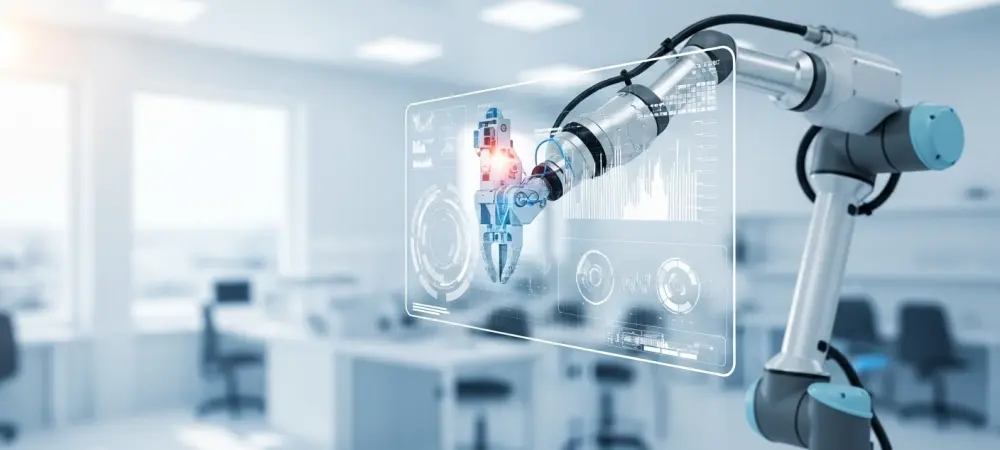
To escape the “legacy” trap, leadership has initiated a radical overhaul of the company’s manufacturing DNA. Elon Musk recently confirmed the end of the line for the flagship Model S and Model X, repurposing the historic Fremont facility to serve as the primary hub for the Optimus humanoid robot. This transition signals a willingness to cannibalize established luxury segments in favor of a high-risk, high-reward bet on the robotics industry. The goal is to move beyond the metal-stamping business toward a future defined by the “Cybercab” and labor-replacing technology.
However, the bridge to this robotic future is currently built on shaky ground. While the electric Semi and autonomous platforms promise high margins, they have yet to achieve the industrial scale required to fill the multibillion-dollar void left by dwindling car sales. Even the energy storage sector, once touted as a secondary pillar of stability, saw deployments plummet from 14.2 GWh to 8.8 GWh. This contraction complicates the argument that Tesla can effortlessly swap its automotive identity for a multi-faceted technology ecosystem without a painful period of financial contraction.
Investor Sentiment and the Burden of the Visionary
As the April 22 earnings report approaches, the financial community is intensely focused on the sustainability of automotive gross margins. Investors are no longer content with promises of future innovation; they are demanding evidence that the current fleet can remain profitable while the robotics division matures. The “Musk factor” has also evolved into a double-edged sword, where the CEO’s public persona and political entanglements have created a tangible “brand tax” that may be alienating core demographics in vital urban markets. The valuation of the company is increasingly decoupled from its physical output and tied to the perceived potential of its software. Stakeholders are essentially betting on a transformation where the firm evolves into a platform provider, yet the volatility of the leadership remains a constant variable. The upcoming financial disclosures will serve as a litmus test for whether the market still believes in the visionary’s ability to execute a second act as impactful as the first, or if the “robotics-first” narrative is a defensive pivot against a slowing core business.
Evaluating the Viability of a Robotics-First Revenue Model
For this transition to hold weight, the Optimus project must evolve from a laboratory curiosity into a commercially viable tool with clear utility in external industrial settings. Success will be measured by the robot’s ability to perform complex, unscripted tasks that justify its high development costs. Moreover, the “Cybercab” faces a labyrinth of regulatory hurdles; achieving Level 5 autonomy requires more than just functional software—it requires a legislative breakthrough that has remained elusive despite years of optimistic projections. To ensure long-term stability, the company should focus on revitalizing its energy storage business to provide a steady cash flow buffer during the high-expenditure R&D phases of robotics. Diversifying the energy portfolio and stabilizing deployment figures could mitigate the risks associated with the unpredictable nature of autonomous vehicle approvals. Moving forward, the true indicator of success will be whether the organization can monetize its artificial intelligence at a scale that replaces the volume lost in the automotive sector, effectively redefining what it means to be an industrial powerhouse.