

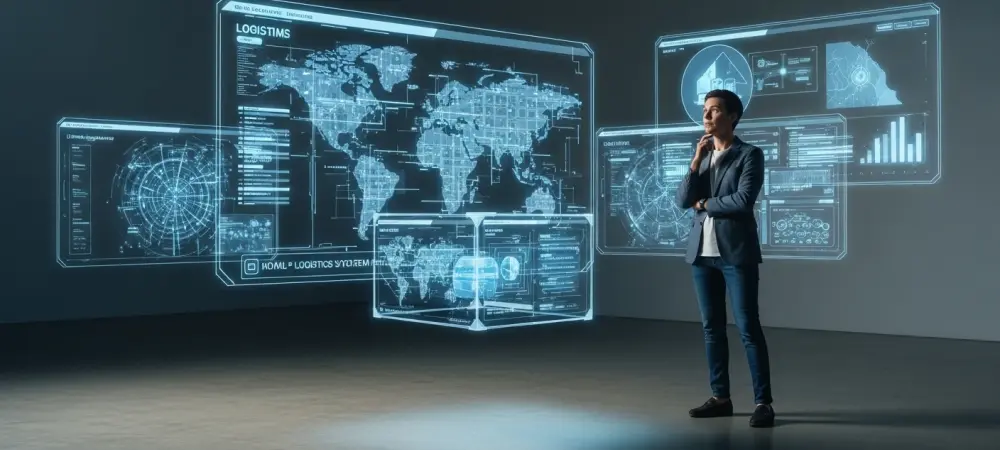
The traditional metric of corporate dominance, once measured by the sprawling size of an organization’s payroll, has officially collapsed under the weight of exponential technological progress. For nearly a century, economic power was concentrated in massive hierarchies where success required a vast workforce to manage the inherent complexities of production and administration. However, the market landscape of 2026 reveals a fundamental disruption of this logic, as artificial intelligence matures into a tool capable of executing sophisticated, autonomous functions. This analysis examines the transition toward the micro-enterprise, a model where the strategic vision of a single individual, augmented by digital intelligence, can rival the output of a global conglomerate. By examining current trends, it becomes clear that the era of the industrial-age giant is giving way to a leaner, more agile economic paradigm defined by individual agency.
The Historical Obsession: Scaling Through Human Capital
To understand the magnitude of this structural pivot, one must consider the legacy of the 20th-century corporate model. Throughout the 1900s, the “economies of scale” principle dictated that market dominance was a function of physical assets and human headcount. Large white-collar battalions were assembled as a necessity, not just for specialized production, but as a proxy for institutional stability and market influence. This reliance on centralization created sprawling management layers and entire departments dedicated solely to the internal administration of other employees, leading to a culture where organizational complexity was often confused with actual productivity.
The friction inherent in these massive systems resulted in a significant loss of efficiency, as bureaucratic alignment and constant meetings became the primary activities of middle management. In this environment, growth was inextricably linked to hiring, creating a cycle of expansion that prioritized volume over velocity. These foundational concepts are now being rendered obsolete as intelligence becomes decoupled from human labor. The current shift proves that strategic insight, rather than raw headcount, is the true engine of modern growth, allowing lean entities to bypass the inefficiencies that historically plagued large-scale operations.
The Structural Shift: Defining the AI-Powered Firm
Severing the Link: Output Versus Organizational Size
The historical correlation between a large staff and high revenue has been permanently severed by the emergence of agentic artificial intelligence. Market data indicates that modern firms are increasingly prioritizing “smaller and flatter” organizational structures, realizing that sophisticated digital tools can outperform bloated departments in both speed and accuracy. When a company can automate specialized tasks ranging from legal research to software development, the functional need for middle management evaporates. This shift redefines the “company” as a strategic framework held by an individual rather than a physical collective of human workers.
By removing the administrative overhead and the complex interpersonal dynamics associated with traditional hiring, the micro-enterprise achieves a level of operational efficiency that was previously impossible. This allows for a focus on high-margin activities while minimizing the “people problems” that often stall innovation in larger firms. The result is a market where the most profitable entities are no longer the largest ones, but those that can leverage the highest ratio of intelligence per human employee. This decoupling of labor from production is the cornerstone of the modern economic revolution.
A Hierarchy of Intelligence: The Visionary and the Agents
A critical component of this new business architecture is the synthesis of human strategy with autonomous execution. In a successful micro-enterprise, the human entrepreneur functions as the “Visionary,” providing high-level direction and creative problem-solving. Below this human core, a digital hierarchy of AI agents takes over the roles once held by specialized staff. A central “Manager” agent coordinates a fleet of “Technician” agents—digital entities capable of handling data analysis, logistics management, and customer outreach with near-infinite scalability and zero payroll complexity.
This organizational structure mimics the functional diversity of a full-scale corporation while operating with far greater agility. It allows the individual to focus exclusively on high-value decision-making while the digital workforce executes repetitive and data-intensive tasks with precision. Because these agents do not suffer from fatigue or the need for bureaucratic alignment, the micro-enterprise can maintain a continuous operational cycle. This model transforms the entrepreneur from a manager of people into a director of systems, drastically reducing the barrier to entry for complex global industries.
Institutional Erosion: The Shift Away from Traditional Credentials
The rise of the micro-enterprise has highlighted a growing disconnect between traditional educational systems and the actual requirements of the modern market. The legacy path involving long-term specialized degrees is increasingly viewed as a high-risk investment, as the skills taught at the start of a program are often automated by the time a student enters the workforce. This reality has sparked a trend toward radical self-reliance and the “Company of One” philosophy, where professionals prioritize individual agency over traditional employment.
Instead of training to become a small part of a corporate machine that may soon eliminate human roles, individuals are focusing on mastering the tools of automation. This movement is as much a psychological shift as an economic one, offering a safeguard against the volatility of corporate restructuring and a return to the virtues of independent entrepreneurship. The focus is no longer on obtaining a position within a hierarchy, but on building a personal infrastructure that can survive and thrive independently of traditional institutional support.
Technological Integration: Navigating the Phygital Frontier
Looking toward the immediate horizon, from 2026 to 2028, the micro-enterprise revolution will expand beyond the digital screen and into the “phygital” realm. This intersection of physical and digital worlds will be defined by the integration of AI “brains” into advanced robotics and autonomous machines. The individual entrepreneur will gain the capacity to manage real-world operations, such as local manufacturing or complex logistics, through the same agentic interfaces used for digital tasks. This technological evolution suggests that the most successful entities of the future will be those that minimize human overhead while maximizing output through autonomous hardware systems.
Strategic Implementation: Thriving in a Lean Economic Landscape
The transition to an AI-driven economy provides a clear roadmap for professionals seeking to maintain a competitive edge. It is essential to prioritize AI literacy and focus on developing a strategic vision rather than purely technical, task-oriented skills. Best practices for this era involve identifying every task that can be delegated to an autonomous agent and building a lean personal infrastructure capable of scaling without the need for traditional hiring. Businesses must look to flatten their existing structures and replace cumbersome, legacy software suites with integrated AI plugins that facilitate seamless communication between digital workers. By shifting focus from the quantity of people to the quality of intelligence, individuals can build resilient enterprises that remain immune to the structural inefficiencies of the past.
Refracted Realities: The Legacy of Individual Autonomy
The decline of the massive enterprise marked one of the most significant economic shifts in recorded history. This transition from human-intensive labor toward autonomous intelligence represented a democratization of corporate power, which allowed any individual with a strategic vision to compete on a global scale. While the obsolescence of traditional roles initially appeared daunting, the emergence of the micro-enterprise offered a future defined by autonomy, efficiency, and personal agency. Strategic winners in this new landscape recognized that the most powerful corporation in the world could reside within a single human mind. Ultimately, success was secured by those who understood that the company of the future was no longer defined by the number of people in an office, but by the intelligence of the tools a single person mastered. Actionable next steps for the coming years involved the aggressive pursuit of niche automation and the continuous refinement of personal strategic frameworks to ensure lasting market relevance.