

Aisha Amaira is a renowned MarTech expert with a deep-seated passion for bridging the gap between sophisticated marketing technology and tangible customer insights. With extensive experience navigating CRM ecosystems and Customer Data Platforms, she specializes in transforming internal data into powerful public narratives. Aisha’s work focuses on how organizations can leverage innovation to capture the authentic voice of the customer, ensuring that satisfaction isn’t just a metric in a dashboard but a driving force in the B2B sales cycle.
In this conversation, we explore the strategic necessity of moving beyond internal satisfaction scores like NPS to create visible, findable customer proof. Aisha explains why traditional reference programs often fail due to fatigue and why peer-to-peer recorded conversations are becoming the gold standard for high-stakes enterprise decisions. We delve into the logistics of producing authentic advocacy content and how to organize these assets to influence buyers who spend the vast majority of their journey researching independently.
Companies often possess high internal satisfaction scores that never reach the public. How do you bridge the gap between internal data and public-facing proof, and what specific steps can teams take to ensure these metrics actually influence a prospect’s decision-making process?
The reality is that a high NPS score sitting in a private dashboard does absolutely nothing for a prospect who is currently weighing you against two competitors. To bridge this gap, teams must stop viewing Customer Success and Marketing as separate silos and instead connect the customer success function directly to the content strategy. The first step is to identify those “invisible advocates”—the customers who renew without hesitation and speak well of you in private—and invite them into a structured, visible format like a recorded interview. You have to move the sentiment out of the spreadsheet and into a medium where a prospect can actually hear a peer’s voice, ensuring that the 90% of buyers who trust peer recommendations over sales pitches can actually find that proof during their research.
Since the vast majority of buyers trust peer recommendations far more than vendor sales pitches, how can a company pivot its outreach strategy? What are the practical trade-offs when shifting resources from traditional sales materials to authentic customer-led narratives?
Pivoting requires a fundamental shift from “telling” the market how good you are to “showing” how your customers succeeded, which aligns with the fact that only 29% of buyers trust vendor salespeople. The practical trade-off often involves moving budget and time away from highly polished, vendor-centric sales decks and toward the production of reusable customer-proof assets like podcasts or video Q&As. While traditional materials are easier to control, they lack the credibility that an authentic narrative provides; by investing in a 15–20 minute recorded conversation, you gain a library of assets that serve every future prospect, whereas a sales pitch only serves the person currently in the room. It’s an investment in scale and leverage rather than one-off interactions.
Traditional reference calls often lead to customer fatigue, while written reviews can feel overly transactional or generic. How do you design an advocacy program that provides genuine value to the customer while still capturing the deep, technical insights that enterprise-level buyers require?
The key is to design the program as an exchange of value where the customer feels like an industry expert rather than a marketing tool. Instead of a dry reference call that helps exactly one person and then disappears, a recorded interview allows the customer to showcase a project they are proud of and share their professional expertise with the wider industry. This format respects their time by capturing their insights once and then repurposing them, which prevents the fatigue of repetitive calls. By asking thoughtful, open-ended questions about their technical challenges and growth, you capture the deep specificity that enterprise buyers need while giving the advocate a high-quality piece of content they can use for their own professional branding.
Transitioning from static forms to recorded interviews or podcasts changes the dynamic of customer feedback. What are the logistical requirements for producing these conversations, and how can organizations ensure the final output feels like a peer-to-peer exchange rather than a polished marketing advertisement?
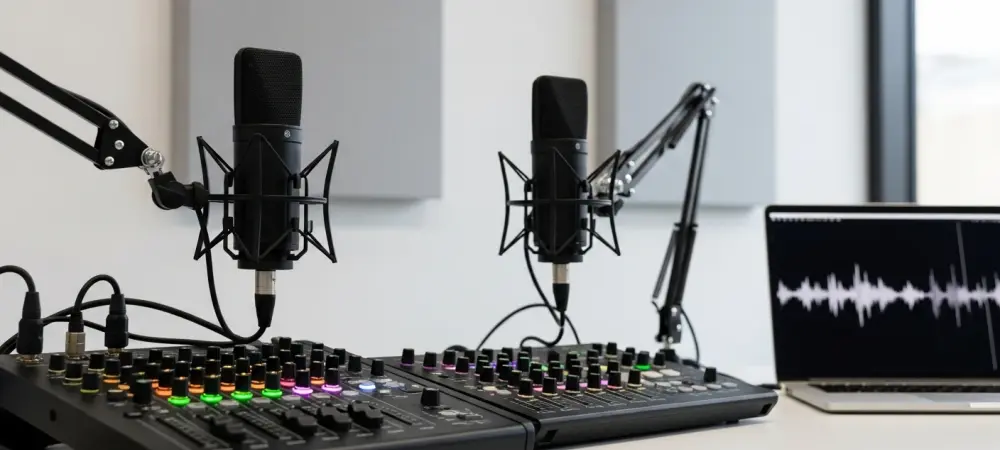
Logistically, you need a professional host who can guide the conversation and a streamlined process for recording and editing, but the most important requirement is a shift in mindset regarding the script. To ensure it feels like a peer-to-peer exchange, you must avoid asking the customer to repeat marketing slogans; instead, let them use their own words and tell their story in a natural, conversational setting. Using a consistent format across different verticals—similar to how Microsoft used Azure partner stories—allows for a professional feel without it sounding like a commercial. When a customer explains why they made a decision and describes the actual hurdles they faced, the authenticity naturally overrides any “corporate” feel, making the content far more relatable to other technical buyers.
Research shows that buyers perform most of their evaluation independently before ever contacting a supplier. How should companies organize a library of customer-proof assets to stay visible during this phase, and what indicators suggest that a single recorded conversation is successfully being reused across multiple sales channels?
Since buyers spend only about 17% of their time in direct contact with suppliers, your assets must be organized by vertical, use case, or technical challenge so they are easily discoverable during the independent research phase. A successful library is one where a single 20-minute conversation is broken down into short-form social media clips, written case studies, and quotable snippets for sales decks. You know a conversation is being successfully reused when you see it appearing in the early stages of the buyer’s journey—perhaps as a video embedded in a blog post or a link shared by a sales rep in a preliminary email—proving that the “invisible” advocacy has finally become a visible part of the lead generation engine. This visibility is what earns you a spot on the shortlist that 92% of buyers create before they even speak to you.
What is your forecast for B2B customer advocacy?
I believe B2B advocacy will move entirely away from the “favor-based” model toward a “media-based” model where customer stories are treated as the most valuable intellectual property a company owns. We will see a decline in the effectiveness of anonymous review sites and a massive surge in long-form, authentic video and audio content that buyers can consume on-demand. As the buying journey becomes even more independent, the companies that thrive will be those that treat their customers as co-creators of their brand narrative, making “customer proof” a permanent, searchable, and central part of their digital presence rather than a hidden internal metric.