

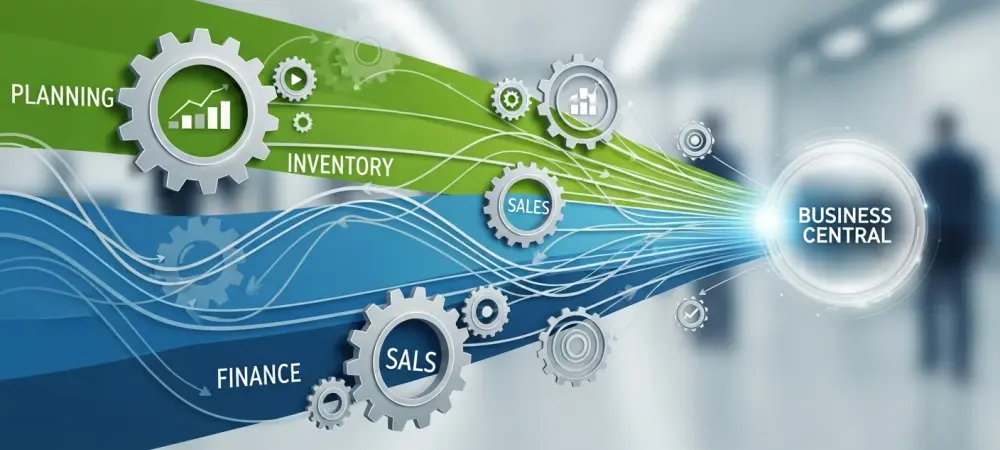
Success in industrial digital transformation hinges not on the speed of a software rollout but on the surgical precision of the sequence in which it is deployed. Manufacturers frequently mistake a software license for a total solution, believing that the mere presence of a modern Enterprise Resource Planning system will cure deep-seated operational inefficiencies. This misconception often leads to “premature automation,” a state where flawed processes are merely accelerated, resulting in a higher volume of errors produced at a much faster rate. It is a fundamental truth that speeding up a broken system only creates faster mistakes, leaving organizations with expensive technology that fails to deliver a meaningful return.
Why Strategy Trumps Software in Modern Manufacturing
Industry veterans like Stephanie Clark, the founder of Elliott Clark Consulting, argue that the philosophy behind the implementation is far more critical than the lines of code within the software. Her methodology rests on a strict hierarchy: process first, technology second, and automation last. This framework acknowledges that software is a tool for executing a strategy, not a strategy in and of itself. By focusing on the structural flow of information before turning on the digital switches, companies avoid the common trap of digitizing chaos.
Furthermore, a strategy-first approach requires an honest assessment of internal workflows that are often taken for granted. When a manufacturer attempts to skip the process phase, they risk embedding bad habits into their new digital infrastructure. The resulting friction typically manifests as employee resistance and data silos that persist long after the software has been deployed. Transitioning toward a process-driven model ensures that every technological investment serves a specific, validated business purpose.
The Evolution of Data Management from Dynamics NAV to Business Central
The journey from legacy systems like NAV 1.0 to the modern Business Central environment represents a fundamental shift in how data integrity is perceived within the industrial sector. In previous decades, manufacturing data was often fragmented, with critical engineering specifications residing in isolated spreadsheets or paper files tucked away in shop floor binders. These “hidden” processes created a disconnect where the office and the shop floor operated on different versions of the truth.
Today, the integrity of this data has become more valuable to long-term revenue than any single product delivery. As manufacturers move toward cloud-based environments, the cost of bad data becomes exponentially higher due to the interconnected nature of modern systems. Establishing a centralized, accurate data source is no longer just an IT goal; it is a core business requirement that dictates the success of every downstream operation from procurement to final shipping.
The Three Pillars of an Effective ERP Implementation
Moving a manufacturer from a state of operational chaos to streamlined efficiency requires a disciplined journey through three specific milestones. This sequential approach ensures that the organization builds upon a solid base rather than reaching for high-level automation while the fundamental structures are still crumbling or unverified.
The Foundation of Process Mapping
The first pillar involves a rigorous redesign of how information moves through the business, specifically targeting the critical handoff between engineering and the shop floor. In many organizations, this is the point where the most friction occurs, as CAD designs are manually re-interpreted for production. Mapping this process reveals where data is born and how it should travel without human intervention. This clarity ensures that when the software is finally configured, it supports a workflow that has already been optimized for speed and accuracy.
Strategic Technology Configuration
Once the process is defined, the focus shifts to aligning Business Central’s internal engines, such as costing models and planning worksheets, with validated data. This stage avoids the “train and go” pitfall, where users are overwhelmed with features they do not need. Instead, the technology is tailored to the refined process, ensuring that the software reflects the reality of the shop floor. This alignment minimizes the learning curve and prevents users from retreating to the familiarity of their old, disconnected spreadsheets.
Intelligent Automation as the Final Multiplier
The final pillar is where true efficiency gains are realized through tools that eliminate manual re-keying between CAD, PLM, and ERP systems. Automation acts as a multiplier, but only when applied to a sound workflow that has been tested and proven. By removing the manual burden of data entry, engineers can return to high-value design work while the system handles the heavy lifting of Bill of Materials transformation. This stage represents the final payoff for the discipline maintained during the previous phases.
What Sets a Process-First Methodology Apart
A process-first approach is characterized by “ruthless scoping” and a commitment to the 80/20 rule, focusing on the core activities that drive the majority of the business. Unlike low-cost, packaged implementations that prioritize a fast go-live over organizational health, this method emphasizes long-term stability. The value of “second opinion” audits is significant here, as they often identify that what feels like “broken” software is actually just a symptom of external process friction.
Moreover, this methodology fosters a culture of “management by exception,” where teams focus their energy on solving high-value problems rather than performing manual data entry. By reducing the noise of routine tasks, leadership can gain a clearer view of the business performance. This shift from reactive firefighting to proactive management is the hallmark of a successful digital transformation. It allows the organization to scale without a linear increase in administrative overhead.
The Current State of Manufacturing Integration and Automation
Modern manufacturers now leverage rules-based engines to bridge the gap between engineering and production departments. Recent advancements in CAD-to-ERP integration allow for the automatic transformation of complex Bills of Materials, ensuring that what was designed is exactly what gets built. This technology effectively combats “shadow IT,” where employees rely on hidden Excel files to manage production because the central system felt too cumbersome.
Furthermore, these integration tools provide a level of data consistency that was previously impossible to maintain manually. As manufacturers face increasing pressure to shorten lead times, the ability to move instantly from design to production becomes a primary competitive advantage. The focus has shifted from merely capturing data to ensuring that data flows seamlessly across the entire enterprise, creating a high-velocity environment that responds to market demands in real time.
Reflection and Broader Impacts
The shift toward a sequential implementation strategy offers long-term sustainability in a digital industry that is becoming increasingly complex. While the initial investment in process mapping may seem slow, it prevented the recurring costs associated with fixing bad data and retraining frustrated staff.
Reflection
Analyzing the “Process, Technology, Automation” order highlighted the difficulty of overcoming organizational inertia and old habits. Many teams were conditioned to favor speed over accuracy, making the shift to a deliberate sequence a significant cultural challenge. However, the benefits of this discipline were undeniable, as it created a stable environment where software served the user rather than the other way around. The order of operations proved to be the most reliable predictor of ERP success.
Broader Impact
The ability to recover hundreds of thousands of dollars in wasted engineering time shifted the competitive landscape for mid-market manufacturers. By eliminating the clerical burden on technical staff, organizations fostered innovation and improved their speed to market. This recovery of human capital allowed companies to focus on growth and product development rather than data correction. The broader manufacturing sector began to recognize that digital maturity was not about the tools themselves, but about the refinement of the business process.
Realizing the Full Potential of Your ERP Investment
The strategic implementation of Business Central reached its peak when the software mirrored a refined, efficient business process. Success was never found in the lines of code alone but in the perfect alignment of human behavior and digital tools. The path toward a high-velocity, automated future required a commitment to doing things in the right order, ensuring that every dollar spent on technology provided a measurable return on investment.
Moving forward, manufacturers must continue to audit their workflows to ensure that new automations do not mask underlying process decay. The most successful organizations were those that treated their ERP sequence as a living strategy rather than a one-time project. By maintaining this discipline, they ensured that Business Central remained a powerful engine for growth. The ultimate takeaway was that when the sequence was correct, the technology finally paid off in ways that reached far beyond the initial scope of the implementation.