

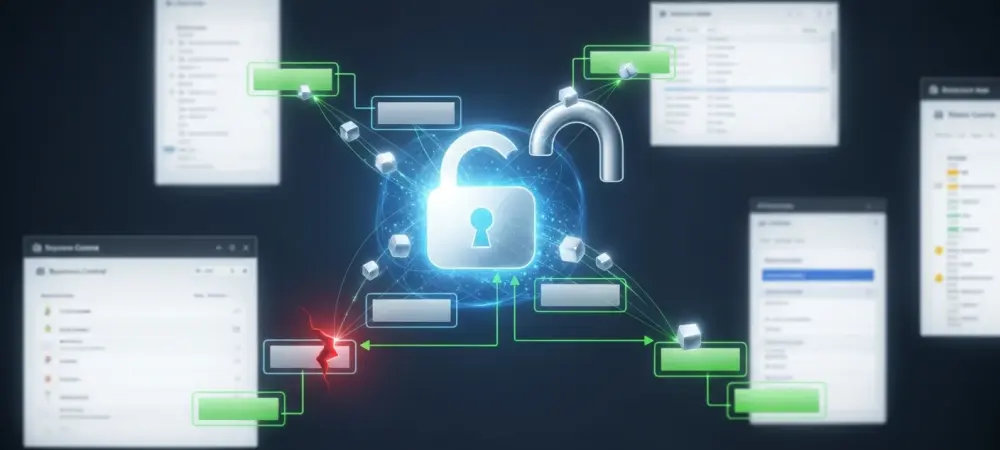
A single misplaced keystroke by an employee with standard access rights can silently rewrite a corporation’s financial future without ever triggering a native security alarm. This vulnerability is not a flaw in the code but rather a side effect of how modern ERP systems handle broad data permissions. When a clerk updates a shipping address, the system often grants them the technical ability to modify a customer’s credit limit or payment terms simultaneously. This fundamental disconnect between operational necessity and data integrity creates a scenario where sensitive financial information is often just one accidental or unauthorized edit away from a major compliance breach.
The importance of this issue cannot be overstated for organizations navigating the complexities of modern digital finance. Business Central provides a powerful platform for growth, but its native security model is built on wide-reaching table access rather than granular control over specific data points. For businesses that must answer to rigorous internal audits and external regulations, the ability to lock down specific fields while keeping the rest of the record open for business is no longer a luxury—it is a requirement. Addressing this gap requires a transition from simple visual adjustments toward a robust, data-layer authorization strategy that protects the core of the business.
The Illusion of Security: When Table Permissions Aren’t Enough
Organization-wide claims of data security often crumble when subjected to a deep dive into user permissions. In many environments, the same permission that allows a warehouse manager to view inventory also grants the ability to change the unit cost of items. This “all or nothing” approach to table access is a significant risk factor for data corruption and fraud. Without the ability to restrict specific fields, sensitive financial data sits exposed to any user who has a legitimate reason to access the record for non-financial purposes.
This structural vulnerability leads to a precarious balancing act for administrators. They are forced to choose between restricting a user’s ability to do their job or granting them access to fields that should remain strictly under the control of the finance department. When operational efficiency is prioritized over security, the result is a system where critical data points like bank account numbers or tax registration details are unprotected. The integrity of the entire financial database is only as strong as the most junior employee’s access level, which creates a significant hurdle for maintaining a secure environment.
The Core Challenge of Business Central’s Data Layer Hierarchy
Business Central operates on a hierarchical security model that focuses primarily on the table level. Users are granted rights to read, insert, modify, or delete entire records, but the system lacks a native permission object for individual fields within those records. This design creates a binary access model that is increasingly at odds with the needs of specialized departments. In a typical scenario, a user either has the right to modify a record in its entirety, or they are locked out of it completely, leaving no middle ground for protecting specific sensitive data points.
For finance and audit teams, this hierarchy presents a clear danger. High-stakes fields like posting groups and payment terms reside on the same tables used for daily customer and vendor management. Because the system cannot isolate these fields from general modification permissions, the technical door remains open for unauthorized changes. This structural limitation means that even if a business has carefully defined roles, those roles are still fundamentally tied to the broad table-level architecture, making it nearly impossible to implement a true “least privilege” access policy for specific data fields.
Why Personalization and Custom Code Fail the Stress Test
To solve the field-level gap, many administrators rely on user interface personalization to hide sensitive fields from certain profiles. However, this method is purely cosmetic and does not constitute a real security control. Data remains accessible and editable through alternative entry points such as “Edit in Excel,” OData feeds, and various API integrations. A user who cannot see a field on their web client can still easily modify that same data by pulling the table into a spreadsheet, rendering the visual hiding technique useless in the face of a modern, integrated workflow. Similarly, relying on custom AL code to enforce field security introduces a heavy burden of technical debt. Writing specific validation checks for every sensitive field requires constant developer intervention and extensive testing during every system upgrade. This approach leads to a rigid environment that is difficult to maintain and expensive to scale. Moreover, managing security through code lacks the transparency required for effective oversight, as non-technical application managers cannot easily view or adjust security policies without a developer’s help, leading to a disconnect between policy and implementation.
Establishing a Reliable Standard for Compliance and Internal Audits
Modern audit requirements emphasize the need for preventive controls—mechanisms that actively block unauthorized actions rather than simply recording them after the fact. Experts in IT audit suggest that a robust field-level security solution must enforce restrictions at the table layer to ensure consistency across all possible entry points. By shifting the focus from visual “hiding” to data-layer authorization, organizations can provide a verifiable audit story. This story proves that critical data, such as vendor bank details, was physically impossible to change for unauthorized users, regardless of how they accessed the system.
A consistent security standard also simplifies the process of risk management during internal reviews. When security is applied at the data level, it covers not just the web browser but also the entire ecosystem of connected apps and reporting tools. This unified approach eliminates the need to audit every single page or profile separately. Instead, auditors can focus on the centralized security configuration, knowing that the rules are applied globally. This creates a more resilient framework that stands up to professional scrutiny and ensures that the organization remains compliant with increasingly strict data governance laws.
A Configuration-First Approach to Securing Critical Data Fields
The most effective way to secure sensitive data is to move away from code-heavy workarounds toward a configuration-based model. This approach allows application managers to designate fields as read-only or hidden through a simple interface, providing the agility needed to respond to changing business needs. By enforcing these rules directly at the table layer, organizations ensure that APIs and external integrations are governed by the same strict rules as the standard web client. This strategy provides a “set it and forget it” level of security that remains intact even as the business grows.
Furthermore, integrating these field-level rules with identity management systems like Microsoft Entra ID allows for seamless alignment with existing organizational groups. Control should also extend beyond just locking fields; disabling specific page actions, such as the “Post” or “Release” buttons, adds another layer of protection to critical workflows. By prioritizing a solution that balances protection with operational flexibility, organizations can secure their most sensitive data points without hindering the productivity of their teams, creating a more stable and trustworthy ERP environment for the entire enterprise.
The transition toward a granular security model represented a critical evolution for organizations seeking to master their internal controls. It was determined that the primary failure of earlier security strategies resided in their focus on the user interface rather than the underlying data architecture. Stakeholders discovered that by implementing a configuration-driven layer, they successfully mitigated the risks associated with unauthorized data modification through external tools like Excel and APIs. The evaluation showed that this shift not only satisfied stringent audit requirements but also reduced the administrative burden on IT departments. Ultimately, the successful closure of field-level gaps became a cornerstone of modern data governance, ensuring that financial integrity remained protected against both accidental errors and intentional misconduct. This proactive stance toward authorization proved to be the most reliable method for maintaining a secure and transparent business environment.