

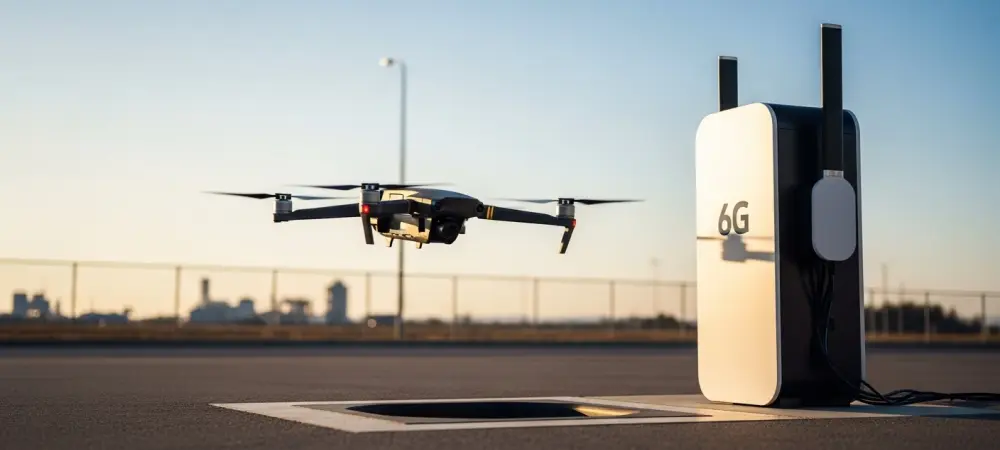
The relentless momentum of global telecommunications has reached a pivotal juncture where the transition from laboratory theory to tangible engineering hardware defines the current technological landscape. If every decade of telecommunications has a “north star,” the year 2030 is currently pulling the entire global engineering community toward its orbit with an irresistible force. We are currently navigating a critical three-year window where theoretical white papers are being traded for soldering irons and field-test prototypes in a high-stakes race for digital supremacy. While the average consumer is still adjusting to the nuances of 5G, the infrastructure for its successor is already moving out of the laboratory and into the real world. The shift toward 6G isn’t just a quest for a faster smartphone; it is the construction of a planetary-scale nervous system that merges the digital and physical worlds into a single, real-time reality.
This transition marks a departure from incremental upgrades toward a fundamental reimagining of what a network can be. As engineers across the globe accelerate their testing protocols, the narrative has shifted from “if” 6G will arrive to “how” it will fundamentally reorganize human society. The urgency is driven by the realization that the digital economies of the next decade will require a level of connectivity that current systems simply cannot sustain. Consequently, the progress seen in recent months represents more than just technical milestones; it reflects a strategic alignment of national interests, industrial capability, and scientific breakthrough.
The 2030 Deadline: How It Reshapes Today’s Technology
The path to 2030 is characterized by a “decadal rhythm” that has governed the telecommunications industry since its inception, yet the current cycle feels uniquely urgent. Every ten years, the baseline for global connectivity is reset, and the organizations that define these new standards often reap the economic benefits for the ensuing decade. Because the development of 6G requires an entirely new set of physical infrastructure and software protocols, the groundwork must be laid years in advance. This means that the decisions made by researchers and policymakers today are directly responsible for the shape of the autonomous and immersive technologies that will define the 2030s.
Currently, the global community is focused on a specific window of opportunity where the standard-setting process moves from abstract goals to concrete technical specifications. The shift is palpable in the way tech giants and government agencies are reallocating their research budgets toward high-frequency spectrum research and non-terrestrial networking. By establishing 2030 as the definitive commercialization target, the industry has created a pressure cooker for innovation that forces engineers to solve problems—such as terahertz wave propagation and massive energy consumption—that were once considered insurmountable. This deadline acts as a powerful catalyst, ensuring that the necessary hardware is not only designed but also manufactureable at a global scale within the next four years.
Furthermore, the 2030 horizon is reshaping how the private sector approaches investment in 5G Advanced, which serves as a crucial bridge to the 6G era. Companies are no longer viewing network upgrades as isolated events but as part of a continuous evolution toward “full-domain intelligence.” This strategic perspective ensures that the current infrastructure is forward-compatible, preventing the massive waste of resources that would occur if the industry had to start from scratch at the turn of the decade. The race is no longer just about speed; it is about building a sustainable, resilient foundation for a world where every object is an intelligent node in a global mesh.
Evolution: From 1G Voice to the 5G Infrastructure Gap
Understanding the 6G imperative requires looking at the historical trajectory of mobile evolution, which began with the simple goal of untethering the human voice. In the 1G and 2G eras, the West dictated the rules of the game, creating a legacy of standards that prioritized voice and basic text. However, as the world moved into the 3G and 4G eras, the focus shifted toward the app economy and multimedia consumption, allowing the smartphone to become the central hub of human existence. While 5G successfully began the work of connecting industrial machines and expanding the Internet of Things, it has encountered a technological ceiling that prevents the most ambitious future concepts from becoming viable. Despite its strengths, 5G is not fast enough for holographic presence, not wide enough to cover the oceans or the upper atmosphere, and not smart enough to process the vast amounts of data it carries. There is a persistent “infrastructure gap” where the demands of Level 4 autonomous driving and large-scale industrial digital twins outstrip the current network’s capacity for low-latency synchronization. This gap has created a bottleneck for innovation, as developers of cutting-edge hardware wait for a network that can handle the massive throughput required for real-time, high-fidelity interaction between the physical and digital spheres.
The transition is no longer just about better downloads; it is about which nations will control the foundational infrastructure for autonomous transport, global logistics, and next-generation manufacturing. Historically, the transition between generations has been a time of significant geopolitical shifts. In the 5G era, China emerged as a dominant force in patents and deployment, breaking the long-standing monopoly of Western standards. This shift has set the stage for a high-stakes competition to define 6G, as global powers recognize that the network of the future will be the primary engine of economic and military advantage.
Defining Excellence: The Seven Pillars of 6G Performance
The leap from 5G to 6G is defined by a tenfold to hundredfold improvement across seven critical metrics that will move the world from “ground coverage” to “full-domain intelligence.” The most visible of these metrics is the move toward terabit-per-second speeds, with peak rates reaching 1Tbps to 10Tbps. Such velocity makes downloading an entire library of 8K films instantaneous and eliminates the lag that currently plagues immersive virtual environments. This isn’t merely a luxury for consumers; it is a requirement for the complex data streams needed to maintain real-time holographic projections and high-resolution spatial computing.
Beyond raw speed, the pillar of sub-millisecond synchronization is perhaps the most transformative for industry and medicine. With end-to-end latency dropping below 0.1ms, the network becomes responsive enough to support remote robotic surgery and high-precision industrial synchronization. In these scenarios, the delay between a command and an action must be virtually non-existent to ensure safety and accuracy. 6G achieves this by integrating edge computing directly into the network fabric, allowing data to be processed as close to the source as possible, thereby bypassing the delays inherent in traditional centralized architectures.
Spatial connectivity and reach represent the final frontier of the 6G vision. The network aims to support one million devices per square kilometer, enabling the dense coordination of drone swarms and city-wide sensor grids without the threat of network congestion. Simultaneously, the integration of satellite internet with terrestrial stations will eliminate “dead zones” in polar regions, deserts, and the deep sea. This full-domain reach is complemented by a green efficiency mandate, targeting a 100-fold increase in energy efficiency. This ensures that the massive increase in data does not lead to a corresponding spike in power consumption, allowing for remote sensors that can operate for decades on a single charge.
Engineering Reality: Expert Insights and Strategic Progress
Data from the IMT-2030 Promotion Group and insights from industry leaders reveal that the “engineering window” is officially open, with significant milestones already being met in the field. The focus has shifted from the “what” to the “how,” as engineers test the physical limits of hardware in diverse environments. In China, for instance, a structured three-stage roadmap has already moved through the initial R&D phase, resulting in over 300 technological reserves. The current emphasis is on “Technology Solution Testing,” which serves as the vital bridge where the feasibility of new waveforms and hardware designs is proven through rigorous real-world trials.
One of the most significant breakthroughs highlighted by experts is the concept of Integrated Sensing and Communication, or ISAC. In this model, 6G base stations double as high-resolution radar systems, allowing the network to “see” and “sense” its environment without the need for additional sensors. This capability provides centimeter-level tracking of objects, which is essential for managing the complex traffic of autonomous vehicles and drones in crowded urban corridors. By merging sensing and communication into a single hardware platform, the network becomes more than just a data pipeline; it becomes an active participant in environmental awareness.
Furthermore, the integration of space, air, and ground networks has moved from a theoretical ideal to a verified technical achievement. Recent tests have successfully demonstrated the seamless handoff of data between terrestrial base stations and low-earth orbit satellites, proving that a global mesh network is technically achievable. This achievement is crucial for providing stable connections to objects traveling at speeds of 1,000 km/h, such as civil airliners. These engineering realities suggest that the foundational technologies for 6G are maturing at a rapid pace, moving closer to the standard-setting phase that will precede large-scale commercial deployment.
Practical Applications: How 6G Will Redefine Daily Life
The transition to 6G provides a specific framework for industries to evolve, offering practical strategies for implementing technologies that were once confined to the realm of science fiction. One of the most immediate beneficiaries is the low-altitude economy, where 6G acts as the “nerve system” for autonomous drone scheduling. This enables large-scale logistics, emergency rescue operations, and power line inspections to occur simultaneously in the lower atmosphere with zero risk of collision. The network’s ability to sense and track every drone in real-time ensures that the sky remains an organized and safe corridor for commerce.
In the realm of transportation, 6G is the essential ingredient for Level 4 and Level 5 autonomous driving. Through sub-millisecond latency and vehicle-to-everything integration, the network provides the safety margins necessary for cars to communicate with road infrastructure and each other in real-time. This removes the need for human intervention even in the most complex driving environments, as the “vehicle-road-cloud” integration allows for a collective intelligence that is far superior to an individual driver’s perception. The result is not just convenience, but a dramatic reduction in traffic-related accidents and a complete optimization of urban mobility.
Industrial sectors are also seeing the benefits of 6G through the scaling of high-fidelity digital twins. Manufacturers can now create virtual replicas of entire factories that mirror physical hardware with such precision that they allow for predictive maintenance and unmanned operations at an unprecedented scale. By removing bandwidth bottlenecks, 6G also allows companies to implement “telepresence” for remote collaboration, making holographic projections indistinguishable from face-to-face meetings. This shift will likely redefine the global workforce, as the physical location of an expert becomes irrelevant when they can interact with a remote site through a perfectly synchronized digital representation. By the end of the 2026 testing cycle, the global engineering community had successfully demonstrated that the primary technical hurdles for 6G were no longer theoretical impossibilities but solvable engineering challenges. The transition from 5G to this next generation was characterized by a fundamental shift toward an integrated network that sensed, thought, and communicated as a single entity. Researchers and policymakers had reached a consensus on the essential protocols, ensuring that the 2030 deadline remained a realistic target for widespread commercial reality. This period of intense development had proved that the infrastructure for a truly connected planet was within reach.
The focus then turned toward the ethical and regulatory frameworks needed to govern a world where every square meter of the Earth was covered by high-speed, intelligent connectivity. It was realized that the massive amount of data generated by 6G would require new standards for privacy and security that were as robust as the network itself. As the first pilot cities began deploying early 6G nodes, the conversation shifted toward ensuring that the benefits of this technology reached every corner of society, regardless of geographic or economic status. The path forward was clear: the race to build the network was over, and the era of living within it had begun.