

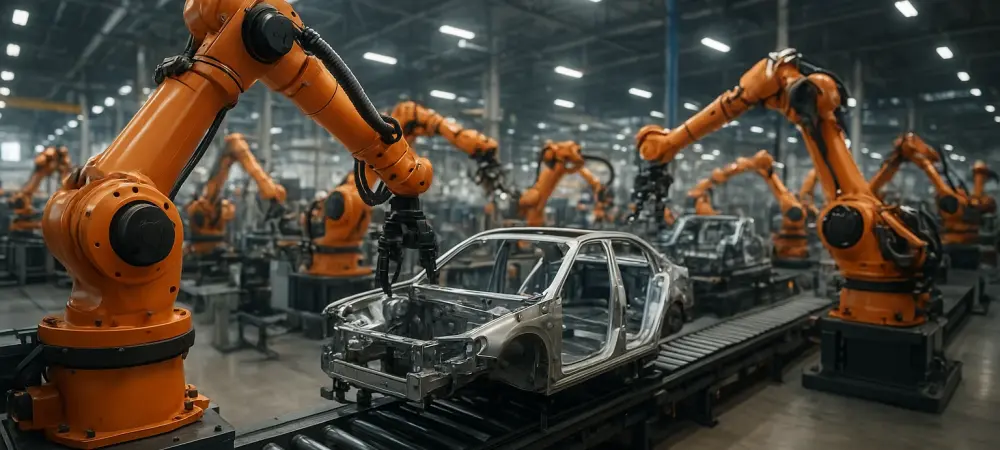
While the digital revolution of the late twentieth century redefined how information flows across the globe, the current surge in physical artificial intelligence is fundamentally restructuring how the world builds, moves, and maintains its tangible assets. This shift is not merely a technical upgrade but a profound transformation in the global industrial landscape, where machines are no longer relegated to fenced-off corners of a factory. In this current peak of 2026, the robotics market has moved beyond the “hype cycle” that once defined its public image, entering a period of unprecedented operational maturity. The transition has been accelerated by a confluence of a tightening global labor market and the arrival of a robust AI infrastructure that can support high-stakes, real-world execution.
The significance of the current market height is rooted in a fundamental change in the relationship between human labor and mechanical automation. As traditional workforce pools continue to shrink, the necessity for reliable robotic intervention has evolved from a luxury for the wealthy elite of the manufacturing world into an existential requirement for businesses of all sizes. This evolution is characterized by the move from conceptual prototypes—often designed to dazzle investors with limited demonstrations—toward indispensable realities that drive daily production. The maturation of capital and the refinement of physical AI frameworks have allowed these systems to handle the chaos and unpredictability of modern supply chains with a level of precision that was once purely theoretical.
The Dawn of a New Era in Physical AI
The current year has solidified the role of physical artificial intelligence as the primary engine of industrial growth, marking the end of the era where AI was confined to screens and data centers. As of 2026, the convergence of high-speed connectivity and advanced edge computing has enabled robots to process vast amounts of sensory data in real-time, allowing them to interact with their surroundings with newfound fluidity. This capability has effectively bridged the gap between digital “thinking” and physical “doing,” creating a new class of machinery that can adapt to changing conditions without human intervention. The labor crisis that began years ago has reached a tipping point, forcing a rapid shift in focus toward systems that can provide consistent output in the face of rising wages and diminishing worker availability.
Furthermore, the maturation of AI infrastructure has provided a standardized platform upon which various industries can build specialized applications. Whether it is a surgical robot performing a delicate procedure or a mobile platform navigating a cluttered warehouse, the underlying intelligence is now robust enough to support diverse operational demands. This infrastructure is the backbone of the current market peak, as it reduces the risk for early adopters and provides a clear roadmap for latecomers to integrate automation into their existing workflows. The result is a global economy that is increasingly reliant on the seamless integration of software and hardware to maintain the standard of living that society has come to expect.
From Laboratory Prototypes to Industrial Foundations
For a long time, the robotics industry was plagued by the “demo effect,” where high-gloss video clips and carefully curated laboratory trials created an illusion of readiness that often failed in the grit of the real world. However, the current industrial landscape has moved decisively away from these speculative venture capital projects toward a culture of results-oriented pragmatism. The focus has shifted from what a robot could potentially do in a controlled setting to what it actually delivers in terms of cycle times, throughput, and maintenance intervals. This transition is a direct response to the demands of commercial buyers who require tangible revenue and operational efficiency rather than optimistic projections.
Establishing credibility in this new era requires more than just innovative engineering; it demands a track record of reliability and a clear understanding of the industrial environment. The shift toward using reliability and tangible revenue as industry benchmarks has filtered out many of the players who relied solely on technical novelty. Today, the leading companies in the sector are those that have successfully deployed their systems across complex, multifaceted production lines. These industrial foundations are built on the back of years of iterative testing and a relentless focus on solving the specific, often mundane, challenges that prevent a machine from running twenty-four hours a day without failure.
The transition from “demos” to “foundations” also reflects a broader change in the investment community’s perspective. There is now a much sharper line between companies that are still in the prototype phase and those that are generating significant revenue from active deployments. This professionalization of the market has led to a more disciplined approach to development, where safety validation, human oversight, and rigorous performance testing are integrated into the product from the very beginning. As a result, the robotic systems of 2026 are not just tools; they are the fundamental building blocks of a new industrial age that prioritizes stability and scale over mere technical ambition.
Achieving Unprecedented Scales in Automation
The sheer volume of robotic integration in the current market is staggering, reflecting a global consensus that automation is the only viable path forward for modern industry. From 2026 onward, the focus of the market has been on scaling these solutions to meet the demands of an increasingly complex global economy. The record-breaking installation volumes and market valuations we see today are a testament to the depth of this adoption, as sectors that were once resistant to automation are now among its most aggressive proponents. This scale is not just about the number of units being shipped, but about the depth of their integration into the core processes of global commerce.
Record-Breaking Installation Volumes
The global market has reached a monumental milestone with 542,000 units installed within a single year, reflecting a massive surge in demand across all major industrial regions. This volume has pushed the total market valuation to a record $16.7 billion, a figure that highlights the immense capital being poured into the physical AI sector. These numbers are more than just statistics; they represent a fundamental shift in how manufacturing and logistics are organized on a global scale. The doubling of installation volumes over the last decade shows that the world has moved beyond the experimental phase and is now in the midst of a full-scale industrial transformation.
This surge in installations is particularly evident in the highly competitive markets of North America and Europe, where the push for reshoring manufacturing has driven a need for high-efficiency production methods. The $16.7 billion valuation also reflects the increased sophistication of the hardware and software being deployed, as today’s robots are far more capable—and therefore more valuable—than their predecessors. The investment in these units is being treated by major corporations as a long-term capital asset, essential for maintaining a competitive edge in a world where manual labor is increasingly scarce and expensive.
Surge in Diverse Sector Adoption
One of the most notable trends in the current market is the expansion of robotics into sectors that were traditionally dominated by manual labor, such as the food industry. In the current cycle, the food sector has experienced a 30% uptick in adoption, as companies look to robots to handle everything from processing and packaging to hygiene-sensitive sorting. This shift is driven by the need for consistency and safety, areas where robotic systems often outperform human workers. Additionally, the United States has seen its robot density rise to 307 units per 10,000 employees, moving the country into a stronger position among the world’s most automated nations.
The rising robot density in the United States is a clear indicator that automation is no longer just for the automotive industry. Sectors like hospitality, healthcare, and retail are now finding practical applications for robotic systems that can assist with repetitive tasks and customer service. This diversification of the market is crucial for its long-term stability, as it reduces the industry’s reliance on any single sector. By proving their value in the high-stakes environment of food production and medical care, robotic systems are demonstrating a versatility that will continue to drive growth across the entire economic spectrum.
Phased Deployment Success Stories
The success of large-scale rollouts in 2026 is often tied to disciplined deployment frameworks, such as the collaboration between TechForce Robotics and NBR Intelligence. This model prioritizes a phased approach, starting with comprehensive assessments and pilot programs before committing to massive installations. By focusing on five pilot units and evaluating them against rigorous metrics like availability, task completion, and safety, companies can mitigate the risks associated with rapid automation. This disciplined sequence ensures that the technology is fully integrated into the existing workflow before it is scaled to thousands of units.
The TechForce Robotics framework, which targets the automation of up to 30% of identified workflows, serves as a blueprint for the modern industry. It recognizes that the transition to automation is as much about operational planning as it is about engineering. By setting non-binding planning targets for up to 5,000 robotic systems and then validating the performance of each phase, the framework builds trust with site operators. This approach has proven highly effective in overcoming the skepticism that often accompanies the introduction of new technology, paving the way for the record-high installation numbers observed across the globe.
What Sets the Modern Robotics Market Apart
The current growth of the robotics market is fundamentally different from previous cycles due to the widespread adoption of the “Robotics-as-a-Service” (RaaS) model and the integration of the AI infrastructure stack. In the past, the massive upfront capital expenditure required to purchase and install industrial robots was a major barrier for many companies, especially small and medium-sized enterprises. However, the shift toward a flexible, recurring operating expense model has democratized access to these technologies. This change allows businesses to pay for automation as they use it, similar to how they pay for cloud computing or software subscriptions.
Moreover, the integration of AI into the hardware has created a more intelligent and adaptable workforce. Modern robots are no longer static machines following a rigid set of instructions; they are dynamic systems capable of learning from their environment. The transition from CapEx to OpEx has been a primary driver of the 31% expansion in RaaS fleets seen this year. This model also benefits the robotics providers by creating stable, recurring revenue streams that can be used to fund further innovation. By lowering the financial barrier to entry and providing more capable systems, the RaaS model and the AI stack have fundamentally changed the economics of the entire industry.
The shift toward a service-based economy within the industrial sector also means that the relationship between the provider and the user is more collaborative. Providers are now incentivized to ensure their systems are running at peak efficiency, as their revenue is often tied to the machine’s performance. This has led to better maintenance, more frequent software updates, and a faster pace of improvement across the board. The modern robotics market is therefore characterized by a continuous cycle of enhancement and adaptation, making it much more resilient than the hardware-heavy markets of the past.
The Current State of Global Industrial Integration
The leading players in the industry, such as Intuitive Surgical, Teradyne, and Rockwell Automation, are currently at the forefront of integrating AI-driven systems into complex industrial environments. These companies have moved beyond selling individual machines and are now providing comprehensive automation solutions that include quality management, predictive monitoring, and real-time data analytics. For example, the use of vision-based AI for quality control has allowed manufacturers to detect defects that would be invisible to the human eye, significantly reducing waste and improving overall product quality. This level of integration is a hallmark of the 2026 market peak.
In the medical field, the introduction of multi-layered AI frameworks has allowed for more precise and safer surgical procedures, reducing variability and improving patient outcomes. In contrast, in the semiconductor and heavy manufacturing sectors, companies like Teradyne and Rockwell are using AI to optimize testing and production schedules, ensuring that expensive machinery is used to its maximum potential. These developments are not just about adding features to existing products; they represent a fundamental rethink of how industrial processes are managed. The ability to monitor a plant’s performance in real-time and predict potential incidents before they occur has made industrial operations safer and more efficient than ever before.
Honeywell and other major technology firms are also contributing to this integration by developing assistants that help human operators manage complex systems. These AI-driven tools can analyze historical data and real-time inputs to provide actionable insights, allowing humans to focus on higher-level decision-making while the machines handle the details. This partnership between human intelligence and mechanical precision is the current state of the art in global industrial integration. It is a world where every part of the production process is connected, monitored, and optimized by a sophisticated layer of digital intelligence that powers physical execution.
Reflection and Broader Impacts
The current state of the robotics market offers a moment for reflection on how far the industry has come and the challenges that still lie ahead. While the record-high installations and valuations are a clear sign of success, the transition hasn’t been without its hurdles. Maintaining reliability in the chaotic, real-world settings of a busy factory or a hospital remains a significant engineering challenge. However, the strengths of current automation—most notably its ability to solve the chronic labor shortages that have plagued the global economy—cannot be overstated. The impact of these machines is felt in every corner of the world, from the speed of delivery services to the precision of modern manufacturing.
Reflection
Analyzing the strengths of current automation reveals that the biggest victory has been the successful mitigation of the labor crisis. By taking over repetitive, dangerous, and physically demanding tasks, robots have allowed the remaining human workforce to move into more creative and managerial roles. However, the challenge of maintaining reliability in non-standard environments remains a primary focus for engineers. Unlike a laboratory, a real-world factory is full of dust, vibration, and unexpected variables. The ability of modern physical AI to navigate these challenges is a testament to the progress made in sensor technology and machine learning algorithms.
Another point of reflection is the speed at which the industry has matured. The transition from venture-backed speculation to a results-driven market happened in a remarkably short period, driven by the sheer necessity of the labor situation. This rapid maturation has forced a level of discipline on the industry that was previously lacking. Companies that failed to provide reliable, revenue-generating solutions were quickly replaced by those that could. This competitive environment has benefited the end-users, who now have access to more robust and cost-effective automation solutions than ever before.
Broader Impact
The broader impact of this structural, generational shift in labor is difficult to overstate. As global education levels rise, fewer people are willing to perform traditional manual labor roles, creating a permanent gap that only automation can fill. This is not a temporary market fluctuation but a fundamental change in the human workforce. The integration of AI and physical machinery is redefining global commerce by allowing for more localized production and more resilient supply chains. The ability to deploy robotic systems quickly and efficiently means that companies can be more responsive to changes in consumer demand.
Furthermore, the shift toward automation is driving a new kind of economic growth, one that is based on productivity gains rather than just the addition of more labor. This has profound implications for how we think about work, education, and the structure of society. As AI-physical integration becomes more sophisticated, it will continue to redefine the roles of both humans and machines in the economy. The record-breaking market heights of 2026 are just the beginning of this generational shift, as we move toward a future where the seamless interaction between digital intelligence and physical execution is the standard for all industrial activity.
The Future of the Automated Workforce
The industry successfully navigated the transition from conceptual experimentation to a foundation of global industrial stability. The record-high installation numbers and multi-billion-dollar valuations witnessed this year established a new paradigm for how humanity interacts with technology. Operators learned that hardware was only as valuable as the software that governed it, and the market matured into a system of predictable scaling and reliable performance. The structural shift in the global workforce proved to be a permanent reality, and stakeholders moved from a position of caution toward one of active integration, recognizing that automation was the only way to sustain global productivity.
The achievements of this year served as the bedrock for the next phase of industrial evolution, where the lines between human and machine capabilities will continue to blur. To maintain this momentum, stakeholders must prioritize the continued development of edge-AI capabilities and flexible financial models like RaaS. The focus should remain on creating systems that are not only efficient but also resilient and adaptable to the unpredictable nature of the world. By embracing the transition from digital intelligence to physical execution, the global community can ensure that the automated workforce continues to provide the stability and growth needed for a prosperous future. Further resources can be found through the International Federation of Robotics and the annual reports of major industrial technology firms.