

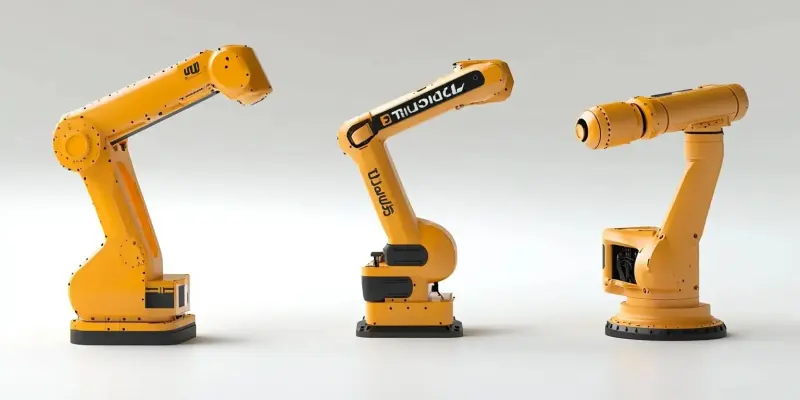
The evolution of industrial robotic arms represents a fascinating journey from the rudimentary robots of the 1950s to the sophisticated, intelligent machines of today, and potentially even humanoid robots in the future. Tracing this development spans decades of technological advancements, market growth, and new challenges, offering a comprehensive look at how these machines have reshaped the landscape of industrial automation.
The Birth of Industrial Robotic Arms
The Unimate: A Revolutionary Beginning
The journey of industrial robotic arms began in the 1950s with the creation of the Unimate by George Devol and Joseph Engelberger. Introduced at a General Motors assembly line in 1961, the Unimate performed repetitive and hazardous tasks such as die casting and welding. This initial development was significant as it marked the beginning of the automation age in manufacturing. Despite being rudimentary by today’s standards, the Unimate’s programmable nature was revolutionary and laid the foundation for future advancements.
The Unimate was a groundbreaking invention that set the stage for the proliferation of automation in various industries. By taking over dangerous and monotonous tasks from human workers, the Unimate demonstrated the potential for improved safety and consistency in manufacturing processes. This innovation not only addressed the labor shortages and safety concerns of the time but also underscored the transformative power of programmable machines. Despite its primitive design, the Unimate sparked interest and investment in robotic technology, ultimately driving further development and integration of robotic systems in manufacturing.
Early Industry Leaders and Technological Improvements
The 1970s and 1980s saw substantial improvements in robotic arm technology. Companies like Fanuc and Kuka emerged as leaders, producing robots with higher precision and better reliability. Advances in materials and control systems during this period allowed robotic arms to handle more delicate tasks, such as assembly and painting. The 1980s also introduced computer numerical control (CNC), enabling robotic arms to integrate seamlessly with computerized production lines. Vision systems were developed, allowing robots to adapt to their environments, which expanded their application range from heavy industries to electronics and consumer goods manufacturing.
These technological enhancements revolutionized the capabilities of industrial robots, extending their use beyond simply performing hazardous tasks. The addition of CNC and vision systems allowed robotic arms to undertake more intricate and precise operations, significantly boosting efficiency and productivity in various industries. The ability to adapt to their surroundings and process complex information in real-time meant that robots were no longer limited to basic, pre-programmed tasks. This period marked a pivotal shift in the perception of industrial robots, transforming them from specialized tools into versatile and indispensable assets in manufacturing.
The Rise of Versatile Automation
Expansion Across Various Sectors
The 1990s to the 2010s marked a period where automation became ubiquitous across various sectors, including pharmaceuticals, aerospace, and food production. Industrial robotic arms became more versatile with the integration of advanced sensors and real-time control systems, which enhanced their safety and efficiency. The introduction of collaborative robots, or cobots, by companies like Universal Robots in the 2010s was a game-changer. Cobots, designed to work safely alongside humans, featured force-limiting sensors that enabled them to stop immediately upon contact with a human. This innovation made automation accessible to smaller businesses and changed the perception of robots as inherently hazardous.
Collaborative robots revolutionized the landscape by making advanced robotic technology accessible to a broader range of industries, including small and medium-sized enterprises. The development of cobots marked a fundamental shift in robotics, emphasizing safety, ease of use, and flexibility. These robots, with their enhanced safety features and user-friendly interfaces, allowed for more widespread adoption and acceptance of robotic systems. Cobots’ ability to operate in close proximity to human workers without extensive safety barriers opened doors to new applications, fostering a collaborative working environment that leveraged the strengths of both humans and robots.
The Dominance of Collaborative Robots
The past five years have seen an explosion in the capabilities of robotic arms. Collaborative robots now dominate the market, even inspiring traditional industrial arms to incorporate safety and usability features once exclusive to cobots. Advanced machine learning algorithms have empowered robotic arms to perform complex tasks with greater autonomy and precision, such as quality inspection, material handling, and the assembly of intricate components. However, despite these advancements, there remain heavy-duty robots designed for tasks involving heavy payloads or extreme precision, which are generally kept isolated from workers due to their size and power.
The integration of advanced machine learning and artificial intelligence (AI) has elevated the functionality of collaborative robots, enabling them to adapt and respond to complex tasks with minimal human intervention. These advancements have expanded the scope of robotic applications, making them suitable for a wider array of tasks that require high precision and adaptability. The evolution of cobots and the concurrent enhancements in traditional robotic arms illustrate how robotic technology continues to evolve, offering increasingly sophisticated solutions to meet diverse industrial needs. This dynamic development underscores the ever-growing importance of robotic automation in modern manufacturing.
Market Growth and Global Trends
Exponential Growth in Robot Installations
The market for industrial robotic arms has seen exponential growth since the 1950s. According to the International Federation of Robotics (IFR), the number of industrial robots in operation worldwide exceeded 3.5 million in 2022, a significant increase from just a few hundred in the 1960s. This growth has been driven by rising labor costs, the need for increased productivity, and technological advancements. Asia, particularly China, is the largest market for industrial robots, accounting for over 50 percent of global installations. Europe and North America also have significant investments in automation across automotive, electronics, and logistics sectors.
The rapid expansion of industrial robotic arm installations highlights the growing reliance on automation to address economic and operational challenges. Countries and companies continuously invest in robotic technology to enhance production efficiency, reduce labor costs, and maintain competitiveness. Asia’s dominant position in the global market reflects its aggressive adoption of automation strategies, fueled by robust manufacturing sectors and government support. Similarly, industries in Europe and North America leverage robotic technology to optimize processes and navigate labor market constraints. This widespread adoption underscores the essential role of robotic arms in modern industry.
Economic and Technological Drivers
Looking ahead, industrial robotic arms are anticipated to become even more intelligent, adaptive, and efficient. Developments in artificial intelligence (AI) and machine vision are expected to enable robots to learn new tasks without extensive reprogramming. Modular designs could facilitate customization for specific applications, and advancements in materials might reduce their size and weight. Sustainability will play a crucial role, with manufacturers seeking energy-efficient robots to minimize environmental impact. Additionally, the integration of the Internet of Things (IoT) is expected to allow for predictive maintenance and real-time monitoring, further improving operational efficiency.
The prospective advancements in AI and machine vision promise to enhance the cognitive capabilities of robotic arms significantly. By leveraging these technologies, robots can autonomously adapt to complex tasks and environments, reducing the need for human intervention and manual programming. Modular designs will offer flexibility, allowing for easy customization and reconfiguration to meet specific industrial requirements. Emphasis on sustainability and energy efficiency aligns with broader environmental goals, pushing manufacturers to innovate in creating greener, more efficient robotic systems. The confluence of IoT with robotic technology will enable better maintenance practices, maximizing uptime and productivity.
The Challenge of Humanoid Robots
Emerging Competitors in Automation
Despite these advancements, industrial robotic arms face growing competition from humanoid robots. Companies like Tesla, Figure AI, and Boston Dynamics are developing humanoids capable of performing tasks traditionally reserved for robotic arms, such as welding, assembly, and inspection. Humanoid robots offer several advantages, including adaptability, dexterity, and potential long-term cost-effectiveness. Their human-like form allows them to operate in environments designed for human workers, reducing the need for custom infrastructure. They can also perform tasks requiring fine motor skills and access tight spaces that challenge traditional robotic arms.
Humanoid robots present a significant innovation by combining advanced robotics with the intuitive form and function of human movement. Their versatility and adaptability make them suitable for a range of tasks beyond the capabilities of traditional robotic arms. The potential for integration into existing environments without extensive modification is a critical advantage, reducing implementation costs and complexity. As these humanoid robots continue to evolve, they offer the promise of enhanced operational efficiency and flexibility, potentially transforming how automated processes are designed and executed. Nevertheless, the shift towards humanoid robots depends on overcoming current limitations in precision, speed, and reliability.
The Future of Industrial Automation
The journey of industrial robotic arms, from their primitive beginnings in the 1950s to the highly advanced and intelligent machines we see today, is truly captivating. This evolution not only reflects decades of significant technological progress but also considerable market expansion and the tackling of new challenges. Initially, these robots were basic, designed to perform simple, repetitive tasks in manufacturing environments. Over the years, advancements in technology have driven the development of more sophisticated robots capable of performing complex tasks with high precision and efficiency. Today, industrial robotic arms are intertwined with artificial intelligence, allowing them to learn and adapt, enhancing their functionality and productivity. This has fundamentally transformed the landscape of industrial automation, making processes faster, safer, and more efficient. Businesses across various sectors have integrated these robots into their operations, revolutionizing production lines and reducing human labor in dangerous environments. As we look to the future, the possibility of integrating humanoid robots into industries presents a whole new frontier, promising even greater leaps in automation innovation.