

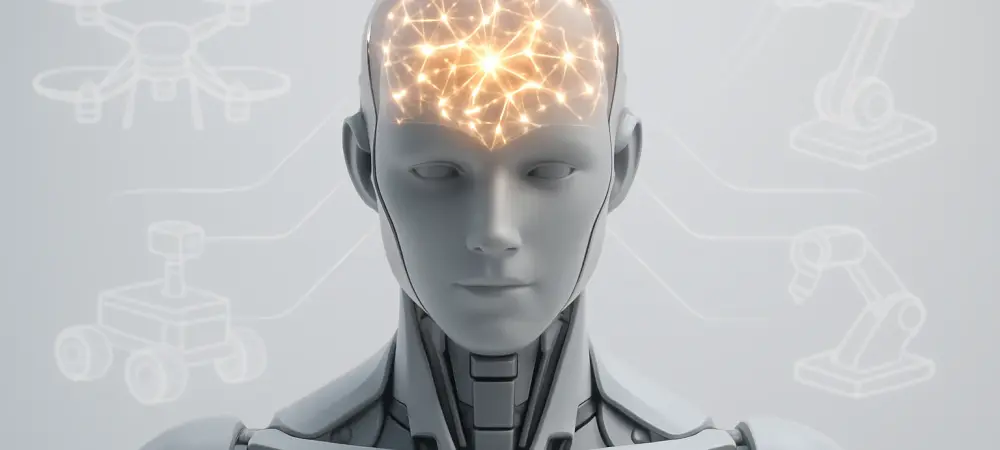
For decades, the promise of a truly intelligent robot—one that could see, reason, and act within the unpredictable chaos of the real world—remained largely confined to the realm of science fiction and carefully controlled laboratory experiments. The leap from a machine that followed a script to one that could write its own seemed insurmountable. Today, that barrier is dissolving. A profound transformation is underway, driven by the convergence of advanced artificial intelligence, vast datasets, and sophisticated hardware. This is the dawn of Physical AI, a new era where robots are evolving from single-purpose tools into autonomous, adaptive partners capable of understanding and interacting with the physical world in ways previously thought impossible. This shift is not merely an incremental upgrade; it is a fundamental redefinition of what a robot is and what it can do for humanity.
When a Robot Last Learned Something New on Its Own
The traditional robot of the last half-century was a master of repetition, not adaptation. Bolted to a factory floor, it could weld a car door or place a microchip with superhuman precision, but only if every component was in its exact, pre-assigned place. This paradigm is undergoing a radical shift, moving from robots as programmed instruments to robots as autonomous agents. The central challenge has always been the unstructured nature of the real world, a place where lighting changes, objects are misplaced, and unexpected obstacles appear. The new generation of robots is being designed not just to execute commands but to learn from its environment, generalize from past experiences, and make intelligent decisions in real time.
This advanced capability is encapsulated in the concept of “Physical Intelligence,” the seamless integration of perception, reasoning, and action. It represents a machine’s ability to process complex sensory data from cameras and sensors, reason about the physical properties of objects and the consequences of its actions, and then execute precise, coordinated movements to achieve a goal. Unlike a purely digital AI that operates on data, a physically intelligent agent must contend with gravity, friction, and the infinite variables of a tangible environment. This convergence is what allows a robot to pick a piece of fruit without crushing it or navigate a cluttered warehouse without a predefined map.
Beyond the Cage Why Traditional Automation Is No Longer Enough
The limitations of single-purpose automation have become increasingly apparent. Confined to safety cages to protect human workers, these robots operate in highly structured, predictable settings. Their inability to adapt makes them unsuited for the dynamic environments where automation is now most needed. This rigidity represents a significant bottleneck for industries seeking to enhance productivity and resilience in the face of fluctuating supply chains and labor shortages. The era of the caged, single-task robot is yielding to a demand for machines that can work safely and effectively in human-centric spaces.
This demand is exploding in sectors defined by constant change. Logistics and e-commerce fulfillment centers, for example, are chaotic ecosystems where item sizes, shapes, and locations are never static. In healthcare, robots are needed to assist with patient care and sanitize rooms, tasks that require navigating unpredictable layouts and interacting gently with people. These applications demand a level of versatility and awareness that traditional automation simply cannot provide. The market is no longer asking for a better robotic arm; it is asking for a smarter, more capable robotic partner. Crucially, this wave of Physical AI is being framed not as a replacement for human workers but as a collaborative force multiplier. The goal is to deploy intelligent robots to augment human capabilities, taking over tasks that are hazardous, physically strenuous, or mind-numbingly repetitive. By handling the heavy lifting, sorting, and transport, these machines free human employees to focus on complex problem-solving, quality control, and customer interaction—roles that leverage uniquely human skills like creativity, empathy, and strategic thinking. This collaborative model promises a future where human-robot teams achieve levels of safety and efficiency unattainable by either working alone.
The Technological Tripod Powering Intelligent Robots
The brain of these new robots is powered by foundation models, the same large-scale AI technology behind revolutionary advances in language and image generation. These pre-trained models act as a universal translator for robotic skills, enabling them to generalize knowledge across an astonishing diversity of tasks, objects, and hardware. A landmark demonstration of this is Google DeepMind’s RT-X project, which leverages the Open X-Embodiment dataset to successfully transfer learned skills across 22 different types of robots. On the commercial front, companies like Covariant are deploying models such as RFM-1, a multimodal system that processes language, video, and robot interaction data to perform complex reasoning and improve its performance on the fly.
Intelligence, however, requires immense amounts of experience, which is where the data flywheel and hyper-realistic simulation come into play. The efficacy of a foundation model is directly tied to the volume and quality of its training data. While open-source efforts like the Open X-Embodiment dataset provide a crucial starting point with over a million real-world robot trajectories, the real acceleration comes from commercial fleets generating tens of millions of data points. To safely and rapidly scale this learning process, developers rely on simulation platforms like NVIDIA’s Omniverse. Here, they can create high-fidelity “digital twins” of warehouses or factories, allowing robots to train on millions of scenarios, from routine operations to rare edge cases, perfecting the critical “sim-to-real” transfer that ensures virtual lessons translate into real-world competence.
This sophisticated digital intelligence would be useless without a physical body capable of instantaneous action. The final leg of the technological tripod is advanced hardware, specifically powerful on-board (edge) computing and highly sensitive sensors. The delay, or latency, between sensing, thinking, and acting is a major bottleneck for safe interaction. To minimize this, platforms like NVIDIA’s Jetson Thor are being designed to provide the massive computational power needed for whole-body control and dexterous manipulation directly on the robot. This is complemented by hardware innovations like the advanced tactile sensors on Sanctuary’s Phoenix humanoid, which give the robot a human-like sense of touch, enabling it to handle delicate or irregularly shaped objects with finesse.
From the Lab to the Loading Dock Physical AI in Action
The transition of Physical AI from research concept to commercial reality is happening now, most visibly in logistics and manufacturing. Amazon, an early adopter at massive scale, now operates a fleet of over one million robots, utilizing generative AI to optimize the movement and coordination of its vast robotic workforce. Moving beyond wheeled bots, humanoid robots are making their commercial debut. Agility Robotics’ Digit, a bipedal robot designed to work in human spaces, has moved from pilot programs to a full deployment agreement with logistics giant GXO to handle tasks like tote manipulation in warehouses. At the same time, Boston Dynamics has re-engineered its famous Atlas robot into an all-electric powerhouse built specifically for industrial applications, promising unprecedented strength and dexterity for the factory floor.
Perhaps the most significant change is not just what robots can do, but how humans interact with them. The advent of Vision-Language-Action (VLA) models is creating a new, intuitive interface for human-robot collaboration. Instead of writing complex code, an operator can now use simple, natural language commands to direct a robot. For instance, a person could say, “Please pick up all the red boxes and place them on the top shelf.” The robot uses its vision to identify the correct boxes, its language understanding to interpret the command, and its action model to plan and execute the multi-step task, even explaining its process along the way. This conversational interaction drastically lowers the barrier to using robotic systems and fosters a more seamless partnership.
Navigating the Path Forward Overcoming Critical Challenges
Despite this rapid progress, significant technical bottlenecks to widespread adoption remain. On-board processing latency, while shrinking, is still a challenge, as are the power constraints of untethered, mobile hardware. The sim-to-real gap, where behaviors learned in a perfect virtual world do not always translate flawlessly to messy reality, requires continuous refinement. A critical area of research is improving robot robustness—ensuring a machine can reason its way through novel situations that fall outside its training data, rather than freezing or making a mistake. These are not insurmountable obstacles, but engineering challenges that require sustained innovation.
As robots move from cages to collaborative workspaces, ensuring safety and building trust are paramount. A multi-layered framework is emerging to govern human-robot interaction. This begins with hardware fail-safes and redundant systems to prevent accidents. It extends to the AI itself, with the development of models that possess “calibrated uncertainty,” allowing a robot to recognize the limits of its knowledge and ask a human for help when it is not confident. Ultimately, maintaining a human-in-the-loop for oversight on critical decisions and establishing clear, industry-wide safety standards will be essential for fostering the trust needed for these systems to become integrated into society.
The dawn of Physical AI was not a single event but a steady convergence of powerful forces. The development of foundation models provided the cognitive architecture, a global network of connected robots generated the necessary experiential data, and advanced computing hardware supplied the link between digital thought and physical action. Together, these elements dismantled the old paradigm of robotics, transforming machines from rigid automatons into dynamic, learning partners. This evolution unlocked automation for the unstructured world and, in doing so, created a new collaborative framework where human ingenuity was amplified, not replaced, by intelligent machines.