

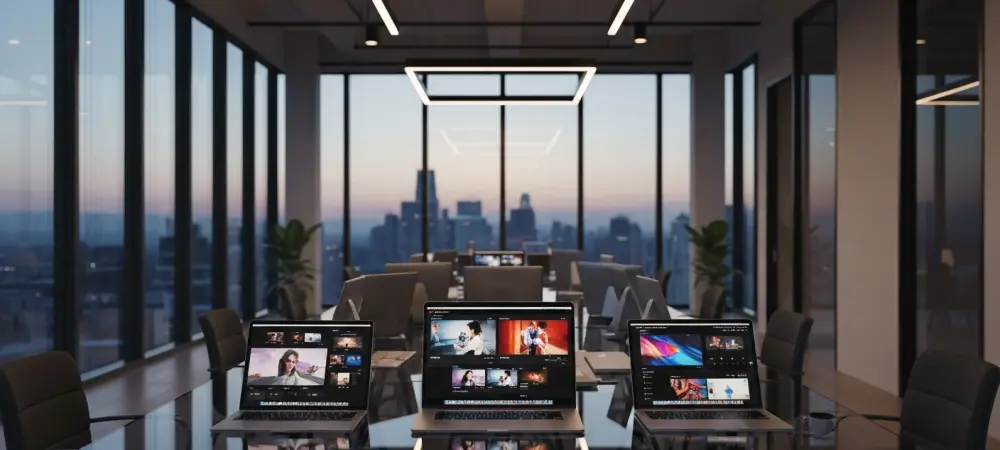
The traditional sound of a film set has been replaced by the quiet hum of high-performance servers as the boundary between human imagination and digital execution effectively disappears. For digital marketing agencies and independent creators, this transition marks a pivotal departure from the era of manual labor toward a landscape defined by automated high-fidelity production. The democratization of cinematic quality means that the prestige once reserved for major studios is now accessible to anyone with a coherent creative vision. As global demand for video content reaches an all-time high, these emerging AI platforms have transitioned from experimental curiosities into the very backbone of the professional media industry.
The Dawn of the Automated Cinema Era
The shift toward AI-driven workflows has fundamentally reorganized the way stories are told and products are sold. In this new landscape, the traditional bottlenecks of pre-production and post-production have been compressed into streamlined generative cycles. Creators no longer spend weeks on storyboarding or location scouting when they can iterate through dozens of visual concepts in minutes. This evolution has allowed small teams to compete with massive conglomerates by focusing on the core narrative rather than the logistics of lighting rigs and camera crews.
Furthermore, the surge in high-performance synthetic video has created a new standard for global communication. Digital marketing agencies are increasingly utilizing these tools to localize content for different markets with unprecedented speed, ensuring that brand messaging remains consistent while appearing culturally relevant. This democratization of production value has not only leveled the playing field but has also forced a total reimagining of what it means to be a “filmmaker” in an environment where technical barriers to entry have been largely erased.
The New Standard of Visual Excellence
The Eight Pillars of High-Performance Synthetic Video
Technical benchmarks in the current year prioritize the total elimination of the “uncanny valley,” focusing instead on fluid motion consistency and complex physics. Modern generators are now capable of rendering hair, water, and fabric with a level of realism that was previously impossible. These pillars include advanced lighting dynamics that respond naturally to environmental changes, ensuring that every frame looks as though it were captured by a high-end lens. The industry has moved beyond simple generation; the focus is now on maintaining the integrity of subjects across multiple scenes without the distracting visual artifacts of the past.
Moreover, the conversation has shifted toward the importance of granular directorial control. High-performance tools now allow users to dictate specific camera movements, such as complex pans or orbits, with the precision of a veteran cinematographer. While the speed of automated output is a significant advantage, many professionals argue that the true value of these tools lies in the balance between algorithmic efficiency and human creative oversight. Without the human element to guide the emotional arc, even the most visually stunning video can feel hollow, prompting a renewed focus on the “conductor” role of the modern creator.
The Rise of Multi-Model Aggregators and Ecosystems
A significant disruption in the marketplace has been the rise of unified platforms like Rendar AI, which provide a single point of entry to a wide variety of specialized engines. Rather than subscribing to ten different services, creators can now access diverse models like Seedance for cinematic atmosphere or Kling for high-speed consistency through a centralized hub. This modular approach allows businesses to swap between different “aesthetic engines” depending on the specific needs of a campaign, ensuring that their visual output remains fresh and unpredictable.
The economic advantages of these centralized hubs are difficult to ignore, especially for startups operating on tight margins. By utilizing integrated text-to-video and image-to-video workflows, companies can maintain a cohesive brand identity without the high overhead of proprietary tool development. However, some industry analysts warn of the competitive risks associated with relying on shared platforms. If every agency uses the same underlying models, the challenge shifts from technical execution to how uniquely one can prompt and manipulate these systems to stand out in a saturated market.
Specialized Solutions for the Short-Form Attention Economy
In the fast-paced world of social-first platforms, the demand for “viral-ready” clips has led to the optimization of tools like Pika Labs and OpenArt. These platforms are engineered specifically for the vertical video format, catering to the rapid-fire consumption habits of younger demographics. By focusing on high-energy motion and immediate visual hooks, these generators allow influencers to produce a volume of content that would have been physically impossible just a few years ago. The goal is no longer just quality, but the intersection of quality and extreme agility.
There is also a growing sophistication in how these tools handle emotional resonance through algorithmic storytelling. Contrary to early fears that AI content would feel robotic, current innovations allow for subtle facial expressions and pacing that mimic human sentiment. This progress has been fueled by regional influences, as creators in different parts of the world push the technology to reflect diverse cultural aesthetics. As a result, the short-form economy has become a breeding ground for experimental digital narratives that feel deeply personal despite their synthetic origins.
Bridging the Gap Between Generation and Post-Production
The evolution of integrated suites like Runway ML has changed the definition of an “all-in-one” studio. These platforms combine the raw power of generative AI with the precision of traditional timeline-based editing, allowing for a seamless transition from prompt to final cut. Users can now perform complex tasks—such as object removal, rotoscoping, and color grading—within the same environment where the video was born. This prevents the loss of data that often occurs when moving files between disparate software applications.
Looking ahead, the industry is beginning to see the emergence of modular systems where AI editors might eventually perform real-time adjustments. Some experimental workflows suggest a future where video content could theoretically change its pacing or visual tone based on live viewer engagement data. While this remains a high-end application for now, the gap between “generating” a clip and “producing” a film is closing. The choice for professionals often comes down to whether they prefer the structured environment of a full production suite or the rapid-fire flexibility of modular, specialized generators.
Strategies for Navigating the Generative Landscape
To maximize the potential of these technologies, users must align their choice of tool with their specific creative objectives. For instance, those seeking cinematic depth often find their needs met by the multi-model versatility of Rendar AI, while beginners might find the streamlined interface of OpenArt more conducive to rapid learning. On the other hand, Runway ML serves as the standard for those who require heavy post-production capabilities, and Pika Labs remains the premier choice for high-speed social media output. Selecting the right engine is the first step in ensuring that the technology supports rather than hinders the creative process.
Mastering the art of prompt engineering is another critical factor in achieving commercial-grade results. Moving beyond basic descriptions and incorporating professional cinematographic terminology—such as “chiaroscuro lighting” or “dolly zoom”—significantly improves the precision of the AI’s output. Furthermore, managing the logistics of token-based pricing has become a necessary skill for production managers. By strategically planning iterations and using image-to-video workflows to anchor subject consistency, businesses can ensure a high return on investment and avoid wasting resources on aimless generations.
The Future of Direction in an AI-Centric World
The ultimate value of digital media has successfully migrated from the labor of execution to the strength of the original vision. As the mechanical aspects of video production become invisible, the human role has transformed into that of an AI conductor. This shift allows creators to dream on a global scale, producing content that transcends language barriers and physical limitations. The rise of “faceless” content creation has demonstrated that a strong narrative can resonate even without a traditional human cast, opening doors for brand storytelling that is limited only by the imagination.
The landscape of content creation flourished because the barriers to entry were dismantled by intelligent automation. Creators who embraced the role of the digital orchestrator found themselves capable of producing cinematic experiences that rivaled the golden age of traditional film. Industry professionals successfully transitioned from technical specialists to visionaries, focusing their energy on the “why” of the story rather than the “how” of the render. This shift ensured that the future of digital narrative remained firmly in the hands of those who could best direct the machines to reflect the human experience. Through the strategic use of credit-based logistics and multi-model ecosystems, the media industry established a sustainable model for high-volume, high-quality expression. The era of the automated cinema did not replace the artist; it gave the artist an infinitely larger canvas.