

In a striking departure from the frenetic pace that characterized the rise of software intelligence, a unified call for caution is now shaping the development of artificial intelligence designed to act in the physical world. This industry-wide shift reflects a growing consensus that the tangible consequences of deploying autonomous hardware demand a more measured and foundational strategy. The rapid, sometimes chaotic, rollout of agentic software AI has served as a critical lesson, prompting executives and engineers to prioritize safety, reliability, and clear regulatory guardrails over reckless innovation. This emerging philosophy signals a maturation of the industry’s approach, focusing on building a robust framework for AI’s embodiment before unleashing its full potential.
The Physical Frontier: Defining AIs Embodiment in the Real World
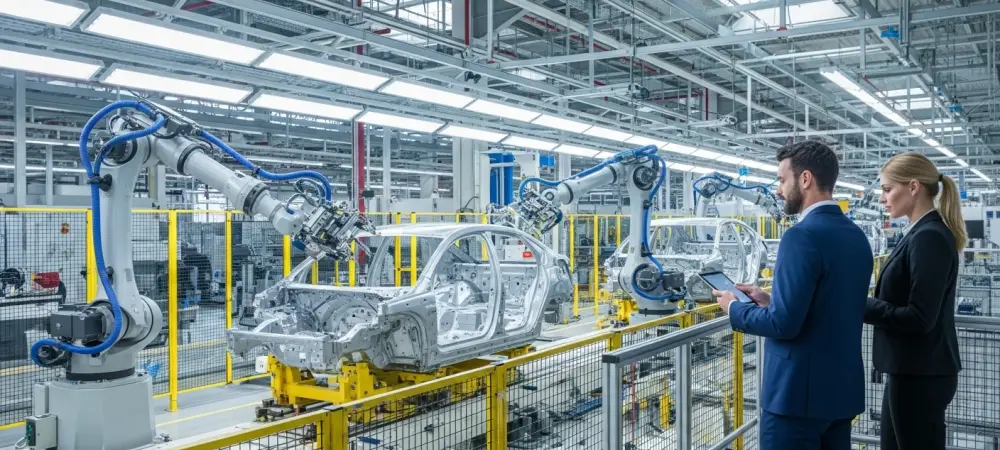
Physical AI distinguishes itself from its digital counterpart through its direct, tangible interaction with the environment. It represents the embodiment of intelligence in moving hardware, from industrial robots on an assembly line and autonomous drones surveying farmland to intelligent security systems and automated forklifts navigating a warehouse. Unlike software AI, which operates within the confines of digital systems, physical AI’s actions have immediate and irreversible real-world effects. This embodiment transforms abstract algorithms into concrete actions, fundamentally altering the nature of the technology and its potential impact.
The application of this technology is already reshaping key sectors. In manufacturing and logistics, physical AI is the engine behind automated “dark” factories and efficient supply chains. Agriculture benefits from precision robotics that optimize planting and harvesting, while the security industry employs intelligent surveillance systems capable of independent action. In each of these domains, the integration of physical AI is not a futuristic concept but a present-day reality, driving operational efficiency and solving complex logistical challenges. Consequently, the deployment of AI in tangible hardware carries significantly heightened stakes. A software bug might cause a system crash, but a flaw in a physical AI system could lead to property damage, operational failure, or serious safety incidents. This reality underscores the critical importance of reliability, predictability, and robust safety protocols. The transition from virtual code to physical action is a profound one, demanding a higher standard of care and a more deliberate development process from creators and operators alike.
Charting the Course: Industry Trends and Growth Trajectories
From Reckless Race to Measured Pace: A New Philosophy for Deployment
A new philosophy is taking hold across the technology landscape, one that favors a measured pace over a reckless race. Influenced by the lessons learned from the rapid and sometimes turbulent introduction of software AI, industry leaders are advocating for a slow-and-steady approach to its physical counterpart. This cautious stance is rooted in the understanding that real-world deployment requires a foundation of trust and reliability that can only be built through meticulous testing and incremental progress. The consensus is clear: build the framework first, then scale the innovation.
This strategic pivot is evident in the industry’s prioritization of controlled domains for initial deployment. According to the Deloitte “State of AI in the Enterprise” study, applications within structured environments like factories and warehouses are advancing far more quickly than those in open, unpredictable settings. This focus allows developers to mitigate risks and refine performance in predictable scenarios, gathering crucial data before tackling more complex challenges. The strategy is to prove value and ensure safety where the variables are known and manageable.
Moreover, the industry’s focus has shifted from pursuing futuristic, “Jetsons-like” concepts to solving immediate, practical problems. The primary drivers for adoption are now grounded in addressing tangible business needs, such as labor shortages, operational bottlenecks, and efficiency improvements. This pragmatic approach not only provides a clearer path to return on investment but also ensures that the technology’s development is tethered to real-world value creation, rather than speculative hype.
Gauging the Momentum: Current Adoption and Real-World Impact
Despite the call for caution, the adoption of physical AI is already robust and accelerating. Market data reveals that over half of global companies currently utilize some form of physical AI, with projections indicating this figure will climb to 80% within the next few years. This momentum demonstrates that the technology has moved beyond the experimental phase and is now a critical component of modern industrial and commercial operations. The growth is not speculative; it is fueled by proven results and a clear competitive advantage for early adopters.
The real-world impact of these deployments is already significant. Modern automotive plants, for example, increasingly operate as “dark” factories where robotic systems work around the clock, driving productivity and yielding substantial energy savings. In logistics, collaborative robots communicate and coordinate to fulfill orders with remarkable speed and accuracy. Elsewhere, intelligent security cameras independently manage alarms, and automated retail systems handle returns and sales, often leveraging large language models to enhance their capabilities.
These applications are delivering tangible value by fundamentally reshaping workflows and boosting efficiency. By automating repetitive or hazardous tasks, physical AI frees up human workers for more complex, strategic roles while simultaneously increasing output and reducing operational costs. This immediate return on investment is a powerful motivator for continued adoption and a testament to the technology’s practical utility in today’s economy.
Bridging the Divide: The Hurdles Slowing Physical AIs Advance
Despite its growing adoption in specific sectors, the path to widespread, sophisticated physical AI is hindered by significant technological and market-driven challenges. The current state of the technology is often described as being in its nascent, foundational phase, facing several key hurdles that differentiate its development trajectory from the exponential growth seen in software. These obstacles require fundamental breakthroughs in both hardware and software to overcome.
Critical hardware limitations remain a primary barrier. High power consumption, for instance, restricts the operational longevity and mobility of autonomous systems. Similarly, the dexterity and fine-motor control of today’s robots are still far from matching human capabilities, limiting their application in complex, delicate tasks. Perhaps most prohibitive is the sheer cost of advanced robotic hardware, which places it out of reach for many smaller enterprises and slows the pace of scalable deployment.
Beyond the physical hardware, the lack of a standardized development layer presents a major bottleneck. Unlike the software world, there is no universal platform—no “ChatGPT for robots”—that allows for interoperable and cumulative development. Instead, companies are building isolated, proprietary ecosystems, fragmenting the industry and impeding collaboration. Compounding this is the virtual-to-physical gap, the immense challenge of ensuring that AI models trained in pristine virtual simulations can perform reliably and safely amidst the unpredictability of the real world.
Forging the Guardrails: The Urgent Call for a Unified Regulatory Framework
An industry-wide consensus has emerged on the urgent need for clear boundaries, definitions, and rules to govern physical AI. This call for a unified regulatory framework is not a push to stifle innovation but a proactive effort to ensure its safe and responsible progression. Leaders are advocating for standards that can guide development, define acceptable use cases, and establish liability, creating a predictable environment for both innovators and the public.
The push for regulation is driven by a deep understanding of the potential risks. High-risk applications, such as a “chainsaw-wielding robot” used in forestry, serve as a potent example of technology that must be confined to strictly controlled, human-monitored environments to prevent catastrophic failures. By proactively identifying such scenarios, the industry is working to mitigate risks before they materialize, underscoring a collective commitment to safety over speed.
This deliberate, compliance-focused approach is already shaping industry best practices ahead of any formal legislation. Companies are investing in rigorous testing protocols, fail-safe mechanisms, and human-in-the-loop oversight to ensure their systems operate as intended. This self-regulation demonstrates a mature understanding that public trust is the ultimate currency, and that building a safe, reliable foundation is essential for the long-term viability and acceptance of physical AI.
The Long Road Ahead: Envisioning the Future of Embodied Intelligence
The rise of physical AI is not an overnight revolution but the culmination of a long-term, evolutionary trajectory. Its foundation was laid over the past decade through the convergence of multiple technologies, starting with the proliferation of IoT devices and sensors, which gave machines awareness of their environment. This was followed by advancements in robotic process automation (RPA) and data science, which provided the tools for complex task execution. The recent surge in agentic AI represents the final layer, enabling more sophisticated and autonomous decision-making.
This layered development suggests a dual-track future for embodied intelligence. In the short term, the focus will remain squarely on structured industrial, logistical, and commercial settings, where tasks are well-defined and risks can be carefully managed. The long-term trajectory, however, points toward a slower but ultimately more profound impact on society as the technology matures and gradually moves into more open environments. While its advance may appear less dramatic than that of software AI, its integration into the fabric of daily life is expected to be deeper and more permanent.
Ultimately, the central question shaping this long road ahead revolves around societal consensus. The industry can develop the technology, but its ultimate role and limits will be determined by a broader public dialogue. The core debate will focus on what tasks we are willing to delegate to autonomous physical agents and how much control we are prepared to cede. The current cautious and foundational focus is a crucial first step in building the trust necessary to begin answering that question.
A Deliberate Dawn: Key Takeaways for a Responsible AI Future
The prevailing sentiment among technology leaders was that a foundational, cautious strategy must take precedence over rapid, high-risk innovation. This deliberate approach to physical AI marked a significant departure from the disruptive ethos that has long defined the tech industry, signaling a new era of responsible development. The consensus was clear: the physical world operates with consequences that demand foresight and restraint.
This measured path signified a collective industry commitment to building a robust, safe, and trustworthy future. By prioritizing the establishment of clear rules, focusing on controlled deployments, and addressing fundamental hardware and software challenges first, the sector laid the groundwork for sustainable growth. The emphasis was not on what could be built, but on what should be built, and how it should be integrated into society. The most viable path forward for sustainable growth and investment centered on solving immediate, real-world challenges. This pragmatic focus on delivering tangible value in areas like manufacturing and logistics ensured that the technology’s evolution remained grounded and purposeful. This approach was identified as the key to unlocking the immense potential of physical AI while responsibly managing its inherent risks.