

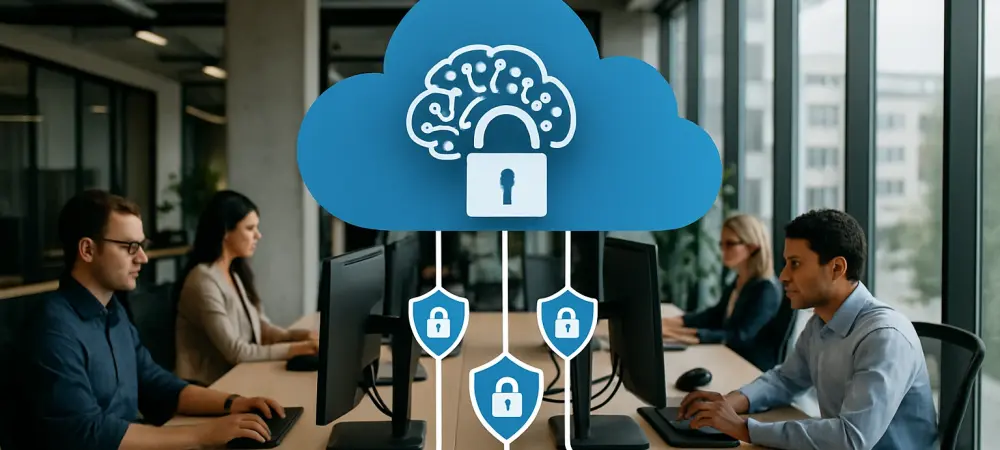
What happens when the rush to adopt cutting-edge AI tools collides with the urgent need to protect sensitive business data? In an era where data breaches can cripple a company overnight, Synology has stepped forward with a groundbreaking update to its Office Suite, integrating artificial intelligence into private cloud environments. This isn’t just another tech rollout; it’s a direct response to the growing tension between innovation and security. Businesses today face mounting pressure to boost efficiency while safeguarding their most valuable asset—data. This update promises to redefine how enterprises can harness AI without exposing themselves to risk.
Why Secure AI Matters in Cloud Environments
The stakes for data privacy in cloud-based AI tools have never been higher. A recent survey revealed that over 60% of business leaders hesitate to adopt AI due to fears of breaches and compliance failures. Synology’s latest Office Suite update addresses this head-on by embedding AI capabilities within a private cloud framework, ensuring that sensitive information stays under tight control. The focus here is clear: productivity gains must not come at the expense of security.
This approach resonates with the current climate of caution in the corporate world. With regulatory bodies tightening rules on data handling, companies cannot afford to gamble on untested solutions. Synology’s strategy offers a lifeline, providing tools that enhance workflows while maintaining strict governance over information. It’s a calculated move to build trust among enterprises wary of third-party cloud vulnerabilities.
The Growing Need for AI with Built-In Privacy
As AI becomes a cornerstone of business operations, the demand for solutions that prioritize privacy has surged. Statistics show that nearly 75% of IT executives rank data governance as their top concern when integrating AI tools. Synology’s response is a suite designed specifically for private clouds, minimizing exposure to external threats while delivering the benefits of generative AI. This isn’t merely about keeping pace with technology—it’s about tackling the very real risks that haunt decision-makers.
The implications of this trend extend beyond individual companies. Industries handling sensitive data, such as healthcare and finance, face unique challenges in adopting AI without violating strict regulations. Synology’s update positions itself as a tailored solution, enabling these sectors to explore AI’s potential without fear of compromising client trust or facing hefty fines. The balance of innovation and protection is no longer a distant goal but a tangible reality.
Inside Synology’s AI-Driven Office Suite Upgrades
Synology’s latest enhancements target three core components, each crafted to boost efficiency while keeping security paramount. Synology MailPlus now leverages AI to condense lengthy email chains, propose actionable next steps, and offer one-click smart replies drawn from past interactions. This ensures responses remain professional and relevant, saving valuable time for busy teams.
Synology Office, meanwhile, transforms document and collaboration workflows with AI-powered drafting, proofreading, and instant translation features. Users can search for complex spreadsheet formulas using everyday language or translate full presentations seamlessly, with suggestions customized from data stored in Synology Drive. Lastly, the Synology AI Console emerges as a game-changer, allowing businesses to select preferred AI models at no added cost while enforcing strict controls like token limits and role-based access. Features such as data de-identification and audit logging further prevent unauthorized usage, addressing the looming threat of “shadow AI” within organizations.
Voices from the Field on AI and Data Control
Rex Huang, Director of Enterprise Application Group at Synology, encapsulates the vision behind this update: “Generative AI holds immense potential to reshape work, but only if privacy remains non-negotiable. These tools empower companies to innovate without relinquishing control over their data.” This sentiment echoes broader industry concerns, with recent data indicating that 75% of IT leaders prioritize governance in AI adoption. Synology’s private cloud focus, paired with robust tracking via the AI Console, sets a benchmark that could inspire similar efforts across the tech landscape.
Early adopters have already reported tangible benefits, with some noting a 40% reduction in email response times using MailPlus. A mid-sized financial firm shared how the AI Console’s permission settings prevented sensitive client data from being processed by unapproved models, averting potential compliance issues. These real-world outcomes highlight that security and speed can coexist, offering a compelling case for broader adoption of such solutions.
Strategies for Secure AI Integration in Business
For organizations eager to adopt AI without risking data exposure, Synology’s updated suite provides a practical roadmap. Start with MailPlus to streamline email tasks by enabling AI summaries and tailored responses, while setting clear limits to protect confidential content from unintended sharing. Training teams to review automated outputs adds an extra layer of caution.
Next, maximize Synology Office for collaborative projects by using AI to draft and translate content, ensuring suggestions draw only from internal Synology Drive files for relevance and safety. Finally, leverage the AI Console to establish governance, selecting trusted models and enforcing access restrictions. Regular audits of usage logs can catch anomalies early, ensuring compliance remains airtight. These steps allow businesses to embrace AI’s advantages while maintaining an iron grip on privacy and regulatory adherence.
Reflecting on a Milestone in Secure Innovation
Looking back, Synology’s rollout of an AI-powered Office Suite marked a pivotal moment for enterprises navigating the complex intersection of technology and data protection. The enhancements to MailPlus, Office, and the AI Console delivered measurable improvements in efficiency, while robust security features addressed critical privacy concerns. This update stood as a testament to the possibility of blending cutting-edge tools with unyielding control over sensitive information.
For businesses that adopted these solutions, the path forward involved continuous refinement—regularly updating governance policies and training staff to handle AI responsibly. Exploring integrations with other secure platforms also offered potential to further strengthen workflows. This journey underscored a broader lesson: innovation thrives best when paired with vigilance, paving the way for a new standard in enterprise technology.