

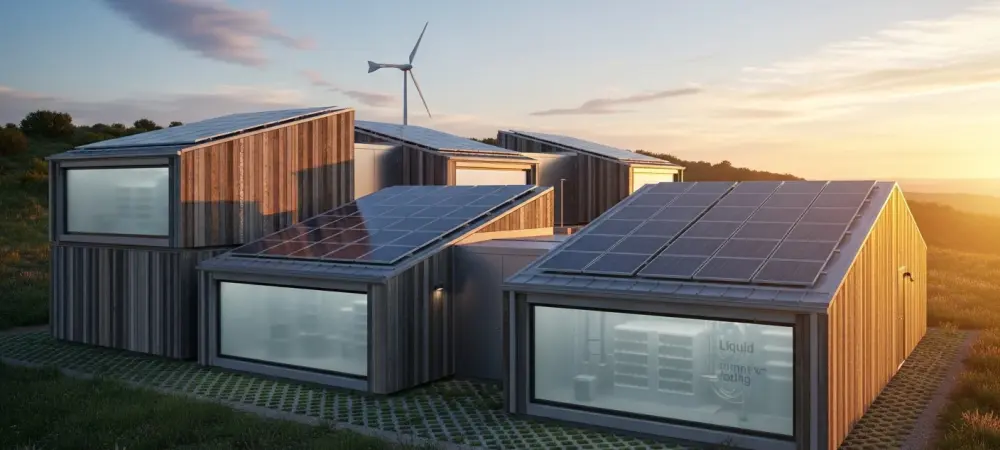
Modern computing is rapidly moving away from the massive, power-hungry silos of the past and toward a decentralized model that places processing power exactly where it is needed most. As data volumes explode, the traditional reliance on centralized hyperscale facilities in major hubs like Frankfurt or London is becoming a bottleneck for latency-sensitive industrial applications. The emergence of sustainable Edge data centers represents a pivot toward localized, high-performance infrastructure that prioritizes proximity and environmental stewardship over sheer scale.
This shift is more than just a geographical change; it is a fundamental reconfiguration of the digital landscape. By moving infrastructure to the “edge” of the network, companies can process data in real-time, which is essential for autonomous systems and smart municipal grids. This transition addresses the growing tension between our increasing digital dependency and the urgent need to reduce the carbon footprint of the ICT sector.
Evolution and Core Principles of Edge Computing
The journey of data processing has come full circle, moving from localized mainframes to the cloud and now returning to the source via Edge computing. Unlike the sprawling campuses of global tech giants, these decentralized units are designed to be compact and highly efficient. They function as critical nodes that bridge the gap between local devices and the broader cloud, ensuring that high-bandwidth tasks do not clog long-distance network pathways.
The relevance of this technology lies in its ability to democratize access to high-tier computing. For decades, rural regions and smaller industrial parks were left in the digital shadows. Now, modular infrastructure allows for a more equitable distribution of capacity. This evolution marks a departure from “one-size-fits-all” facilities, favoring bespoke, localized solutions that are deeply integrated into the communities they serve.
Technological Pillars of Eco-Friendly Edge Design
Sustainable Structural Engineering: Solid Wood Construction
One of the most radical departures from industry norms is the replacement of traditional steel and concrete with solid wood frames. Concrete production is a massive source of global emissions, yet it remains the default for data centers due to its thermal mass. However, modern timber engineering provides a viable, fire-resistant alternative that acts as a carbon sink. This choice alone can save hundreds of tons of CO2 during the construction phase, setting a new benchmark for “green” building in the tech sector.
Beyond carbon sequestration, wood offers surprisingly effective natural insulation properties. When integrated into a high-performance computing environment, these materials help maintain stable internal temperatures with less mechanical intervention. This approach challenges the notion that data centers must be sterile, gray monoliths, proving that natural materials can meet the rigorous demands of Tier 3 and Tier 4 infrastructure.
Advanced Liquid Cooling: Sector Coupling
Managing the intense heat generated by modern AI and cloud workloads requires more than just powerful fans. Liquid cooling technology, which circulates coolant directly near the heat source, is significantly more efficient than traditional air-cooling methods. It allows for much higher rack densities, meaning more computing power can be squeezed into a smaller physical footprint. This efficiency is critical for Edge sites where space in industrial parks is often at a premium.
The true innovation, however, lies in “sector coupling.” Instead of venting waste heat into the atmosphere, these facilities are engineered to feed that thermal energy into local district heating networks. This turns a problematic byproduct into a valuable community resource. By heating local homes or municipal buildings, the data center moves from being an energy drain to becoming a functional component of the local energy ecosystem, maximizing every watt consumed.
Emerging Trends in Decentralized Infrastructure
The business of building data centers is also transforming, with a clear trend toward Public-Private Partnership (PPP) solutions. This model allows municipalities to gain advanced digital capabilities without the immense upfront capital risk. By utilizing single-source models for financing and operation, developers can provide “data-center-as-a-service” to entire regions. This streamlined approach accelerates deployment, which is vital as the demand for local data sovereignty grows.
Furthermore, there is a concerted effort to bring high-performance computing to underserved industrial zones. This “ruralization” of tech allows local businesses to keep their data within the region, complying with strict privacy regulations while gaining the low latency required for modern manufacturing. The trend suggests that the future of the internet will be a dense web of smaller, interconnected hubs rather than a few massive central points.
Real-World Applications: Regional Implementation
In regions like Bavaria and North Rhine-Westphalia, these concepts are already taking physical shape. Projects in towns like Dorfen demonstrate how a 4MW facility can serve an entire district’s cloud needs. These sites are not just server farms; they are strategic assets for local sovereignty. By providing local businesses with a secure, domestic alternative to international cloud providers, these facilities help maintain economic competitiveness in an increasingly digital world.
Unique use cases are emerging where data centers are being directly integrated into municipal energy grids. In these scenarios, the facility acts as a flexible load, helping to balance the grid when renewable energy production fluctuates. This symbiotic relationship between IT and energy infrastructure is a hallmark of the new decentralized model, showing that digital expansion does not have to come at the expense of regional sustainability goals.
Implementation Obstacles: Market Challenges
Despite the clear benefits, the path to a nationwide green Edge network is fraught with technical hurdles. Maintaining complex liquid-cooling systems at scale requires specialized expertise that is currently in short supply. Furthermore, the initial cost of sustainable materials like solid wood and advanced heat exchange systems can be higher than traditional methods. Investors must be convinced of the long-term operational savings to justify these higher entry prices.
Regulatory issues also pose a significant challenge. Zoning laws in industrial parks often lack the flexibility needed for “sector coupling” projects, and navigating the permits for feeding heat into public networks can be a bureaucratic nightmare. There is also the matter of market trust; many businesses are hesitant to move away from established hyperscale providers, requiring Edge operators to prove their reliability and security through rigorous certification and uptime performance.
The Future of Green Edge Networks
The vision for the coming years involves a nationwide grid of interconnected, sustainable hubs. This network would allow for seamless data roaming between local nodes, ensuring that a vehicle or industrial robot always has access to the closest possible processing power. Breakthroughs in modularity will likely allow these centers to be “clipped” together like LEGO blocks, scaling up or down based on the real-time needs of the surrounding population.
As energy systems become more decentralized, the role of the data center will evolve further. We may see facilities that operate entirely on off-grid renewable sources, using massive battery arrays or hydrogen storage to maintain 24/7 operations. This would decouple digital growth from the traditional power grid entirely, creating a truly resilient and independent digital infrastructure that can withstand global energy volatility.
Synthesis and Strategic Assessment
The rise of sustainable Edge data centers represents a necessary synthesis of economic viability and environmental responsibility. By moving away from the “bigger is better” mentality, the industry is finding that smaller, smarter facilities can actually provide superior performance for the next generation of digital tools. The combination of timber construction and liquid cooling proves that the construction and IT sectors can collaborate to solve the dual challenges of latency and emissions.
While the market is still navigating the complexities of high initial costs and regulatory bottlenecks, the strategic value of decentralized infrastructure is undeniable. These facilities are becoming the literal “engine rooms” of regional economies, providing the backbone for everything from smart cities to advanced manufacturing. The transition toward a greener, more distributed network is not just a trend; it is the fundamental architecture of a more resilient and sovereign digital future.
Strategic planners should have prioritized the integration of these modular units into existing urban planning frameworks. Moving forward, the focus must shift toward standardizing “heat-as-a-product” agreements to ensure that waste energy is never truly wasted. Future developments will likely require even deeper collaboration between tech providers and local governments to turn digital infrastructure into a public utility as essential as water or electricity.