

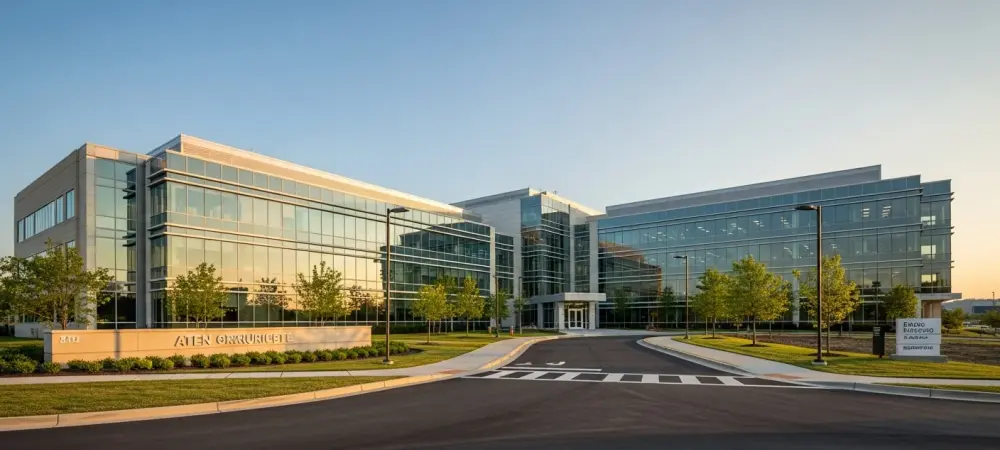
The landscape of Northern Virginia is undergoing a dramatic metamorphosis as the boundaries between academic excellence and industrial digital infrastructure continue to blur in the face of unprecedented economic shifts. In a transaction that highlights the astronomical value of real estate within the world’s most significant data hub, Amazon Data Services recently finalized the purchase of the George Washington University Virginia Science and Technology Campus for nearly half a billion dollars. At approximately $3.5 million per acre, this acquisition stands as a monumental milestone in Loudoun County property history, signaling a transformative era for both the prestigious university and the global leader in cloud computing.
This record-breaking deal is more than just a real estate transaction; it represents a fundamental pivot in how modern institutions view their physical footprints. By selling 122 acres in the heart of “Data Center Alley,” George Washington University is effectively trading traditional land holdings for a more liquid and sustainable financial future. The move allows the university to capitalize on the region’s insatiable demand for server space, converting a satellite campus into a massive capital injection that will drive research and student support for decades.
A $427 Million Shift in the Heart of Data Center Alley
The sale of the Ashburn-based property serves as a vivid illustration of the rising dominance of digital infrastructure over traditional suburban development. As cloud services become the backbone of the global economy, the land that once housed quiet lecture halls and manicured lawns is now being repurposed to fuel the engines of the internet. This shift reflects a broader regional trend where Northern Virginia has become the undisputed epicenter for global data traffic, driving land prices to levels once reserved for high-density urban centers.
Local experts view this $427 million exchange as a defining moment for Loudoun County’s industrial evolution. While the region has long been known for its tech-heavy economy, the sheer scale of the Amazon acquisition confirms that even established academic sites are now prime targets for redevelopment. This transition underscores the immense pressure on available land as tech giants compete for the proximity and power connectivity that Ashburn uniquely provides.
Strategic Monetization of Academic Assets
For higher education institutions, the decision to divest from sprawling satellite campuses is increasingly viewed as a savvy financial maneuver. George Washington University leadership identified the Ashburn site as a high-value asset that could be better utilized to bolster the university’s endowment rather than maintaining underused physical facilities. By liquidating this portion of its real estate portfolio, the institution can now focus resources on its primary urban locations while securing the funding necessary to remain competitive in a rapidly changing academic market.
CFO Bruno Fernandes and President Ellen M. Granberg have framed this move as a proactive step toward long-term fiscal resilience. The infusion of hundreds of millions of dollars into the university’s permanent funds provides a safety net against economic volatility and allows for significant investment in faculty recruitment and student scholarships. This strategy reflects a modern reality where universities must act as sophisticated asset managers to preserve their core educational missions.
Inside the Deal: Redevelopment Plans and Transition Timelines
Amazon’s vision for the 122-acre site involves a complete overhaul of the existing infrastructure to make way for a state-of-the-art data center complex. However, the transition will not occur overnight, as the logistics of moving a functioning campus are exceptionally complex. The agreement includes a critical five-year leaseback provision, allowing the university to maintain its current operations while it carefully executes a phased relocation of its academic and research programs.
The logistical undertaking is significant, given that the campus currently houses the School of Nursing and the university’s primary internal data center. Additionally, 17 specialized research laboratories must be meticulously moved to new locations without compromising the integrity of ongoing experiments. This five-year window provides the necessary breathing room to ensure that the 850 faculty and staff members currently stationed on the property experience a seamless transition to their future workspaces.
AWS and the Unrelenting Demand for Cloud Infrastructure
This acquisition further solidifies the dominance of Amazon Web Services in a region it has occupied since the mid-2000s. With over 50 operational data centers already scattered across Loudoun, Fairfax, and Prince William counties, Amazon continues to expand its footprint to keep pace with the exponential growth of artificial intelligence and cloud-based enterprise solutions. The Ashburn property offers a strategic advantage, providing a large, contiguous parcel of land in an area where such opportunities are becoming increasingly rare.
The relentless pursuit of capacity by AWS highlights the “Ashburn Effect,” where the presence of a massive data ecosystem attracts even more investment, creating a self-reinforcing cycle of growth. For Amazon, securing this land is a defensive and offensive move, ensuring it has the space required to scale its infrastructure for the next generation of digital services. This aggressive expansion reinforces Virginia’s status as the most critical node in the global digital supply chain.
Navigating Large-Scale Campus Relocations
The success of this transition will ultimately depend on the university’s ability to move its research and educational assets without losing institutional momentum. Relocating 17 laboratories is a delicate process that requires specialized coordination to protect sensitive equipment and data. By prioritizing research continuity, the university aims to ensure that its scientific output remains uninterrupted while it transitions to more modern, optimized facilities that are better aligned with current academic needs.
Looking ahead, the university’s focus shifted toward maximizing the impact of the newly acquired capital. Financial advisors began integrating the proceeds into a diversified investment strategy designed to provide a steady stream of revenue for future campus upgrades. Meanwhile, the relocation of the school’s own data center presented an opportunity to modernize its internal IT infrastructure, adopting the same high standards of efficiency that drove Amazon to the site in the first place. These steps collectively ensured that the university remained agile and well-funded in an era of digital transformation.