

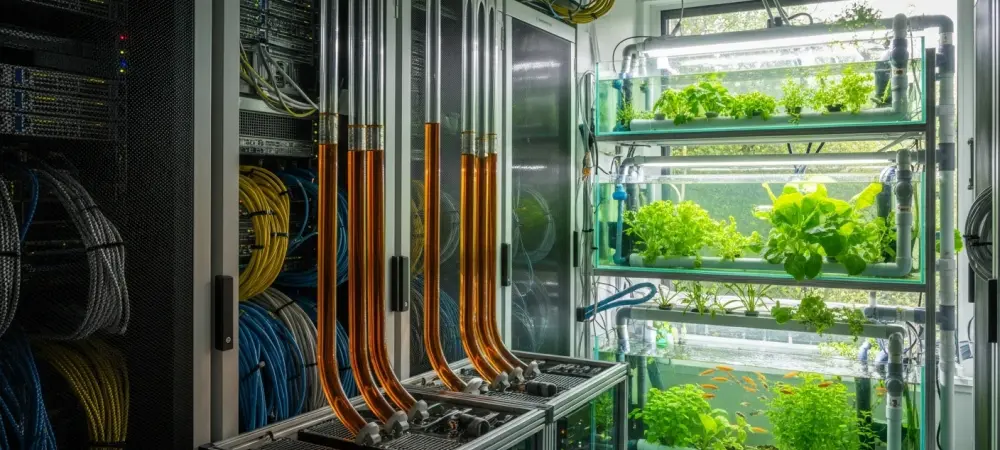
The transformation of historic industrial landscapes into sophisticated hubs for artificial intelligence represents a pivotal shift in how regional economies balance legacy and innovation. Developer Krambu has recently proposed a sustainable data center at the historic Bonner Mill Industrial Park in Missoula County, Montana, aiming to breathe new life into a site once defined by the timber industry. CEO Steve Wood has positioned this project as a significant advancement in data infrastructure, emphasizing a closed-loop system specifically engineered for efficient heat capture. Rather than venting waste heat into the atmosphere, the facility would repurpose thermal energy to sustain auxiliary agricultural ecosystems such as greenhouses, aquaponics, or hydroponics. This integrated approach seeks to minimize the environmental footprint of heavy computation while providing a tangible secondary benefit to the local food supply chain, effectively turning a byproduct into a resource for the community. The proposal aligns with a modern strategy where industrial sites serve dual purposes, blending intensive computing power with sustainable biological production methods.
Regulatory Standards and Community Legacy
Legacy concerns heavily influence the local reception of this proposal, primarily due to the community’s difficult history with a previous cryptocurrency mining operation. The facility formerly operated by HyperBlock left a lasting impression on Missoula residents, who raised consistent alarms regarding extreme noise pollution and an energy footprint that consumed nearly one-third of the county’s total household electricity demand. To prevent a recurrence of these issues, Missoula County established rigorous zoning regulations in 2019 that now dictate the terms for any incoming high-intensity data projects. These rules require facilities to operate on 100% renewable energy and maintain strict protocols for electronic waste recycling. Resource management remains a focal point of discussion, with Wood indicating that the facility’s water consumption would likely mirror the historical usage levels of the original sawmill. Current estimates suggest a requirement of approximately 500 gallons per megawatt to maintain the necessary cooling for the high-performance hardware.
Navigating Local Oversight and Environmental Integration
Because the proposed data center location sat within 500 feet of a residential neighborhood, the project necessitated a special exception review to address potential impacts. This formal oversight process scrutinized the plans for noise mitigation, outdoor lighting configurations, and anticipated traffic patterns to ensure the facility did not disrupt the quality of life for nearby residents. While Krambu evaluated various potential tenants, including the U.S. Department of Defense, the initiative remained in its early planning stages without a formal application filed with the county. Officials emphasized that the path toward approval required extensive public engagement and transparent dialogue to bridge the gap between technological ambition and local environmental standards. Ultimately, the proposal highlighted the necessity of integrating rigorous municipal oversight with private innovation to achieve sustainable development. This process ensured that future industrial growth honored community values while pushing the boundaries of what green infrastructure could achieve in a modern economy.