

Surpassing Previous Performance Limits With a 43,000-Core Rack-Scale Solution
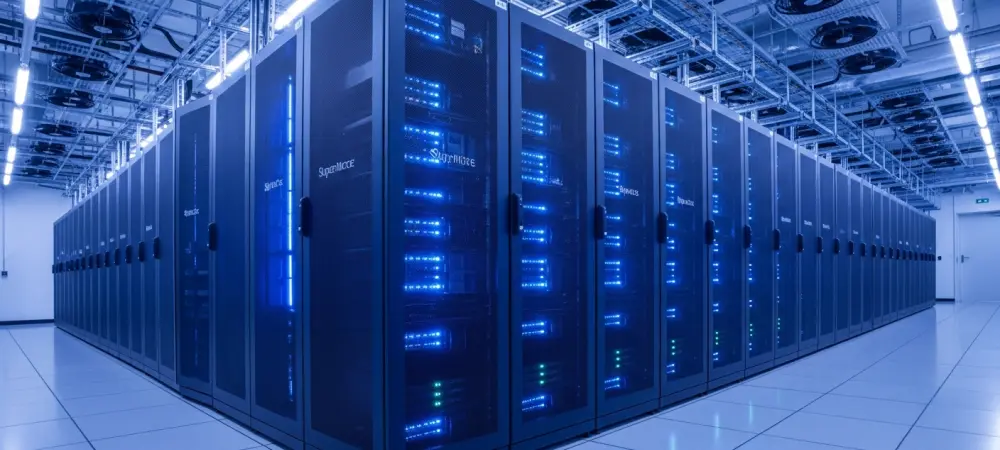
The contemporary data center has evolved from a simple collection of server racks into a concentrated powerhouse where a single 48U configuration now facilitates over 43,000 cores. Supermicro’s latest #5 server lineup represents a massive leap in density, driven by 6th Gen AMD EPYC 9006 Series processors that deliver a staggering 1.7x performance increase over their predecessors. This launch marks a critical point in hardware evolution, where the raw power of 256 cores per socket meets the efficiency required for the next generation of digital services. Integrating unprecedented compute density into standard footprints allows organizations to achieve massive scale without expanding physical real estate. By utilizing advanced CPU power, these systems handle intensive workloads that were previously impossible to manage within traditional power envelopes. This capability ensures that modern enterprises can maintain rapid growth while optimizing their footprint.
The Strategic Pivot Toward Specialized Hardware for Artificial Intelligence
As enterprise workloads shift from general-purpose computing to intensive AI training and high-performance computing, off-the-shelf hardware often falls short. The industry currently faces a compute gap where traditional architectures struggle to manage the massive data throughput required by large language models. This shift necessitates specialized architectures designed specifically for scale-out environments and liquid-cooled efficiency.
Specialized designs ensure that organizations manage complex multi-threaded tasks without hitting a thermal or performance ceiling. This transition is no longer optional for businesses aiming to stay competitive in a data-driven market. Moving toward purpose-built systems allows for a more efficient allocation of resources, reducing the overall energy footprint while maximizing output.
Exploring the #5 Ecosystem: Modular Architecture and 6th Gen AMD EPYC Capabilities
The #5 portfolio is categorized into distinct series to address specific operational bottlenecks, utilizing up to 512 threads per processor to maximize throughput. The Hyper series serves as the backbone for enterprise virtualization, while the CloudDC models provide the modular flexibility needed for rapid data center expansion. For environments where physical space is at a premium, the GrandTwin and FlexTwin systems offer high-density compute nodes. The FlexTwin specifically leverages liquid cooling to maintain peak performance during sustained heavy loads. Furthermore, the inclusion of Petascale Storage and SuperBlade systems ensures that both massive data analytics and dense HPC applications are supported within a unified hardware framework. This diversity allows IT managers to select hardware that fits their exact thermal requirements.
Optimizing AI Training With AMD Instinct GPUs and Advanced Liquid Cooling
Technical performance is further amplified by the integration of AMD Instinct MI350P GPUs, creating a hardware synergy that targets the most demanding AI inference models. The flagship Helios rack-scale platform exemplifies this, integrating 72 liquid-cooled GPUs to prevent the thermal throttling that often plagues air-cooled systems. To eliminate data bottlenecks between these high-performance nodes, Supermicro utilizes AMD Pensando networking technology and the Pollara 400 AI NIC.
Focusing on liquid cooling and specialized networking reflects a broader industry trend toward GPU-heavy infrastructure that prioritizes sustained output over intermittent bursts of power. These systems ensure that data moves as fast as the processors can handle it, which is essential for maintaining training speeds.
Implementing High-Density Infrastructure for Enterprise and Hyperscale Growth
Organizations looking to adopt the #5 portfolio prioritized a strategic approach to power distribution and thermal management. They evaluated liquid cooling readiness, particularly for the FlexTwin and Helios models, to fully capture efficiency gains. By deploying modular CloudDC units for scale-out tasks and utilizing the specialized Hyper series for core AI workloads, IT departments established a tiered infrastructure that balanced cost with performance. Leveraging high-speed networking like the Pollara 400 proved essential to ensure that increased core counts translated into actual reduced latency for end-user applications. The focus shifted toward sustainable, high-density growth that addressed the immediate demands of AI while preparing for the next wave of computational challenges. This transition provided a scalable foundation that allowed businesses to navigate the complexities of hyperscale expansion effectively.