

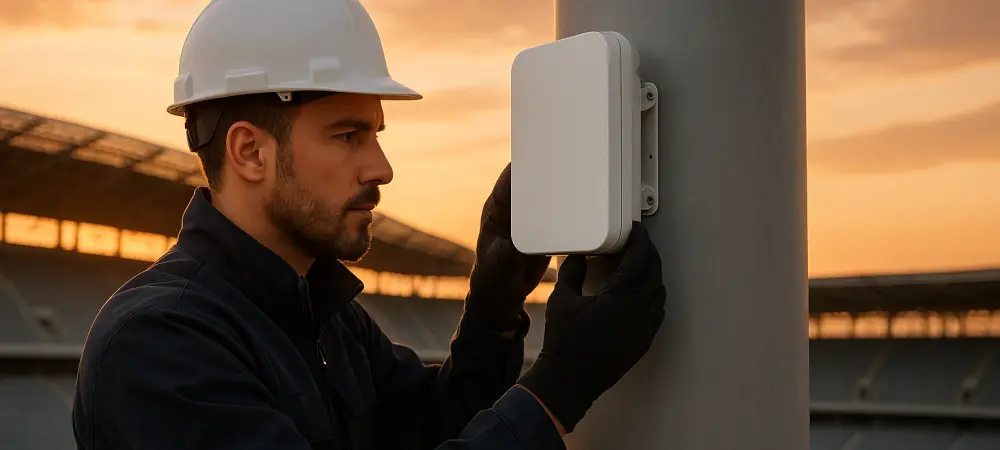
Reliable wireless coverage is now as essential as traditional utilities, playing a vital role in storm preparedness, emergency call services, and the growing field of remote health monitoring. As the current football season progresses through 2026, the density of fans within Louisiana’s most iconic sports venues highlights a shift from recreational connectivity to a foundational requirement for survival and commerce. In locations like LSU’s legendary “Death Valley” or the Caesars Superdome, the expectation for seamless data transfer has surpassed the simple desire to upload a highlights reel. Instead, these massive structures serve as test beds for the reliability of high-capacity wireless systems that must support tens of thousands of users. This digital backbone is no longer about social media but the necessity of maintaining safety in environments where traditional communication methods would fail under the weight of population density.
Evolution of Network Demands
Infrastructure in Public Spaces
The recent eighty-million-dollar renovation of the Caesars Superdome serves as a prime example of how physical architecture must now be designed around digital capacity. Beyond the aesthetics of the seating and concourses, a massive portion of investment was directed toward high-density wireless nodes that facilitate nearly every aspect of the venue’s operations. Stadium staff now depend entirely on handheld wireless scanners to manage entry points, while vendors utilize high-speed connections to process thousands of financial transactions per minute. Without these robust systems, the logistics of hosting eighty thousand people would grind to a halt, leading to dangerous overcrowding at entry gates and loss of revenue for local businesses. This integration demonstrates that wireless service is no longer an optional perk but a vital component of the structural integrity of the event itself, ensuring that the flow of people and commerce remains uninterrupted.
Connectivity and Public Safety
While many fans still value the ability to share content in real-time, the true value of modern wireless deployment lies in its capacity to protect the public during unexpected crises. First responders within high-occupancy venues now utilize dedicated wireless bands to coordinate responses to medical emergencies or security threats without interference from the general public’s data traffic. This dual-use nature of the network—serving both commercial and emergency needs—has redefined how municipalities view telecommunications investments. The same towers and small cells that allow for a seamless fan experience are the same tools that emergency dispatchers use to locate individuals in distress through enhanced GPS tracking and biometric data feeds. Consequently, the push for better connectivity in sports arenas has become a catalyst for broader regional improvements in public safety infrastructure, acknowledging that a network failure is a significant risk to the entire community.
Overcoming Regulatory Barriers
Navigating Local Regulations
Despite the clear and present need for expanded wireless capacity, the physical deployment of hardware continues to face significant hurdles from a complex web of local regulations. This patchwork of rules creates a fragmented environment where service providers must navigate different permitting requirements, fee structures, and zoning laws for every municipality they enter. In many cases, the time required to secure the necessary approvals for a single small cell installation can take longer than the actual engineering and construction phases combined. These bureaucratic delays often lead to increased project costs and can prevent rural or underserved areas from receiving timely upgrades. The inconsistency between neighboring jurisdictions often discourages long-term investment, as providers struggle to project timelines and budgets across a multi-state region. Addressing this inertia is critical for ensuring that technological advancements in urban hubs are replicated in smaller towns.
National Standards for Reform
The transition toward a more streamlined regulatory environment proved to be the most effective way to bridge the gap between technological potential and physical reality. As 2026 progressed, the industry moved away from the cumbersome administrative processes of the past and adopted a more agile approach to network expansion. This shift allowed for the rapid deployment of essential connectivity in both high-density sports venues and rural landscapes alike. The focus remained on creating a resilient infrastructure that could withstand the pressures of peak demand and environmental challenges. Leaders within the sector recognized that removing administrative barriers was just as vital as the engineering of the networks themselves. By prioritizing standard procedures and reducing the complexity of the permitting process, the nation secured a more reliable digital future for all citizens. These actions ensured that the infrastructure remained robust enough to support life-saving services.