

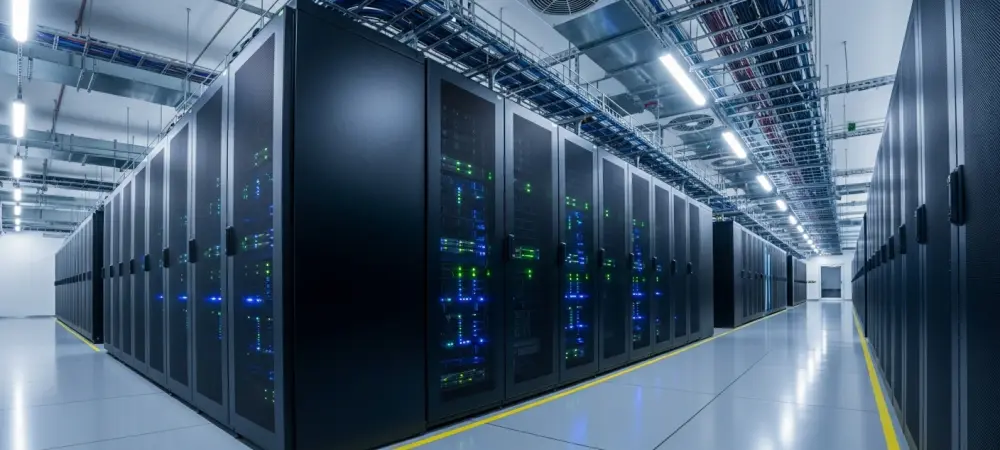
The sheer volume of global data traffic has reached a point where traditional infrastructure can no longer keep pace with the localized processing demands of autonomous systems and real-time analytics. In the contemporary digital economy, the selection of a data center model has transcended its historical status as a mere facilities or real estate decision to become a core pillar of business architecture. Infrastructure choices now function as both a potential bottleneck and a powerful accelerator for an organization’s overarching data strategy, influencing everything from latency to market adaptability. For modern Information Technology leaders, these facilities are no longer just storage rooms for hardware; they are strategic assets that dictate cost structures, define the limits of scalability, and determine the speed of technological deployment. The current technological landscape is defined by a shift from viewing data centers as isolated technical silos to seeing them as strategic levers. This evolution requires a deep understanding of various architectural models, ranging from high-control enterprise environments to the massive flexibility of hyperscale cloud providers. The primary goal for leadership is to align these infrastructure investments with the company’s growth trajectory, financial health, and long-term operational resilience.
Evaluating the Strategic Decision-Making Process
Foundational Pillars for Infrastructure Assessment
A rigorous evaluation process must prioritize long-term business outcomes over the convenience of maintaining legacy technical setups that may no longer serve the organization’s needs. This assessment begins with an in-depth analysis of capacity and growth projections, requiring architects to determine if their workloads remain stable throughout the year or are prone to unpredictable, rapid expansion driven by consumer trends. Understanding the nature of the data—whether it is transactional, analytical, or archival—allows for a more precise mapping of hardware requirements and facility capabilities. Furthermore, the financial strategy must balance capital-intensive ownership models against consumption-based operational expenses, a decision that fundamentally alters the corporate balance sheet and overall cost predictability. By shifting away from rigid capital expenditure (Capex), organizations can often gain the liquidity needed to invest in software innovation rather than physical maintenance.
The transition toward modern architectures also necessitates a look at the total cost of ownership, which includes often-overlooked variables such as cooling efficiency and the physical security of the site. Strategic decision-making involves calculating the risk of downtime against the cost of redundant systems, ensuring that the chosen path provides a safety net without becoming a financial drain. This evaluation also considers the lifespan of the hardware involved, as rapid cycles of innovation can render a privately owned facility’s equipment obsolete within just a few years. Consequently, the assessment phase is not merely a technical checklist but a comprehensive business audit that seeks to align the physical location of bits and bytes with the financial goals of the C-suite. It is this alignment that prevents infrastructure from becoming a legacy anchor during periods of rapid market shifts.
Security, Performance, and Operational Maturity
Decision-makers must navigate increasingly complex regulatory environments, ensuring that data sovereignty and compliance requirements are met through the selection of appropriate physical and logical locations. As international laws become more stringent regarding where personal information is stored and processed, the geographic footprint of a data center becomes a legal imperative rather than just a technical preference. Performance is increasingly measured by geographic distribution, where proximity to end-users is vital for reducing latency in high-stakes environments like financial trading or remote surgical applications. When data has to travel thousands of miles to reach a central server, the resulting delay can degrade the user experience or even cause critical system failures in automated environments.
Beyond the physical location, the choice of a data center model must align with the internal staff’s ability to manage complex or outsourced environments effectively. Rising energy costs and global sustainability mandates require a focus on power usage effectiveness (PUE), pushing organizations to seek facilities that utilize advanced cooling techniques or renewable energy sources. This operational maturity also involves assessing the organization’s cybersecurity posture, as a decentralized or hybrid model introduces new attack surfaces that must be defended with sophisticated monitoring tools. If an organization lacks the internal expertise to maintain a high-security private facility, the move toward a managed service or a professional colocation provider becomes a strategic necessity rather than a luxury. This ensures that the infrastructure remains resilient against both physical disasters and digital threats while maintaining the high performance required by modern applications.
Traditional and Hybrid Hosting Models
The Enduring Role of Enterprise Data Centers
The enterprise data center remains the primary choice for organizations where full infrastructure ownership and maximum control are the top priorities for their daily operations. This model is most common in highly regulated sectors like finance, healthcare, and national defense, where data sensitivity and operational continuity cannot be compromised by third-party variables. In these environments, the organization retains total authority over every aspect of the facility, from the physical security protocols at the perimeter to the specific air-filtration systems used in the server rooms. While this level of control provides peace of mind and simplifies compliance audits, it requires significant upfront capital investment and places the full burden of maintenance, hardware refreshes, and energy efficiency directly on the organization’s internal teams.
Despite the rise of cloud computing, the traditional enterprise model offers a unique advantage for businesses running deeply integrated legacy systems that are not easily refactored for the cloud. These systems often require specific hardware configurations or low-level access to the networking stack that public providers cannot or will not provide. Furthermore, owning the facility allows for custom-tailored performance optimization, such as specialized liquid cooling for high-frequency trading servers or hardened shielding against electromagnetic interference. However, the lack of elasticity is a notable drawback; expanding a private data center is a slow process involving construction permits, equipment procurement, and complex installation timelines. Therefore, while it remains a cornerstone for core mission-critical functions, it is increasingly being used as part of a broader strategy rather than as a standalone solution for all corporate data needs.
Colocation as a Strategic Middle Ground
Colocation facilities offer a professionalized, shared environment where companies lease space, power, and connectivity while maintaining ownership of their specific server hardware. This serves as an ideal middle ground for enterprises that want to move away from the heavy lifting of facility management—such as maintaining massive generators and industrial-grade air conditioning—without losing control over their server configurations. By sharing these massive infrastructure costs with other tenants, organizations gain access to redundant power systems and carrier-neutral network ecosystems that would be prohibitively expensive to build and maintain privately. This model effectively turns a portion of the facility-related capital expenses into predictable operating costs, allowing for a more agile financial approach to infrastructure scaling.
The strategic value of colocation is particularly evident when looking at disaster recovery and geographic expansion. Companies can quickly establish a presence in a new region by leasing space in a local colocation hub, gaining immediate access to the regional fiber-optic backbone without the need for a multi-year construction project. Moreover, colocation providers often offer “remote hands” services, where their on-site technicians can perform basic hardware tasks, reducing the need for the enterprise to fly its own engineers to distant locations. This model also facilitates better connectivity to cloud on-ramps, as many colocation providers host direct-connect points for major public cloud services. This allows for high-speed, low-latency communication between the company’s private hardware and its public cloud workloads, making it a foundational element for any modern hybrid IT strategy.
Scalability Through Hyperscale and Edge Solutions
The Power of Hyperscale Cloud Environments
Hyperscale data centers, operated by major cloud service providers, are engineered for extreme scale and automation through the use of sophisticated software-defined infrastructure. These environments are the bedrock for cloud-native applications, massive artificial intelligence training sets, and global digital platforms that must support millions of concurrent users. By abstracting the hardware layer through virtualization, hyperscale providers allow organizations to spin up thousands of virtual machines in minutes, providing a level of elasticity that traditional data centers simply cannot match. This model shifts the responsibility of hardware maintenance, physical security, and power management to the provider, allowing the customer to focus entirely on software development and data analysis.
While the advantages of hyperscale are significant, particularly regarding global reach and energy efficiency, they also introduce a unique set of risks that must be managed. Vendor lock-in is a primary concern, as moving massive amounts of data and reconfiguring proprietary cloud services can be both costly and technically challenging if an organization decides to switch providers. Additionally, the lack of visibility into the underlying hardware layer can be a hurdle for organizations with extreme security requirements or those needing specific hardware optimizations. Nevertheless, the sheer economy of scale offered by hyperscale facilities means they often operate at a PUE rating far superior to smaller private centers, helping organizations meet their environmental sustainability goals. For most modern enterprises, the hyperscale cloud is no longer an “if” but a “how much,” acting as the primary engine for digital innovation and rapid market entry.
Processing Data at the Network Perimeter
As the demand for real-time processing grows with the rise of 5G and the proliferation of the Internet of Things, edge and micro data centers are becoming essential components of the modern architecture. These compact, distributed units are placed physically close to the data source, such as on a factory floor, inside a retail store, or at the base of a cellular tower, to solve the problem of network latency. By processing information locally, these units ensure that time-sensitive data—such as instructions for an autonomous vehicle or a robotic arm—does not have to travel back to a distant central hub for processing. This localized approach not only improves response times but also significantly reduces the amount of bandwidth required to send raw data over long distances, leading to substantial cost savings.
The deployment of edge computing also provides a layer of localized resilience; if the connection to the central data center is lost, the edge site can continue to function independently, maintaining critical local operations. However, managing a vast network of these distributed sites introduces a new set of operational challenges, including physical security risks and the need for remote management software that can handle thousands of nodes simultaneously. Unlike a centralized facility with armed guards and biometric scanners, an edge unit might be located in a publicly accessible area, requiring specialized tamper-resistant enclosures and encrypted storage. Despite these complexities, the push toward the edge is a logical progression as organizations seek to deliver immersive digital experiences and maintain the high-speed data pipelines required for modern industrial automation and smart city initiatives.
Specialized Units and Emerging Technologies
Agility Through Modular and Containerized Designs
Modular data centers consist of pre-engineered, self-contained units that are manufactured in a factory and delivered to a site ready for immediate operation. This model is highly favored for rapid capacity expansion in remote industrial locations, such as mining sites or oil rigs, where traditional construction is impossible or too slow. Because these units are built in a controlled environment, their performance characteristics are highly predictable, and they arrive with all necessary power, cooling, and fire suppression systems already integrated. This “building block” approach allows organizations to bypass the lengthy and often unpredictable timelines associated with municipal permits and specialized on-site labor. The speed of deployment is perhaps the most significant advantage, enabling a business to add substantial compute capacity in a matter of weeks rather than years.
The use of containerized units also offers a degree of portability that is unique in the world of infrastructure. If a project ends or a site becomes unviable, the entire data center can be disconnected and moved to a new location, preserving the initial capital investment. However, this model does come with trade-offs; the physical dimensions of the module strictly limit the amount of hardware that can be installed, and there is often very little room for custom rack configurations. Integration with existing proprietary legacy systems can also be a challenge, as the modular units are typically designed around standardized modern hardware specifications. For organizations that need to scale rapidly or operate in harsh environments, however, the modular approach provides a level of tactical agility that traditional brick-and-mortar facilities simply cannot provide, making it a vital tool for specialized infrastructure needs.
Future Horizons in Data Center Design
New trends are rapidly shaping the next generation of facilities, with a strong focus on radical sustainability and the support of specialized computing paradigms. Green data centers are now utilizing advanced techniques such as waste heat reuse to provide heating for nearby buildings, or submerged liquid cooling where servers are placed in non-conductive oil to eliminate the need for fans. Underground facilities are also gaining traction, as they offer natural thermal stability and protection from extreme weather events, significantly reducing the energy required to maintain optimal operating temperatures. These innovations are not just about environmental stewardship; they are practical responses to the rising cost of electricity and the increasing frequency of climate-related disruptions that threaten uptime.
Looking further into the technical horizon, the emergence of quantum computing is necessitating the design of entirely new types of data center environments. These quantum-ready facilities must provide extreme environmental controls, such as cryogenic cooling systems that keep processors at temperatures near absolute zero, along with sophisticated electromagnetic shielding to prevent external interference. While these technologies are still in their early commercial stages, forward-thinking organizations are already considering how these specialized centers will integrate with their existing classical infrastructure. Furthermore, the integration of artificial intelligence into the data center management layer itself—using machine learning to predict component failures and optimize power distribution in real-time—is becoming a standard feature. These advancements represent a shift toward a more intelligent, resilient, and specialized infrastructure that can meet the exotic demands of the next generation of digital services.
Implementing a Comprehensive Hybrid Strategy
The Necessity of a Balanced Infrastructure Portfolio
The consensus among industry experts is that no single data center model can meet every requirement of a modern enterprise, leading to the widespread adoption of the hybrid strategy. This approach involves creating a balanced portfolio where specific workloads are assigned to the environment that best suits their technical and regulatory needs. Core, sensitive data and legacy applications typically remain in controlled enterprise or colocation facilities to ensure maximum governance and security. Meanwhile, high-growth, customer-facing applications leverage the global scale and rapid innovation cycles of hyperscale platforms. By diversifying their infrastructure, organizations can avoid the risks associated with putting all their digital assets in one place, such as a single provider’s outage or a regional disaster.
This balanced approach also allows for a more nuanced financial strategy, as it permits the organization to optimize its spending based on the lifecycle of different projects. Temporary experiments and development environments can be hosted in the cloud to take advantage of its low barrier to entry, while long-term, stable workloads can be moved to colocation or private facilities to lock in lower costs over time. The challenge of the hybrid model lies in the complexity of managing data across different environments, requiring sophisticated orchestration tools that provide a “single pane of glass” view of the entire infrastructure. However, the flexibility gained through this model is often worth the additional management overhead, as it provides the organizational agility needed to respond to competitors or pivot to new market opportunities without being held back by a rigid physical foundation.
Optimizing Performance and Driving Innovation
Ultimately, the goal of a modern data center strategy is to transform infrastructure from a necessary cost center into a distinct business advantage that drives innovation. By pushing latency-sensitive tasks to the edge and using modular units for tactical needs, organizations can build a resilient foundation that supports both existing operations and future digital transformations. This strategic alignment ensures that every bit of data is processed in the most efficient location, reducing costs while improving the end-user experience. As technologies like artificial intelligence and 5G continue to mature, the ability to rapidly deploy and scale hardware in diverse environments will become a key differentiator between market leaders and those struggling to keep up.
In conclusion, the evolution of data center architecture required a shift from static, one-size-fits-all thinking to a dynamic, multi-layered approach. Organizations successfully navigated these changes by mastering the trade-offs between cost, control, and agility, ensuring that their infrastructure could support long-term growth. The move toward hybrid environments and the integration of edge and modular solutions provided the necessary flexibility to meet the demands of an increasingly data-driven world. By viewing the data center as a strategic lever rather than a mere facility, leadership teams positioned their companies to capitalize on new technological trends with confidence. This proactive alignment of physical assets with digital goals turned the complexities of infrastructure into a source of operational excellence and lasting competitive strength.