

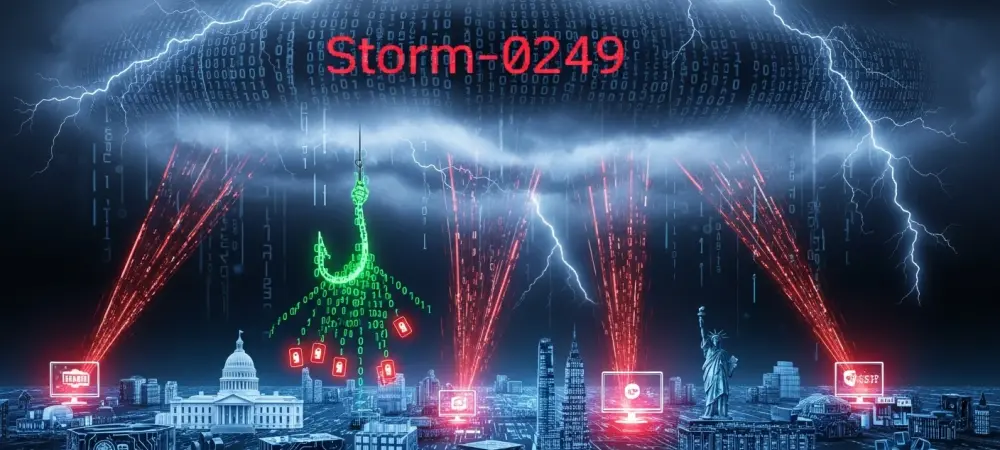
The digital landscape across the United States experienced a significant disruption in February 2025 when a highly coordinated phishing operation successfully infiltrated approximately 29,000 email inboxes within a twenty-four-hour window. This operation was not merely a random surge in spam but a meticulously timed strike designed to exploit the peak of the American tax season, utilizing the authority of the Internal Revenue Service as a psychological lever. Security researchers identified the campaign as a departure from the typical low-effort scams that often clutter junk folders, noting its professional execution and high success rate. By focusing on a broad cross-section of American organizations, the attackers leveraged the collective administrative stress associated with federal filing deadlines. This strategic alignment between the phishing lures and the real-world anxieties of employees created a perfect storm for credential theft and malware delivery. The rapid deployment of this campaign demonstrated a level of operational maturity that suggests a well-funded and organized adversary capable of conducting large-scale social engineering.
The Evolution of the Threat Actor Storm-0249
The threat actor identified as Storm-0249 has emerged as a formidable player in the financially motivated cybercrime arena, characterized by its seasonal approach to targeting and high technical proficiency. Historically, this group has been linked to the distribution of notorious malware families such as IcedID and BazaLoader, showcasing a long-standing expertise in initial access operations. Their methodology involves a constant rotation of lures that mirror current events, including holiday shopping peaks, open enrollment periods for insurance, and the critical window of the annual tax filing season. This adaptability ensures that their malicious content remains relevant and highly likely to bypass the natural skepticism of modern internet users. By evolving their tactics to match the socio-economic calendar, Storm-0249 has maintained a high level of operational success, moving beyond simple fraudulent activities toward becoming a primary broker for sophisticated network intrusions that often precede major corporate data breaches.
A significant shift in the group’s technical strategy was noted with the recent adoption and deployment of the Latrodectus loader, which serves as a more advanced successor to their previous toolkit. This piece of malware is not a simple revision but a sophisticated tool designed for persistence and the delivery of secondary payloads, reflecting a professionalized development lifecycle. Latrodectus shares architectural similarities with its predecessors, yet it incorporates enhanced evasion techniques to remain undetected by standard antivirus software and traditional endpoint security solutions. The move toward this specific loader indicates that the group is prioritizing stealth and long-term access over immediate, noisy exploitation. This strategic shift suggests that Storm-0249 is increasingly focused on high-value targets where a persistent foothold can be monetized through more lucrative means, such as the sale of access to ransomware affiliates or the systematic exfiltration of proprietary corporate information.
Psychology of Deception and Mobile Vulnerabilities
The success of the February 2025 campaign was rooted in an intricate understanding of human psychology and the exploitation of official government branding to create a false sense of security. Attackers meticulously crafted emails that mirrored legitimate correspondence from the Internal Revenue Service, specifically targeting common concerns regarding tax refunds, document requests, or pending balances. These subject lines were engineered to trigger a reflexive, high-priority response from employees who are conditioned to fear the consequences of ignoring federal inquiries. By creating a situation where the user feels an immediate obligation to act, the attackers effectively short-circuit the critical thinking process that might otherwise lead an individual to question the source of the email. This psychological engineering is particularly effective during the high-stress environment of the tax season, where the volume of legitimate financial documents can mask the arrival of a single, well-placed malicious message.
To further enhance the effectiveness of their campaign, Storm-0249 integrated QR codes within PDF attachments, a move designed to shift the field of play from the desktop to the mobile environment. While corporate workstations are often protected by a thick layer of firewalls, email scanners, and endpoint detection systems, mobile devices frequently lack equivalent security infrastructure. When a user scans a QR code from a computer screen or within a document, they are typically redirected to a web browser on their personal or company-issued mobile phone. This transition allows the attackers to bypass many of the traditional safety nets provided by IT departments, as mobile browsers may not effectively flag malicious URLs or provide the same level of visual warning to the user. This exploitation of the mobile security gap demonstrates a sophisticated understanding of how modern employees interact with technology, recognizing that the weakest link in a corporate network is often the device sitting right in their pocket.
Strategic Abuse of Legitimate Cloud Infrastructure
One of the most alarming aspects of this phishing surge was the implementation of a layered delivery chain that leveraged the inherent trust associated with major cloud service providers. Instead of hosting their malicious landing pages on newly registered or suspicious domains, the attackers routed their victims through a sequence of redirects using platforms such as Google, Dropbox, SharePoint, and OneDrive. This methodology is particularly effective because enterprise security filters are often configured to allowlist traffic from these trusted tech giants to prevent the disruption of legitimate business operations. By embedding shortened URLs or QR codes that lead to these reputable platforms, the attackers ensure that their initial delivery avoids being flagged by automated reputation-based filtering systems. This “living off the cloud” strategy forces security tools to distinguish between a legitimate shared document and a malicious redirect hidden within the same ecosystem, a task that remains incredibly difficult.
Building on this foundation of trust, the multi-stage redirection process serves to obscure the final malicious endpoint from both the user and automated analysis tools. A victim might click a link that leads to a legitimate Google-hosted page, which then automatically triggers a redirect to a SharePoint site, which finally points to the actual credential harvesting page or malware download link. This complexity is intentional; it is designed to exhaust the resources of sandboxing environments and automated crawlers that may only follow a single layer of redirection. Furthermore, the use of legitimate file-sharing services allows the attackers to host their initial files in a way that appears entirely normal to the average employee. This abuse of the cloud ecosystem represents a significant challenge for modern cybersecurity, as it turns the very tools meant for collaboration into weaponized conduits for delivery, making it nearly impossible to block the threat without also blocking essential services.
High-Impact Payloads and Long-Term Access
The diversity of payloads identified during the Storm-0249 campaign underscores the broad objectives of the threat actor, ranging from immediate data theft to the establishment of persistent backdoors. In many instances, the final destination of the phishing link was a sophisticated credential harvesting page designed to steal Microsoft 365 login details. However, in more advanced cases, the attackers deployed tools like AHKBot, a remote access trojan built on the AutoHotKey scripting language, which is notable for its ability to mimic legitimate administrative scripts, allowing it to perform a variety of malicious actions such as logging keystrokes, capturing screenshots, and exfiltrating sensitive files without triggering standard behavioral alerts. The deployment of AHKBot suggests that the group is interested in more than just a quick password grab; they are seeking comprehensive control over the infected workstation to monitor communications and identify further targets.
In addition to custom malware, the campaign utilized commercial red-teaming tools like Brute Ratel C4, which are traditionally designed for security professionals but have been increasingly co-opted by sophisticated criminal elements. These tools are specifically built to be difficult to detect, as they often communicate over legitimate channels and use techniques that appear consistent with normal network management activity. The presence of such high-end software in a phishing campaign indicates that Storm-0249 is aiming for lateral movement within corporate networks, seeking to escalate privileges and gain access to central servers or sensitive databases. By establishing these persistent footholds, the attackers can wait for an opportune moment to deploy more destructive threats, such as ransomware, or to conduct long-term corporate espionage. This strategic depth highlights the evolving nature of phishing, where the initial email is merely the first step in a much larger and more dangerous operation.
Future-Proofing Defensive Architectures for 2026 and Beyond
As the industrialization of cybercrime continues to lower the barrier for sophisticated attacks, organizations have had to rethink their approach to digital defense. The reliance on legacy security models that prioritize perimeter protection and domain reputation has proven insufficient against actors who weaponize the cloud and exploit mobile vulnerabilities. In response, a transition toward Zero Trust architectures has become the standard for resilient organizations, where every request for access is verified regardless of its origin or the platform being used. This approach involves stripping away the inherent trust once granted to internal links and major cloud providers, instead applying granular inspection to every piece of traffic. By focusing on behavioral analysis and endpoint detection, security teams have been able to identify anomalies that suggest a malware loader like Latrodectus is attempting to communicate with its control server, even if the initial delivery method was entirely legitimate.
The implementation of phishing-resistant Multi-Factor Authentication has also emerged as a critical takeaway from the recent wave of IRS-themed attacks. Traditional methods, such as SMS codes or standard push notifications, were frequently intercepted by adversary-in-the-middle phishing kits that could capture both the password and the second factor in real-time. To counter this, many forward-thinking enterprises moved toward hardware-based security keys or certificate-based authentication, which create a physical or cryptographic bond between the user and their specific device. These measures effectively neutralized the impact of the credential harvesting pages used by Storm-0249, as the stolen passwords alone were not enough to grant access to sensitive corporate systems. Looking back at the lessons learned from the 2025 campaign, it became clear that the survival of the digital economy depended on this shift from reactive triage to a proactive, architectural defense that assumed breach as a constant possibility.